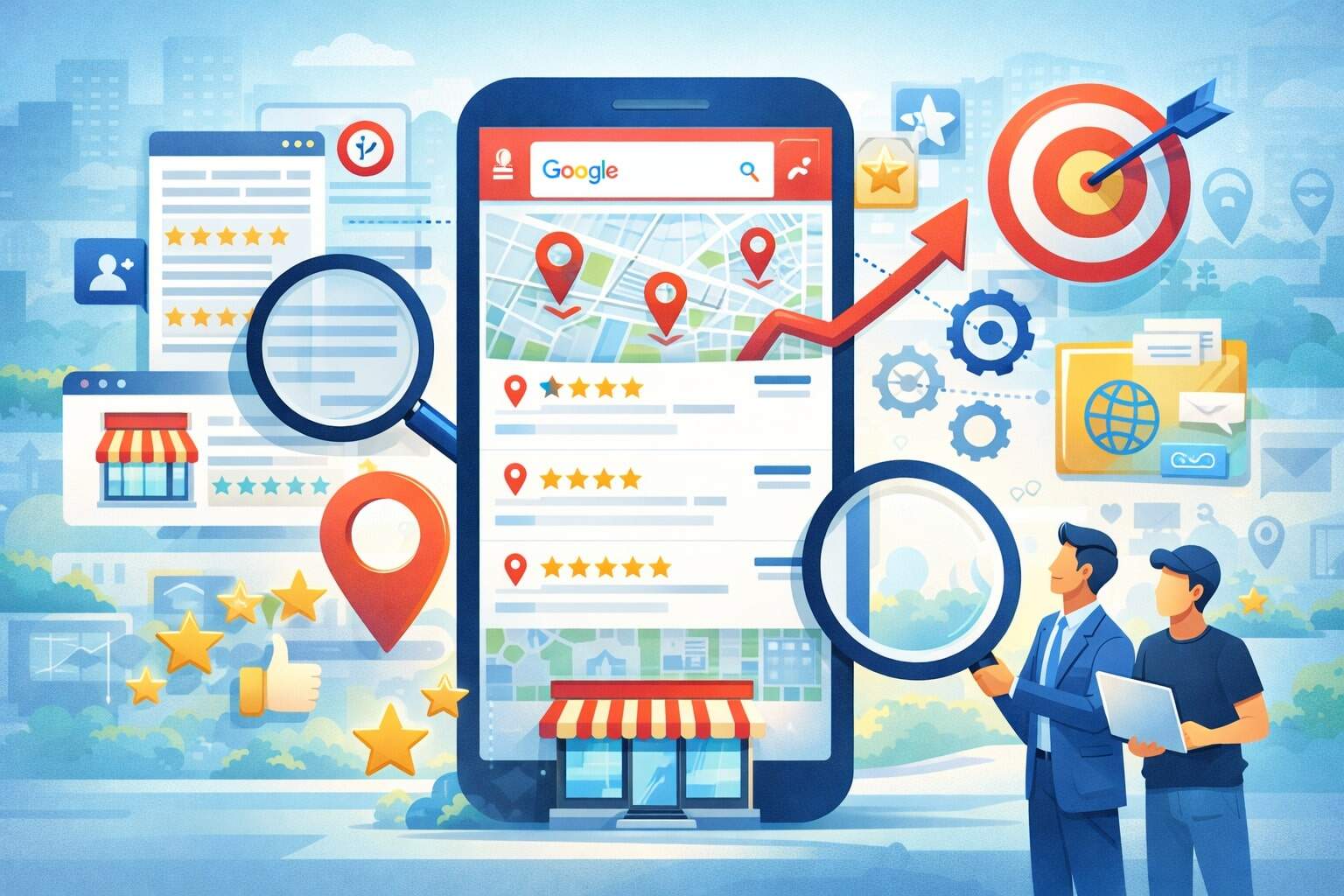
How to Rank in the Google Map Pack
Ranking in the Google Map Pack is one of the fastest ways to turn local searches into calls, direction requests, and in-person visits.
The Google Map Pack (often called the “local pack”) is the map + top three business listings that show up for high-intent searches like “dentist near me,” “emergency plumber,” or “best coffee shop.” When your business appears in the Google Map Pack, you’re visible at the exact moment people are ready to buy.
To rank in the Google Map Pack, you need to align with how Google evaluates local results. Google publicly describes local ranking around three core ideas: relevance, distance/proximity, and prominence.
In practice, the businesses that win the Google Map Pack treat their Google Business Profile like a living asset (not a one-time setup), keep their information consistent everywhere, build strong local trust signals, and make it easy for customers to choose them.
This guide walks you through a complete, step-by-step system to improve Google Map Pack visibility. It’s written for real businesses—single locations, service-area businesses, and multi-location brands—and it’s designed to stay effective as Google’s local search evolves.
Understand How the Google Map Pack Algorithm Works (Relevance, Proximity, Prominence)
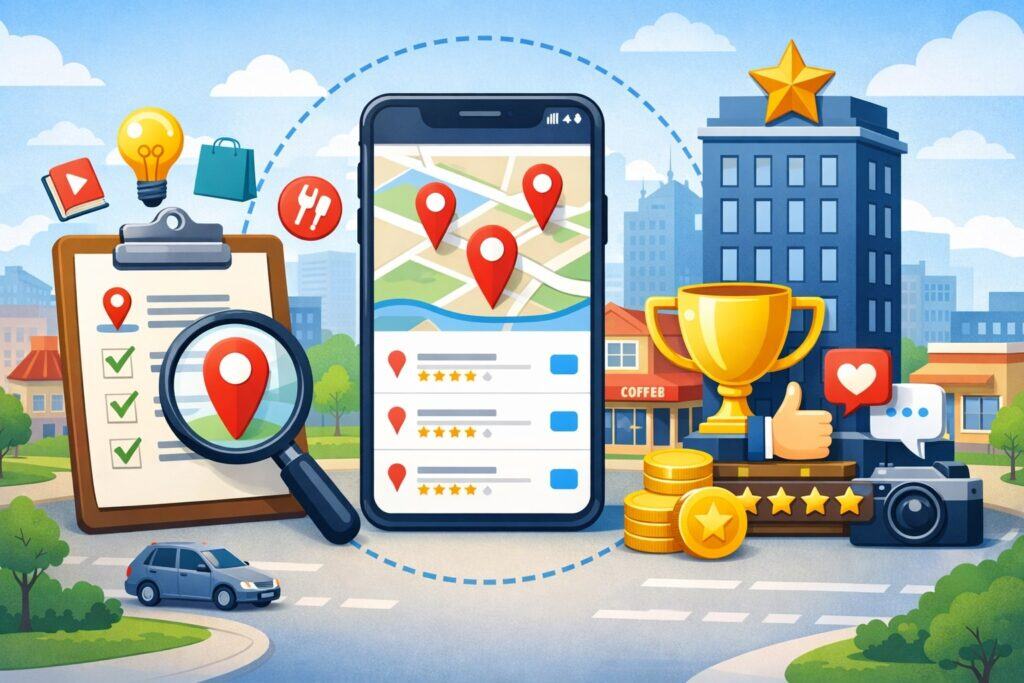
If you want consistent Google Map Pack rankings, start by optimizing for the three signals Google emphasizes in local results: relevance, proximity (distance), and prominence. These aren’t “tips”—they’re the foundation.
Relevance is how closely your business matches what someone searched. In the Google Map Pack, relevance is strongly influenced by your primary category, secondary categories, services, business description, and content on your website.
If you’re a “roofing contractor” but you choose a vague category or you don’t list key services, Google may not see you as the best match for that search.
Proximity is the distance between the searcher (or the location in the query) and your business. You can’t “SEO” your way out of being far away, but you can make sure Google correctly understands where you’re located and what areas you serve. This is especially important for service-area businesses that travel to customers.
Prominence is your overall authority and trust—online and offline. In the Google Map Pack, prominence is built through reviews, consistent mentions of your business across the web, local links, and strong engagement signals (calls, clicks, direction requests). Reviews also act as a major trust driver in Maps ranking systems.
When you improve all three pillars together, you don’t just “rank once”—you build stability in the Google Map Pack, even when competitors try to copy your tactics.
Create, Claim, and Verify Your Google Business Profile the Right Way
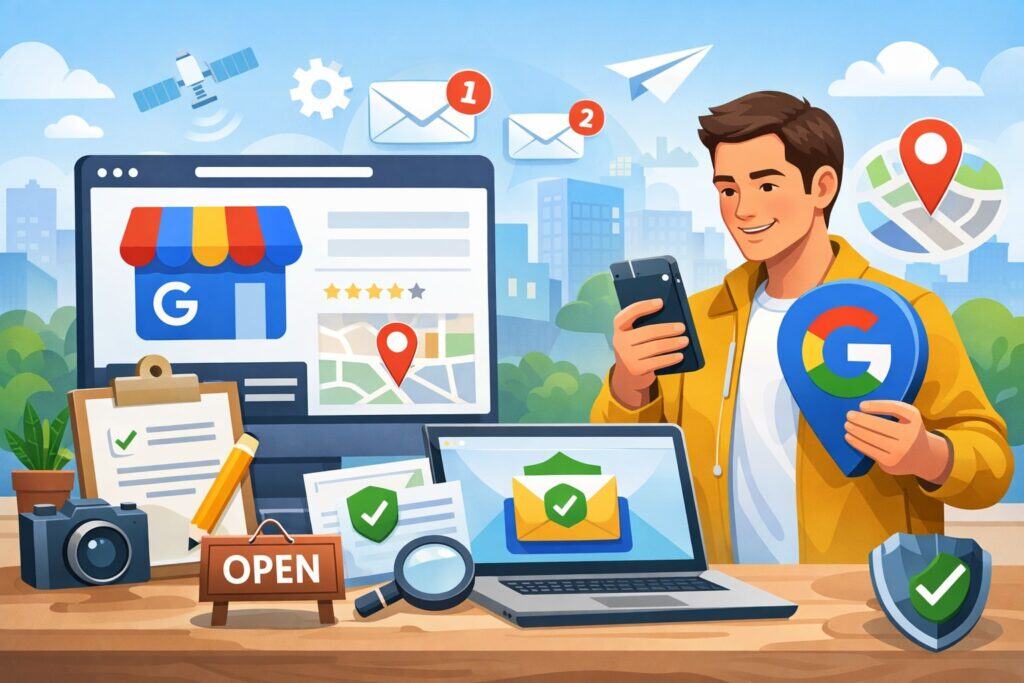
You can’t seriously compete in the Google Map Pack without a properly verified Google Business Profile. Verification matters because it gives you ownership and control over your listing—hours, categories, services, photos, messaging, and more. Google explicitly states you need to verify to manage your Business Profile and keep information accurate.
Start by claiming your profile (or creating one if it doesn’t exist). Then complete verification using the method Google offers for your business.
Verification methods can vary by industry and account history, and Google may require different steps depending on risk signals. The most important rule is simple: make sure everything you submit is real and consistent with how your business exists in the real world.
For storefronts, your address must represent a real physical location that customers can visit during stated hours. For service-area businesses, you should configure service areas accurately and avoid using virtual offices or mailboxes as a public-facing address.
Getting this wrong can cause ranking problems or even listing restrictions. Google also maintains Business Profile policies and guidelines, and violations can lead to limitations or loss of access.
A verified, policy-compliant profile is the baseline for Google Map Pack growth. If you skip this foundation, every other Google Map Pack strategy becomes fragile.
Choose the Best Primary Category and Build a “Category Strategy” That Wins the Google Map Pack
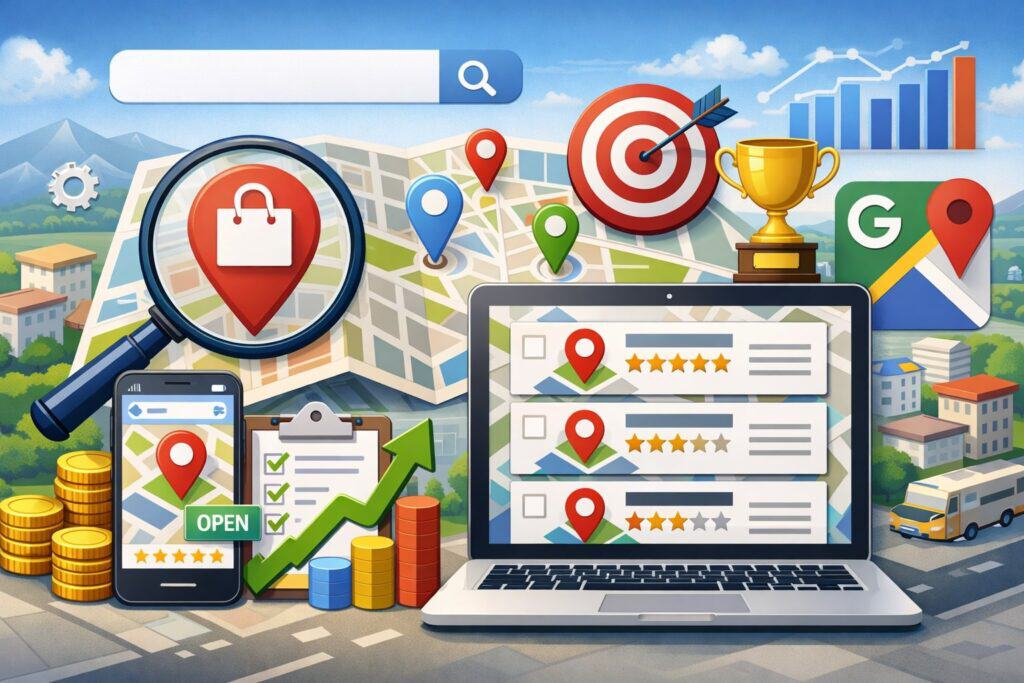
Category selection is one of the biggest “make-or-break” factors for Google Map Pack visibility. Your primary category tells Google what you are, and it heavily influences which searches you appear for.
If your primary category is too broad or slightly wrong, you may struggle to rank in the Google Map Pack even if your reviews and website are strong.
Your goal is not to choose the category that “sounds good.” Your goal is to choose the category that best matches how customers search and what you want to rank for in the Google Map Pack.
For example, “Personal Injury Attorney” is more targeted than “Law Firm.” “HVAC Contractor” is more aligned than “Contractor.” Specificity helps relevance.
Then build a smart secondary category plan. Secondary categories shouldn’t be random. They should support your core services and match real offerings. If you add categories you don’t truly provide, you risk policy trouble and lower performance over time.
After categories, reinforce relevance with your services list (where available), attributes, and business description. Every element should support the same theme: “This business is a strong match for these searches in this area.” That’s the logic behind consistent Google Map Pack ranking.
Future-proofing note: as Google expands AI-driven search experiences, clear category and entity understanding becomes even more important. Many analysts now expect local ranking to rely more on structured clarity (categories/services) and less on vague keyword signals.
Optimize Your Google Business Profile for Conversions (Not Just Rankings)
A profile that ranks but doesn’t convert is wasted Google Map Pack visibility. The best Google Map Pack strategy optimizes for both: ranking signals and customer actions.
Start with perfect basics: business name (no extra keywords), phone number, hours, website URL, appointment URL (if relevant), and the right business type. Accuracy here improves trust and reduces customer friction.
Next, strengthen your profile content:
- Business description: explain what you do, who you serve, and what makes you different—clearly and naturally.
- Services/products: list your real, revenue-driving services in detail.
- Attributes: choose only what’s accurate (these often influence customer decisions in the Google Map Pack).
- Messaging/calls: enable features you can actually manage consistently.
Then focus on engagement assets that influence conversions:
- Add photos that match buyer intent: exterior, interior, team, equipment, before/after, and proof of outcomes.
- Use Google Posts (or updates) to highlight seasonal offers, FAQs, new services, and credibility points.
- Add a strong set of Q&A content based on real customer questions (and monitor it, because anyone can suggest Q&A).
This conversion-first approach improves behavioral signals too—more calls, clicks, and direction requests—creating a positive feedback loop that can support Google Map Pack rankings over time.
Nail NAP Consistency and Local Citations Without Wasting Time
NAP stands for Name, Address, Phone. If you want durable Google Map Pack rankings, your NAP must be consistent across your website, your Google Business Profile, and key business directories. Inconsistent NAP creates confusion and can weaken prominence signals.
Start with your “core identity”:
- One official business name (matching signage and legal use)
- One primary phone number (avoid swapping numbers frequently)
- One canonical address format (same abbreviations, suite formatting, and punctuation everywhere)
Then clean up major citations: top mapping data sources, major business directories, and industry directories that customers actually use. Don’t chase thousands of low-quality listings. Focus on accuracy and relevance.
For service-area businesses, citation work still matters, but don’t expect “service area settings” alone to expand Google Map Pack reach. Service area configuration helps customers understand where you operate, but it doesn’t magically rank you everywhere.
The practical play is to build local relevance through location-specific website content, reviews that mention service areas naturally, and local links/mentions.
When citations match your Google Business Profile, Google’s confidence increases. That confidence supports Google Map Pack stability—especially in competitive markets where small trust gaps can decide who shows up.
Build a Review Engine That Moves Google Map Pack Rankings
Reviews are one of the strongest forces in Google Map Pack performance because they influence both trust and engagement. Many local SEO researchers consistently highlight review volume, quality, and freshness as major ranking drivers.
The winning approach is not “get a bunch of reviews at once.” The winning approach is a review engine that generates steady, authentic feedback.
Key levers that improve Google Map Pack results:
- Freshness: a consistent pace of new reviews signals ongoing quality.
- Relevance: customers naturally mentioning services and neighborhoods can reinforce topical relevance (don’t script this in a spammy way).
- Responses: responding thoughtfully shows active management and can increase trust and conversions.
Operationalize it:
- Ask at the right moment (after a win: delivery, completion, resolution).
- Make it easy (one link, minimal steps, mobile-friendly).
- Train your team (a simple script, but not a forced template).
- Monitor and respond weekly (or daily in high-volume industries).
For negative reviews, don’t panic. Respond calmly, offer a path to resolution, and document patterns so you can improve operations. Over time, strong review management can lift both conversions and Google Map Pack visibility.
Use Photos, Videos, Products, and Updates to Increase Engagement Signals
Many businesses try to rank in the Google Map Pack with text-only profiles. That leaves money on the table. Visual assets and ongoing updates can increase user engagement—clicks, calls, photo views, and direction requests—which supports stronger performance in the Google Map Pack.
Photos: prioritize quality and relevance over quantity. Upload real images that prove you’re legitimate and professional. Include:
- storefront/exterior signage (helps trust and location clarity)
- interior (if customers visit)
- team at work
- equipment and vehicles (for service businesses)
- completed projects and outcomes (before/after where appropriate)
Videos: short clips showing the location, staff, or process can reduce uncertainty and increase conversions.
Products/services: if your profile supports product listings, use them strategically—top sellers, bundles, seasonal items, and “starter” options that convert new customers.
Updates/Posts: treat them like mini landing pages inside the Google Map Pack. Highlight promotions, events, FAQs, and seasonal services. Keep language simple. Use one clear call-to-action per post.
This content also protects you from competitors with “thin” profiles. In many markets, two businesses may be close in proximity and relevance. Engagement and trust signals become the differentiator that helps you keep Google Map Pack placement.
Strengthen Your Website to Support Google Map Pack Rankings
Your Google Business Profile can rank without a great website, but a strong site makes Google Map Pack rankings easier to earn and harder to lose—especially for competitive services.
Start with local relevance fundamentals:
- A fast, mobile-friendly experience
- Clear service descriptions that match your Google Business Profile categories
- Prominent NAP on every key page (footer is fine, but consistency is critical)
- A strong contact page with embedded map (if you have a customer-facing location)
- Clear calls-to-action (call, schedule, get quote)
Then build location and service depth:
- Service pages for your main offerings
- Location pages if you legitimately serve distinct areas (avoid doorway spam)
- FAQs that mirror what people ask before buying
- Proof content: case studies, before/after galleries, testimonials
Add structured clarity:
- Use structured data where appropriate (LocalBusiness schema, service schema, etc.)
- Make sure your business name and address are consistent
Finally, earn authority:
- Get links from local chambers, local sponsorships, neighborhood publications, suppliers, and relevant associations.
- Publish helpful content that targets real local intent, not generic SEO fluff.
This website foundation increases prominence and relevance, supporting stronger Google Map Pack performance over time—especially as search evolves toward AI-driven summaries that reward clear, authoritative sources.
Master Local Content That Targets “Near Me” and Neighborhood Intent
To compete in the Google Map Pack, your content must reflect how people search locally. Many local searches don’t include a city name. They include “near me,” neighborhood references, or service urgency.
Build content around:
- “Service + neighborhood” combinations (only where you actually serve)
- “Service + problem” queries (e.g., “leak detection,” “emergency repair,” “same-day appointment”)
- comparison and trust topics (“how to choose,” “what it costs,” “what to expect”)
Keep content readable:
- short paragraphs (2–4 sentences)
- clear headings
- simple language
- real examples
Add credibility elements:
- licensing/insurance info (if relevant)
- service guarantees
- response times
- photos from local jobs
- testimonials mentioning local areas naturally
This approach strengthens relevance for Google Map Pack queries while also improving organic rankings, which can indirectly support local prominence.
Future prediction: expect more local searches to be answered through AI summaries, with fewer clicks to websites. Businesses that publish clear, structured local content (and keep profiles updated) will be better positioned to be referenced or surfaced in AI-driven local results.
Avoid Suspensions, Spam Signals, and Profile Edits That Hurt the Google Map Pack
A hidden reason many businesses drop from the Google Map Pack is compliance trouble. Even well-meaning edits—like adding keywords to the business name—can trigger issues.
Google maintains Business Profile policies, including prohibited and restricted content guidelines. If Google detects guideline violations, it can restrict content or limit access to the profile. That can destroy Google Map Pack visibility overnight.
High-risk actions to avoid:
- adding service keywords to your business name if they aren’t part of the real-world name
- using virtual offices, co-working addresses, or PO boxes as a public address
- creating multiple profiles for the same business to “cover more cities”
- selecting irrelevant categories just to rank for more terms
- review gating or incentivizing reviews in ways that violate rules
Also, be careful with major profile edits:
- business name changes
- category shifts
- address moves
- phone number swaps
Make changes slowly and only when necessary. Document your business legitimacy (signage, location, operations) so you can resolve verification or reinstatement issues if they happen. Verification is required to manage profiles, so keep that process clean and consistent.
A compliant profile is a stable profile—and stability is a competitive advantage in the Google Map Pack.
Track, Test, and Scale: A Practical Google Map Pack Growth System
Most businesses treat Google Map Pack work like random tasks. Rankings improve faster when you run a system.
Step 1: Set your baseline
- record your current Google Map Pack position for 10–20 core terms
- track calls, direction requests, and website clicks from your profile
- note your review count, rating, and review velocity
Step 2: Implement weekly actions
- add new photos every week (even 3–5 helps)
- publish updates/posts consistently
- request reviews from recent customers
- respond to all reviews
- monitor Q&A for new questions
Step 3: Implement monthly authority work
- build 1–3 local links/mentions per month
- publish 1–2 high-quality local content pieces per month
- audit citations for accuracy
- check competitors: categories, review pace, content style
Step 4: Measure what matters
Ranking is important, but conversions are the goal. If you move from #5 to #3 in the Google Map Pack, you should see more calls and direction requests. If you don’t, your profile may be under-converting (weak photos, unclear services, low trust, confusing hours).
Step 5: Scale what works
Double down on the actions that improve both visibility and outcomes. Over time, this creates a defensible Google Map Pack presence that doesn’t collapse when algorithms shift.
Future of the Google Map Pack: What to Expect Next
The Google Map Pack is not disappearing, but it is evolving. Local search is increasingly shaped by AI-driven experiences, richer profiles, and stronger trust requirements. Many industry observers already emphasize visibility in AI summaries and “answer-first” results as a growing factor in local marketing strategy.
Here are realistic predictions for how the Google Map Pack may change:
- More AI-layered local results: Google may summarize “best options” and reduce the need to click multiple listings.
- Higher trust thresholds: verification, legitimacy signals, and policy compliance will matter even more.
- Deeper engagement weighting: businesses that generate strong user actions (calls, bookings, direction requests) will be harder to replace.
- More competitive conversion elements: products, service menus, booking, messaging, and rich media could become bigger differentiators inside the Google Map Pack.
- Stronger “entity clarity” requirements: categories, services, and consistent business data across the web will matter more as AI systems rely on structured understanding.
The safest long-term strategy is to run your Google Map Pack presence like a real brand asset: accurate data, strong customer experience, steady reviews, and a website that proves expertise and local trust.
FAQs
Q.1: How long does it take to rank in the Google Map Pack?
Answer: It depends on competition, proximity, and trust signals. Some businesses see movement in weeks after optimizing the Google Business Profile and increasing review velocity.
In competitive markets, it can take months of consistent actions—especially authority building (links, mentions, strong website relevance). Your biggest accelerators are correct categories, a complete profile, steady reviews, and clean citations.
Q.2: What is the fastest way to improve Google Map Pack visibility?
Answer: The fastest improvements usually come from fixing fundamentals: correct primary category, complete services, accurate hours, strong photos, and a real review strategy. Reviews are often highlighted as a strong Maps ranking driver, especially when they’re fresh and you respond consistently.
Q.3: Can I rank in the Google Map Pack without an address?
Answer: Yes. Service-area businesses can rank in the Google Map Pack when configured properly. But service areas don’t automatically expand rankings into distant cities; they mainly inform users. To grow reach, you need local relevance signals through content, reviews, and authority.
Q.4: Do keywords in the business name help rankings?
Answer: Spammy business-name keywords might cause short-term movement, but they can also trigger guideline violations and profile restrictions. Google has clear policies and may restrict access or visibility when violations occur. Long-term Google Map Pack success comes from legitimacy and trust.
Q.5: What matters more: reviews or citations?
Answer: Both matter, but in many industries reviews are the most visible trust driver and are widely considered a major Google Map Pack factor. Citations support consistency and prominence. The best approach is to build a steady review engine and maintain accurate citations at the same time.
Q.6: Does verification impact Google Map Pack rankings?
Answer: Verification is essential because it gives you control over the listing and confirms ownership. Google states you must verify to manage your Business Profile and keep info accurate. While verification alone won’t guarantee top rankings, an unverified or unstable profile is far less competitive in the Google Map Pack.
Conclusion
Ranking in the Google Map Pack isn’t about tricks. It’s about building a profile and local presence that Google can confidently recommend. Start with the fundamentals: understand relevance, proximity, and prominence. Then verify and protect your Google Business Profile, keeping it accurate and policy-compliant.
From there, execute the system: category strategy, conversion-focused profile optimization, NAP consistency, meaningful citations, a steady review engine, and ongoing engagement through photos, updates, and Q&A.
Reinforce everything with a strong website and locally aligned content. Measure results, refine monthly, and scale what improves both rankings and revenue.