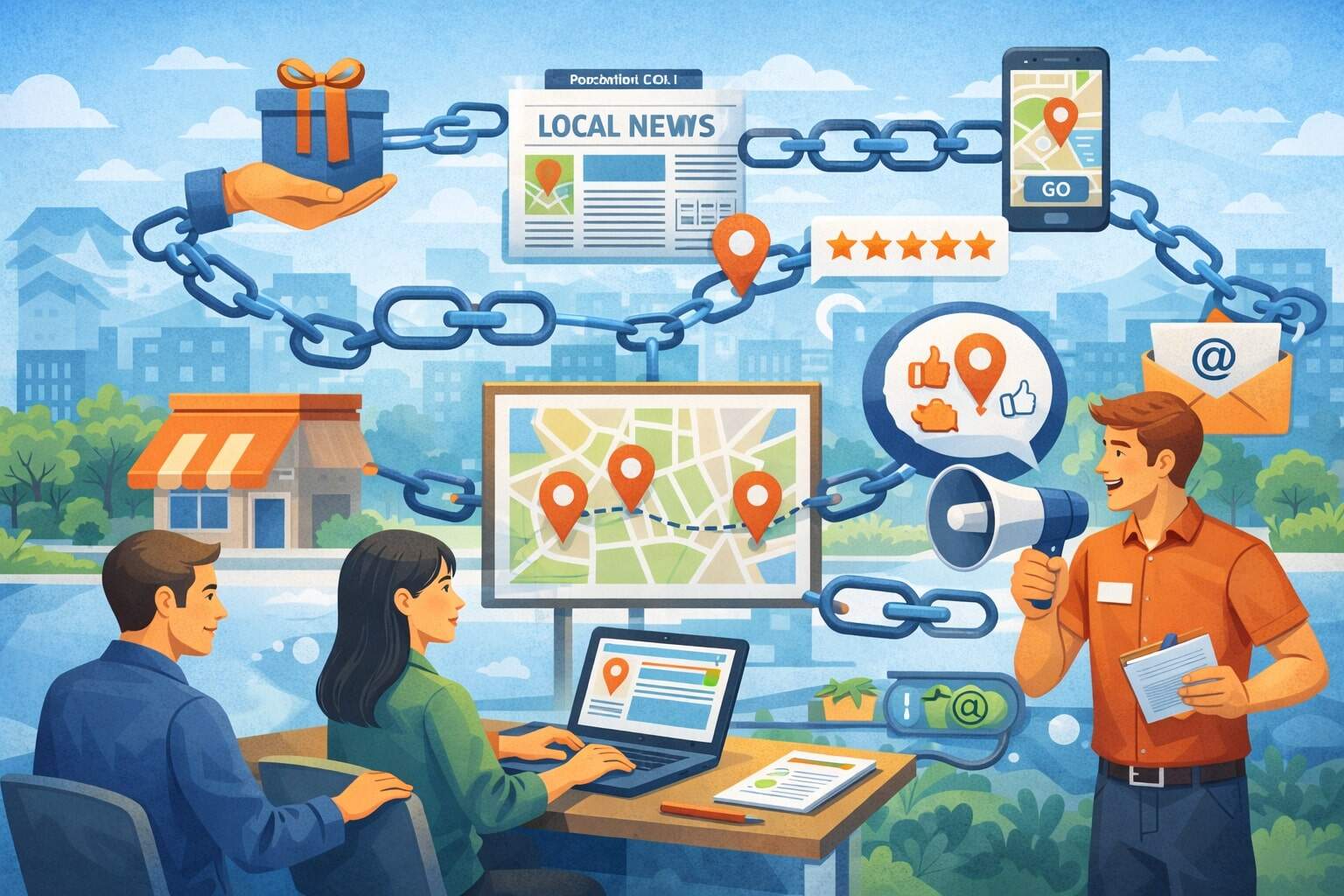
How to Get More Local Backlinks
Local search has gotten tougher, and “easy links” are also riskier than they used to be. If you want to rank in the map results and in the regular organic listings, you need local backlinks that are earned, relevant, and tied to real community signals—not manufactured patterns.
Google’s spam systems and policies continue to crack down on manipulative tactics (including scaled/abusive approaches and “parasite” placements), so the safest path is to build local backlinks the same way you build a strong reputation offline: relationships, value, and proof.
This guide shows you how to get local backlinks consistently—whether you’re a service business, storefront, or multi-location brand. You’ll learn what to prioritize, what to avoid, and how to build a link profile that looks natural because it is natural.
What “Local Backlinks” Really Mean (and Why They Still Matter)
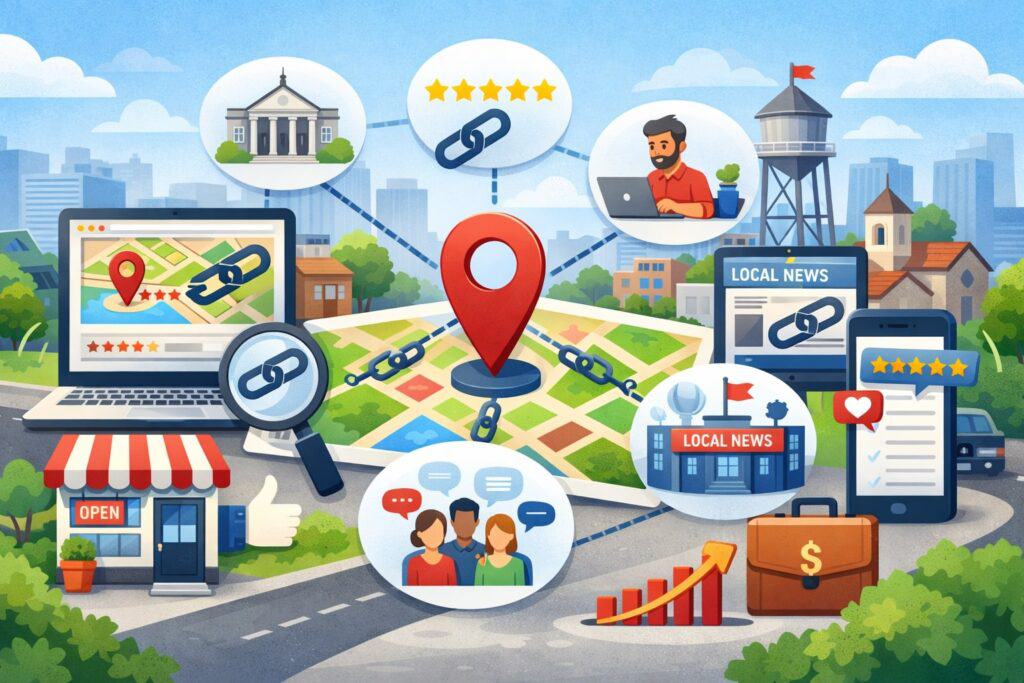
Local backlinks are links from websites that have a meaningful connection to your area or community: city publications, neighborhood blogs, chambers of commerce, schools, nonprofits, event sites, local podcasts, regional associations, local suppliers, and nearby partners.
The biggest myth is that local backlinks only matter for map rankings. In reality, they help across the board: they strengthen topical authority, improve trust signals, and support the “prominence” side of local visibility.
Google has publicly explained that local results consider factors like relevance, distance, and prominence. Prominence is influenced by how well-known a business is—often reflected through mentions, reviews, and links.
Local backlinks are one of the cleanest “digital reputation” signals because they come from third parties who chose to reference you.
Here’s the important nuance: not all local backlinks are equal. A link from a respected regional newspaper or a city government resource page can outweigh dozens of low-quality directory listings.
And spammy link patterns are easier than ever for algorithms to detect. Google’s spam documentation makes it clear that spam systems are constantly evolving and that notable updates can impact sites relying on manipulative tactics.
The goal isn’t to “build links.” The goal is to become the kind of business local websites want to link to—then to make it easy for them to do so.
The Rules of Safe Link Building for Local Businesses
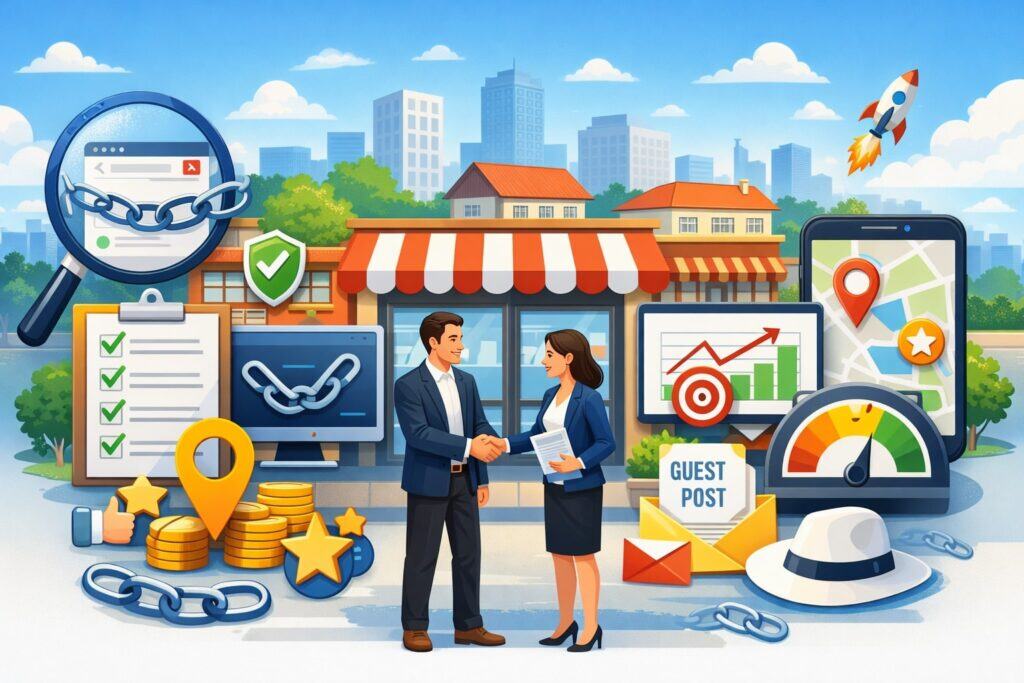
Safe link building is less about “tactics” and more about “signals.” Local backlinks should look like the natural outcome of real-world activity: events you sponsor, expertise you share, stories you earn, and partnerships you maintain.
If your link profile suggests shortcuts—mass submissions, templated guest posts, paid placements without transparency, or sudden spikes from unrelated sites—you’re building on sand.
Google has expanded and clarified spam policies in recent years, including policies targeting scaled abuse and site reputation abuse (often discussed as “parasite SEO”).
That context matters for local backlinks because many businesses get tempted by “quick placements” on high-authority sites that are unrelated to them. Those shortcuts can create more risk than reward long-term.
A practical way to think about it:
- Safe local backlinks usually come from organizations that would recognize you in real life.
- Risky local backlinks usually come from websites that don’t know you, don’t serve your area, and wouldn’t naturally talk about your business.
Also, remember that “local” does not mean “tiny.” A statewide association, a regional TV station, or a metro-area business journal can be a powerful local backlinks source because it’s geographically relevant and editorially curated.
If you want a ranking edge that lasts through updates, pursue local backlinks that also create brand demand: partnerships that bring referrals, press that brings searches, and community activity that creates word-of-mouth.
Build Linkable Local Assets (So People Have a Reason to Link)
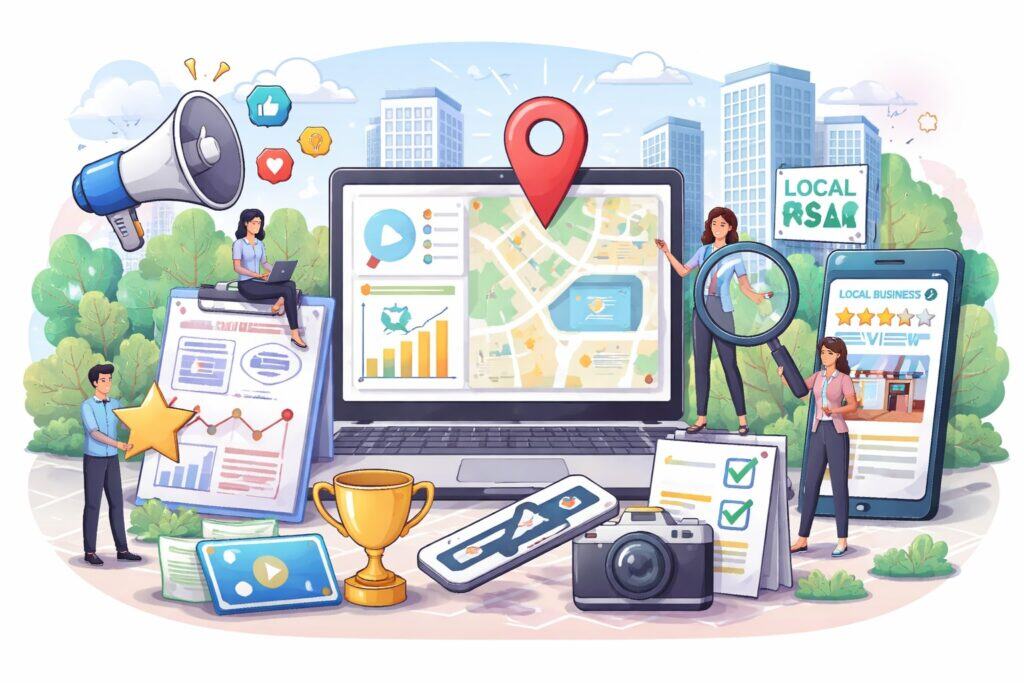
Most businesses fail at local backlinks because they ask for links without offering anything worth linking to. Your website should include at least a few “linkable assets” that help your community, answer local questions, or provide unique data. When your assets are genuinely useful, outreach becomes simple: you’re not begging—you’re contributing.
Start with assets that naturally attract local backlinks:
- Local guides: “Moving to [City] checklist,” “Best time to service HVAC in [County],” “Permit steps for [common local project],” or “Neighborhood-by-neighborhood tips.”
- Local resource hub: A curated, updated page linking to official resources, emergency contacts, community programs, and local organizations (with a clear reason your business maintains it).
- Local statistics or mini-research: Small surveys, anonymized trends, or aggregated insights you can share with local reporters and bloggers.
- Scholarship or trade program page: If you support workforce development, create a well-documented page with eligibility and outcomes.
The key is specificity. “Tips for homeowners” is generic. “Flood season prep for homes near [Local River]” is link-worthy. This specificity makes local backlinks easier because local publishers care about content that is actually local.
Future-focused note: as AI summaries reduce clicks, publishers will link more selectively. Your best defense is to create assets that are hard to replace with generic AI text—original photos, local datasets, interview quotes, and practical checklists tied to local regulations or conditions. This is how local backlinks keep compounding.
Earn Local Backlinks Through Community Relationships (Not Cold Outreach)
Cold outreach can work, but relationship-driven outreach works better—and it’s more durable. The fastest way to earn local backlinks is to become visible in the places local websites already cover: business associations, neighborhood groups, charities, schools, events, and community projects.
Here are relationship channels that repeatedly produce local backlinks:
- Join the chamber, downtown association, or trade group—and participate beyond paying dues.
- Collaborate with complementary local businesses on joint offers, co-hosted workshops, or seasonal community campaigns.
- Provide meeting space, volunteers, or expertise for local organizations.
- Offer to speak at local meetups, colleges, or community education programs.
Why this works: the organizations you support often have sponsor pages, partner pages, event recap posts, newsletters, and attendee listings. These are natural local backlinks opportunities that don’t require awkward tasks. You simply make sure your brand name and website are included where appropriate.
Sponsorships can be especially effective when done thoughtfully. Local events and nonprofits often publish sponsor recognition pages and press coverage, which can create high-trust local backlinks if the placement is real and relevant.
Local PR That Generates Backlinks: Media, Podcasts, and Community News
Local PR is one of the highest-leverage sources of local backlinks because it creates editorial links—often the most trusted kind. The trick is to pitch stories that local outlets actually want, not promotional fluff.
Story angles that commonly earn local backlinks:
- Local hiring and apprenticeship programs
- Community safety initiatives, donation drives, and disaster response support
- Unique business milestones (anniversary, expansion, relocation, awards)
- Local data insights (your mini-study or seasonal trends)
- Expert commentary tied to local issues (weather-related property tips, small business finance, consumer protection)
Create a “press kit” page on your site with photos, a short company description, leadership bios, and past media mentions. This makes it easy for reporters to reference you and link to you—leading to more local backlinks.
Don’t ignore podcasts and local YouTube channels. Many hosts publish show notes pages that include links to guests, which can become steady local backlinks. Offer clear talking points and a unique viewpoint to stand out.
Be mindful of evolving spam enforcement. If you’re tempted by “guaranteed press release links” or paid placements on unrelated sites, skip it. Google’s broader spam posture has been increasingly strict about manipulative tactics and abusive placement models.
A smart local PR rhythm: one strong story per quarter plus smaller “community notes” monthly. Over time, this produces a natural-looking stream of local backlinks.
Use Local Sponsorships and Scholarships the Right Way
Sponsorships are not a shortcut. They’re a community investment that can also generate local backlinks—if you choose wisely and document the partnership properly.
To earn meaningful local backlinks through sponsorships:
- Sponsor events with real websites, real attendance, and real community relevance.
- Prioritize organizations that publish sponsor pages, event recaps, or partner directories.
- Provide helpful contributions (expert workshop, volunteers, equipment, venue support) so the sponsorship has substance.
- Ask for accurate business details: name, website, location, and a short description—no keyword-stuffing.
This is where many businesses slip: they turn sponsorship links into SEO anchors. Don’t. Let the anchor text be your brand name or the event name. That’s what natural local backlinks look like.
Local sponsorships can also lead to secondary local backlinks: local newspapers covering the event, bloggers posting recaps, and community calendars listing the sponsors. Those secondary links are often the real win.
Prediction: sponsorship links will remain valuable, but only when they’re clearly tied to authentic community activity. “Pay-to-play” sponsor pages with thin content and hundreds of outbound links will likely get devalued more aggressively over time.
If you do scholarships, focus on transparency. Publish winners (with permission), outcomes, and program updates. That makes the page link-worthy and helps local backlinks grow naturally year after year.
Local Directories and Citations: Do Them for Trust, Not for Volume
Local directories still matter, but not because you can spray hundreds of low-quality listings and call it link building. The best approach is to treat directories as trust infrastructure: consistent business information and selective local backlinks from reputable platforms.
Focus on:
- Core platforms your customers actually use
- Industry-specific directories that are curated (not auto-generated)
- City and regional directories with editorial oversight
- Association membership directories (often underrated local backlinks)
Maintain perfect consistency for your name, address, phone, and website. While citations aren’t the same as local backlinks in terms of authority, they support legitimacy and reduce confusion across platforms.
Also, the platforms that matter most are usually the ones that rank, get traffic, and have strict moderation—those are the directory local backlinks that still carry weight.
Tie this back to local visibility: Google emphasizes using your business profile and accurate information sources to help customers find you. Consistency across the web supports that ecosystem.
Avoid “directory blasting” services that promise thousands of links. A sudden wave of junk links can dilute your profile and waste crawl attention. The strongest directory approach is slow, selective, and maintained—just like good local backlinks should be.
Partner and Vendor Links: The Most Underused Local Backlinks
One of the easiest ways to earn local backlinks is to use your existing relationships. If you buy from local suppliers, work with local subcontractors, or partner with nearby service providers, you can often earn links through partner pages, “preferred vendor” lists, and joint case studies.
Examples of partner-based local backlinks:
- “Our Partners” page on a supplier website
- “Recommended Pros” list from a complementary business
- Joint project writeups with before/after photos
- Vendor directories from venues, property managers, and associations
The key is to make it valuable for them too. Offer:
- A short case study they can publish
- High-quality photos or video from a project
- A testimonial they can use on their site (often linked)
- A joint discount or community program
These local backlinks are powerful because they’re contextually relevant. They also send real referral traffic. And they’re naturally diverse: different domains, different contexts, different page types.
Prediction: partner links will become even more valuable as search engines place more emphasis on real-world relationships and brand corroboration. A web of authentic local partnerships creates the kind of footprint that spammy local backlinks can’t imitate.
Local Resource Pages and “Best Of” Lists (Without Being Spammy)
Local resource pages are one of the most consistent ways to get local backlinks, especially from schools, libraries, city programs, neighborhood associations, and community blogs. These pages exist to help people find services—so your job is to be a genuinely helpful recommendation.
To earn resource-page local backlinks:
- Identify resource pages that match your service and your area.
- Check quality: does the site look maintained, relevant, and legitimate?
- Make your pitch focused on the user: what problem you solve and who you help.
- Offer a specific reason you should be included (unique service, community program, accessibility options, multilingual support, emergency hours, etc.).
For “best of” lists, avoid paying for fake awards. Instead, earn inclusion by being visible: reviews, community involvement, and a clear differentiator. When you do outreach, don’t ask, “Can you link to me?” Ask, “Would this be useful to your readers?” That framing earns local backlinks more often.
Be careful with mass guest posting or templated “Top 10” lists on irrelevant blogs. Those patterns can look like scaled manipulation, which is exactly what newer spam policies target.
Future trend: as local publishers shrink, there will be fewer high-quality resource pages. That means each earned local backlinks placement will matter more, and relationship-based opportunities will outperform cold outreach.
Google Business Profile and Local Backlinks: How They Reinforce Each Other
Your Google Business Profile doesn’t directly “store backlinks,” but it does sit in the center of the local ecosystem. When you earn local backlinks, you usually earn mentions, branded searches, driving direction requests, and review velocity—all of which reinforce local prominence signals.
Google’s own guidance highlights that local ranking is influenced by relevance, distance, and prominence, and your Business Profile is a key tool for improving visibility. The takeaway is simple: local backlinks work best when they’re part of a bigger local footprint, not isolated SEO activity.
Here’s how to connect your local backlinks strategy to your profile:
- Use consistent categories, services, and descriptions that match the language local sites use.
- Publish posts about events, partnerships, and community work that also generate local backlinks.
- Add photos from sponsored events and collaborations—then those partners are more likely to link back.
- Encourage customers from community events to leave reviews (ethically, without incentives that violate platform rules).
Also, watch for spam risks in “profile backlink” tactics. Some guides discuss building links via profile features; use these features responsibly and focus on legitimacy, not manipulation.
Prediction: as local SERPs evolve with more AI-driven summaries, the brands that win will be those with the strongest corroboration across the web—reviews, mentions, and local backlinks that tell a consistent story.
Measuring, Auditing, and Scaling Local Backlinks the Smart Way
The biggest mistake with local backlinks is chasing quantity without measuring outcomes. You should measure local backlinks with a blend of SEO indicators and business indicators.
Track:
- Referral traffic and conversions from each placement
- Brand searches and “near me” visibility changes
- Map pack impressions and actions (calls, direction requests)
- Organic ranking improvements for service + city terms
- Link quality signals: relevance, editorial context, traffic potential, and site trust
Set a realistic cadence: 4–8 quality local backlinks per month can outperform 40 weak ones. Build a simple “link pipeline”:
- Monthly community activity (events, partnerships, outreach)
- Quarterly PR story or mini-research
- Ongoing directory hygiene and partner link maintenance
- Annual big community initiative (scholarship, program, report)
Audit regularly. If you notice lots of low-quality domains pointing at you (sometimes from scrapers), you can document it and focus on earning stronger local backlinks to outweigh the noise. The best defense is a consistently high-quality profile.
Finally, stay aware of spam update volatility. Google’s spam updates and policies can shift how link patterns are interpreted, so long-term safety comes from authenticity and diversity, not rigid “link formulas.”
FAQs
Q.1: How many local backlinks do I need to rank?
Answer: There isn’t a universal number because competition varies by city, niche, and how strong competitors are. In practice, you don’t “win” with the most local backlinks—you win with the best combination of relevance, trust, and local prominence.
A business with fewer local backlinks can outrank a competitor if those links are more authoritative, more locally relevant, and supported by strong reviews and consistent business information.
A good benchmark is progress-based: aim to earn local backlinks steadily (for example, a handful per month), and watch how rankings and calls change over 60–90 days. If you’re in a competitive metro area, you may need a longer runway and higher-quality placements—local press, associations, and partner links—rather than a bigger count.
Also remember that Google’s local systems weigh multiple factors like prominence and relevance; local backlinks help most when they align with real-world popularity and consistent brand signals.
Q.2: Are local directory links still worth it?
Answer: Yes—but only the right ones. High-quality directories can provide local backlinks that support legitimacy and discovery, especially if people actually use the directory. The goal is not mass submission. The goal is consistent, accurate listings on reputable platforms and industry directories that are moderated and relevant.
If a directory looks auto-generated, stuffed with ads, or filled with spam, skip it. Those links rarely help and can clutter your link profile. A clean directory strategy supports trust, while your growth strategy should focus on editorial local backlinks from community and media sources.
When done well, directories are the “foundation,” not the “roof.” Build the foundation, then spend most energy on relationship-driven local backlinks.
Q.3: What’s the fastest way to get local backlinks without risking penalties?
Answer: The fastest safe method is community participation that naturally produces local backlinks: sponsor a local event, co-host a workshop with a partner, or support a nonprofit that publishes sponsor/partner pages. These create legitimate link opportunities tied to real activity, which is exactly what you want.
Local PR can also be fast if you pitch a timely local angle (seasonal, data-backed, or community-focused). The risk comes from “fast” tactics that rely on scale—bulk outreach templates, low-quality guest posts, or paid placements on unrelated sites.
Google’s spam posture has grown stricter about manipulative patterns, so speed should come from real relationships, not shortcuts.
Q.4: Should I use press releases to get local backlinks?
Answer: Press releases can help with awareness, but they’re not a reliable local backlinks engine on their own. Syndicated release links are often nofollowed or devalued, and the real value comes when a local journalist or outlet picks up the story and writes an editorial piece with a real link.
If you use press releases, treat them as a “seed” for coverage, not the final goal. Build a targeted media list, pitch directly, and provide assets (photos, quotes, data). The best local backlinks from PR come from real reporting and local relevance, not mass syndication.
Also avoid paying for placements that look like “parasite” pages on unrelated sites. That ecosystem has become more contentious and more risky over time.
Q.5: What will local backlinks look like in the next 1–2 years?
Answer: Expect local backlinks to become more “editorial” and less “mechanical.” As AI changes how people consume search results, publishers will link more selectively, and search engines will rely more heavily on corroborated real-world signals.
That means the best local backlinks will come from genuine community involvement, partnerships, and local expertise that can’t be faked at scale.
At the same time, spam detection will keep improving. Google’s spam update framework emphasizes ongoing improvements to spam detection, and policy enforcement has continued to evolve.
The businesses that win will be those that treat local backlinks as a byproduct of doing meaningful local work—then documenting it clearly online.
Conclusion
If you want more local backlinks that actually move rankings and bring customers, stop thinking like a link builder and start thinking like a community brand. The best local backlinks come from things that would still be valuable even if search engines didn’t exist: partnerships, community support, expert contributions, and local stories worth telling.
“Safe and Strong” beats “fast and fragile.” Google’s spam systems and policies continue to evolve, and link manipulation gets harder to hide every year. That’s why your strategy should be built on linkable assets, relationship-driven outreach, ethical sponsorships, and local PR that earns editorial mentions.
Do this consistently, and local backlinks will compound: more visibility leads to more mentions, which leads to more links, which leads to more visibility. That flywheel is what long-term local search dominance looks like.