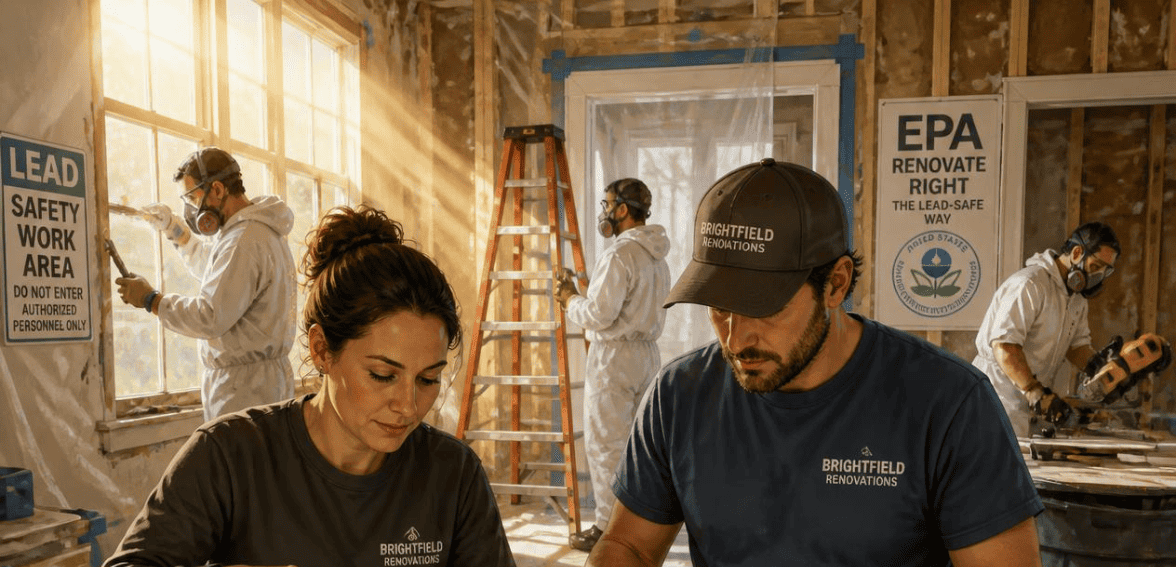
EPA RRP Records Renovation Contractors Should Keep with Each Job
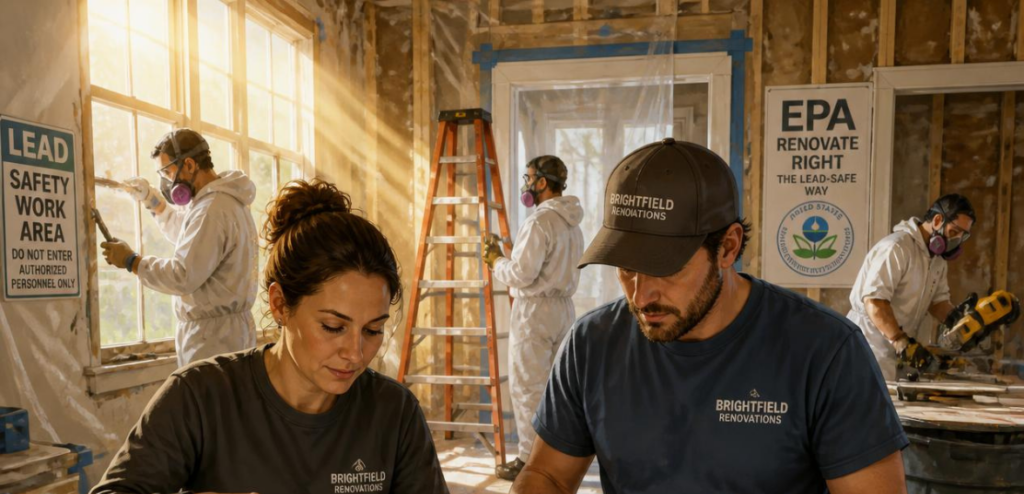
Picture this. An EPA inspector emails your office on a Tuesday morning. They want the file for a bathroom remodel you finished eight months ago in a 1962 home. You have three days to produce it. Do you have the records ready, or are you scrambling through a truck, a phone, and a stack of unlabeled folders?
For renovation contractors working on houses built before 1978, what we describe here is not unusual. It is how the EPA will typically approach enforcement of the Lead Renovation, Repair, and Painting (RRP) Rule. There is no getting around it. While the work you performed on the project is important, the paperwork is what will demonstrate your involvement. Effective EPA RRP recordkeeping can be the deciding factor for contractors on whether the outcome of the next audit is good or bad.
This guide provides a summary of the records that renovation contractors should keep for specific EPA RRP compliance for every job. It will also include recommendations on retention of records and techniques to help stay organized but avoid the clutter of too many records.
What the EPA RRP Rule Requires From Contractors
The RRP Rule applies to any paid work that disturbs painted surfaces in homes, child care centers, and preschools built before 1978. That covers a huge range of jobs. Window replacement, sanding, scraping, demolition, and general remodeling all fall under it.
To legally deliver your services to these properties, your firm needs an EPA lead-safe firm certification. Your firm also needs to assign a certified renovator to each covered job. The other workers need to be certified renovators or be trained on the job by a certified renovator. You also need to implement lead-safe work practices, provide the lead hazard pamphlet, and maintain records.
Most contractors have trouble with the last requirement. They have no issues implementing the work practices, but the records are often forgotten. The RRP Rule states that failure to document is a violation by itself.
Why EPA RRP Recordkeeping Matters for Contractors
Records are not busywork. They are your legal shield.
The RRP Rule has an enforcement program at the EPA. There are many ways the EPA can get tips for potential violations. Some of the more common ways are audits, complaints from homeowners, complaints from competitors, and even work featured on reality TV. Inspectors also ask for records during these inspections. If a record is not provided, that particular requirement can be assumed to be unfulfilled, in the absence of evidence otherwise.
The costs of these violations can be extreme. The civil penalties under the Toxic Substances Control Act account for inflation each year. As of 2026, the maximum penalty per violation has increased to more than $45,000, and violations can be counted per day. One job that requires many steps can be extremely costly if done undocumented. Higher penalties can be assessed for repeat violations or intentional violations and can also result in the EPA suspending or revoking a firm’s certification.
This is why EPA RRP recordkeeping for contractors deserves a real system, not a shoebox. Clean records protect your certification, your bank account, and your reputation.
EPA RRP Records Renovation Contractors Should Keep With Each Job
Federal recordkeeping rules live at 40 CFR § 745.86. The regulation lists what your firm must retain and make available to the EPA on request. Here is what belongs in every job file, explained in plain language.
Firm and Renovator Certification Records

Provide proof that your firm is authorized to perform the work. Also have the current EPA lead-safe firm certification on file for each job, or in a quickly accessible master file. Additionally, you need the certified renovator’s credentials. So, you need a copy of the completion certificates for the renovator’s initial course and the most recent refresher course. These certificates indicate that the person directing lead-safe work on your contract has had the necessary training and is up to date. If the refresher course is overdue, the entire contract is at risk.
Worker Training Documentation
Not every worker needs to be a certified renovator. Many are trained on the job instead. When that happens, you must document it.
Your file should show that the certified renovator provided on-the-job training to each non-certified worker, and what that training covered. Record names, dates, and the specific practices taught. This documentation answers a question the EPA will absolutely ask: who was on site, and were they trained to work lead-safe?
Designation of a Certified Renovator to the Job
Every project must have a certified renovator. You must document who that renovator is for that specific project. This provides a direct association of a trained professional to the activity. If you do not have this documentation, you cannot prove qualified oversight.
Lead-Based Paint Testing and Determination Records
Before work begins, someone has to determine whether lead-based paint is present. Your records must capture how that determination was made.
If a certified renovator used an EPA-recognized test kit, the file must include identification of the kit, a description of each component tested and its location, and the results of all tests. If paint chip samples were submitted to a laboratory, the file must include a description of the components tested, the name and address of the laboratory that performed the analysis, and the results for all samples. Retain any report prepared by a certified inspector or risk assessor.
3M LeadCheck
3M is the manufacturer of an Environmental Protection Agency (EPA)-recognized lead test kit, and 3M’s LeadCheck swabs are commonly used for Renovation, Repair, and Painting (RRP) jobs. However, the recordkeeping rule is still applicable when a contractor uses these swabs. You must document the brand and model, the surfaces tested, and the readings. It is still required to be documented when an EPA-recognized kit is used. A test record is as important as the lead test itself.
Renovate Right Pamphlet Acknowledgments
Before you disturb any paint, you must give owners and occupants the EPA’s lead-hazard information. Then you must prove you did it.
Keep signed and dated acknowledgments of receipt for the pamphlet. If you cannot get a signature, keep documentation of your good-faith effort, such as a certificate of mailing. Pre-renovation education is one of the most commonly cited violations, and it is one of the easiest to document correctly.
Renovate Right (EPA Pamphlet)
The EPA publication you must distribute is “Renovate Right: Important Lead Hazard Information for Families, Child Care Providers and Schools.” It details the risks of lead and recommended safe practices to the users and/or occupants of the property. This pamphlet’s acknowledgment of receipt is a small paper, but it has a lot of legal weight and must be included in all job files.
Work Practice and Cleaning Verification Documentation
Doing the work safely is only half the job. Proving it is the other half.
Your documentation should show that lead-safe work practices were implemented throughout the entire process from containment to cleanup. This includes documentation that the certified renovator performed post-work cleaning verification or was present and in charge while it was performed. This section is much stronger with photos of your containment, your warning signs, and your completed cleaning verification. It’s hard to argue with a photo of taped plastic sheeting.
Records You Provide to Owners and Occupants
Recordkeeping is not only about your files. You also owe information to the people whose property you worked on.
You must provide the owner and any adult occupant a summary of the work practices and testing within 30 days of the completion of the job or the delivery of the final invoice, whichever comes first. If clearance sampling was conducted instead of cleaning verification, a dust sampling report must be provided. Keep copies of what you provide along with documentary evidence of the date it was provided.
The Sample Renovation Recordkeeping Checklist
Pulling all of this together sounds like a lot. The EPA understands that, which is why it created a tool to simplify it.
Sample Renovation Recordkeeping Checklist (EPA)
A free “Sample Renovation Recordkeeping Checklist” is available through the EPA. This recordkeeping checklist conveniently consolidates the training, test kit, and work practice information the rule requires. However, the EPA does not require the use of its form. You may develop a checklist of your own design, so long as you include all the required elements. Many contractors have adopted the checklist as their standard cover sheet for each job and place the certificates, signed acknowledgments, and photos in the cover sheet. This practice helps simplify a complicated rule into a repetitive practice.
How Long to Keep EPA RRP Records
The federal retention period is three years. That clock starts on the date the renovation is completed, not the date you were paid or the date you started.
There is an important caveat. Three years is not a maximum. Some state and tribal programs that run their own RRP programs can establish their own retention periods and additional requirements. States such as Massachusetts, Oregon, Washington, and Wisconsin have their own programs. If you work in any of those states, you must review the respective program and retain records for at least the term of the record retention period that is most stringent. Keep records for an even longer period of time if you are uncertain.
Best Practices for EPA RRP Recordkeeping for Contractors
A rule you cannot follow in the field is a rule you will break. So make your system practical.
Create digital folders for each job. Label them with the date and relevant address. Direct your crew to take job site photos of containment, signage, and cleaning verification. They should upload the photos to the relevant job folder. Scan pamphlets and signed acknowledgments to digital folders before you leave the site. Create a single digital master folder for your certifications and their refreshers so you never have to look for them. Use cloud storage for all of your digital files so a lost phone or a flooded truck does not eliminate proof of your work for eight months. Set a reminder on your calendar for the data retention period, then take the files off the cloud.
The contractors who have the most peace of mind are not the ones with the fewest inspections. They are the contractors who can fulfill any inspection request that comes to them within one afternoon.
Conclusion
The RRP Rule protects children and families from lead exposure, and it protects careful contractors who document their work. The jobs themselves are rarely the problem. The paperwork is. Firm certification, renovator and worker training, lead testing results, the Renovate Right acknowledgment, work-practice and cleaning verification records, and the owner summary all belong in every file, kept for at least three years.
Treat EPA RRP recordkeeping for contractors as part of the job, not an afterthought. Build the folder before the demo starts, not after the inspector calls. Do that consistently, and an audit becomes a formality instead of a crisis.
Frequently Asked Questions
How long must renovation contractors keep EPA RRP records?
At least three years following completion of the renovation, under 40 CFR § 745.86. That is the federal minimum. State or tribal programs may require longer, so confirm the rule in your jurisdiction and keep records to the strictest standard that applies.
What is the single most commonly missed RRP record?
The signed acknowledgment that the owner or occupant received the Renovate Right pamphlet. It is quick to collect and easy to forget. Missing pre-renovation education is one of the most frequently cited RRP violations, so build the signature into your intake routine.
Do I still need records if my lead test came back negative?
Yes. A negative result does not remove your recordkeeping duty. You must document the test itself, including the kit brand and model, the components and locations tested, and each result. The record proves you checked and why you proceeded the way you did.
Can I use my own recordkeeping form instead of the EPA checklist?
Yes. You may use your own form or software as long as it captures every element the rule requires, including test kit details and work-practice compliance. The EPA’s Sample Renovation Recordkeeping Checklist is optional, but it is a reliable template to model yours on.