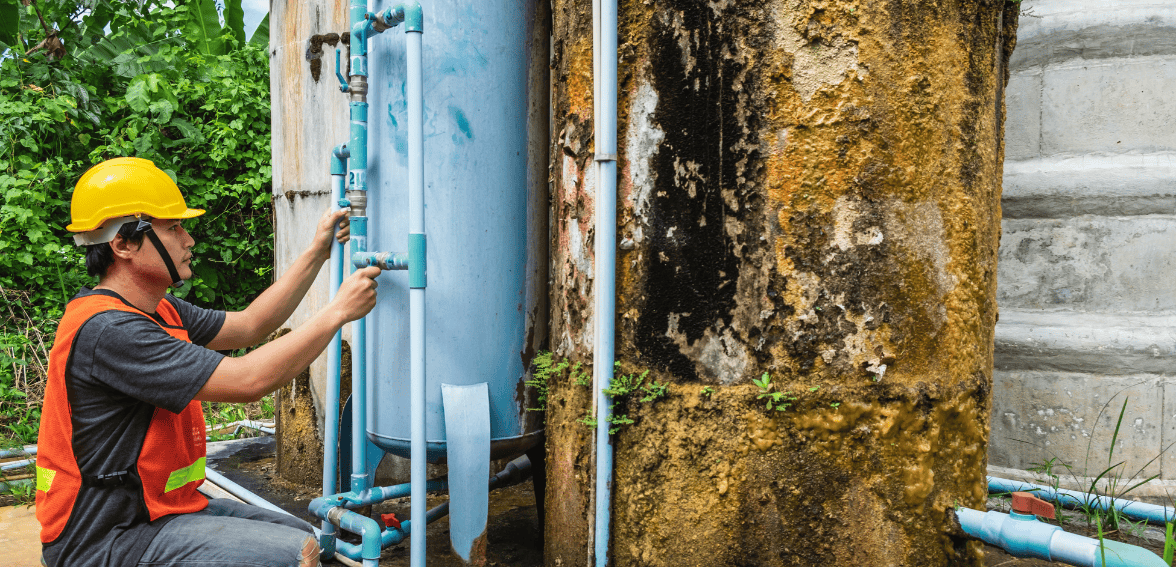
Repair or Replace the Water Heater Before the Next Lease?
Your lease is about to turn over. The water heater is nine years old and making a strange ticking noise. Do you patch it and hope it lasts one more year, or do you swap it out before a new tenant moves in? This single decision can shape your maintenance budget, your tenant’s first impression, and your bottom line for years.
This is the exact dilemma landlords have every single day. A rental’s water heater replacement may feel like a huge cost just prior to the turnover. However, the alternative may cost much more. This guide gives you the actual numbers, the indicators, and the optimal way to decide around your lease cycle.
Why This Decision Matters More Than a Simple Repair
A water heater failure is not just an inconvenience. It is a habitability issue. Most states require landlords to provide working hot water within a set number of days after a tenant reports the problem. Miss that window, and you could face rent withholding, repair-and-deduct claims, or a formal complaint.
Repairing or replacing at the time of a lease turnover puts you in control. Your schedule isn’t dictated by a middle-of-the-night emergency call. Your tenant is not displaced at the time of the repair or replacement. This is why many landlords plan the replacement of a water heater as a capital expense. It is better than a repair expense.
How Old Is the Unit? Lifespan Sets the Baseline
Age is the single biggest factor in this decision. A water heater’s expected lifespan tells you how much runway is left before failure becomes likely.
Tank Water Heaters
Tank-style units are usually what you will find most commonly in rental properties. Usually, tank units that are gas-powered will last from about 8 to 12 years until they need to be replaced. Electric-powered tank units typically last longer. Electric units can last about 10 to 15 years. This is because they have fewer moving parts and don’t expose their units to byproducts of combustion. Once a tank unit gets to about 10 years of age, the glass lining on the interior of the tank will become worn out. Once this happens, it is a lot easier for the tank to become rusty and for interior sediment to accumulate. For rental properties, it is a better option to just replace the tank.
Tankless Water Heaters
Tankless systems heat water on demand instead of storing it. That design puts less ongoing stress on internal parts, which is why tankless units often last 15 to 20 years, and sometimes longer with regular maintenance. If your property already has a tankless system under 10 years old, repair almost always makes more financial sense than replacement.
The 50 Percent Rule: When Repair Still Wins
Plumbers and property managers tend to rely on a very simple rule of thumb for repair versus replacement decisions. If the repair cost is less than 50% of the cost to replace, then a repair is indicated. If the repair estimate approaches 50%, then replacement is indicated.
Let’s look at a c example. Let’s say a tank-style water heater has a failed heating element or thermostat. The cost to repair that would be in the $200 to $400 range. A failing anode rod can even be more cost-effective to repair at $150 to $250. In both of these examples, the cost to repair is definitely under 50% of the cost to install a new water heater, so repair makes sense. If, however, the tank water heater starts leaking or is more than 10 years old, the cost to repair a water heater that is leaking would even be more than the cost to replace. At that point, you are just delaying the inevitable.
Warning Signs That Point Toward Replacement

A few signals tell you the repair window has closed. Rust-colored water is one of the clearest indicators, since it usually means the tank lining has failed and corrosion has reached the metal shell underneath. A puddle forming at the base of the unit signals a cracked tank, and a cracked tank cannot be repaired at any price. Inconsistent hot water, a pilot light that will not stay lit, or strange popping and rumbling sounds from sediment buildup are all signs that the unit is nearing the end of its service life. When several of these signs show up together on a unit older than 8 to 10 years, replacement almost always beats another repair call.
What Rental Water Heater Replacement Actually Costs in 2026
When comparing the cost of repair or replacement, accurate budget data is key. Replacing a conventional storage water heater in 2026, according to Angi, costs approximately $882 to $1,825, with the national average being $1,346. Replacing a water heater with a tankless system range from $1,400 to $3,900, as it requires upgraded gas lines, additional venting, and may require electrical circuit upgrades, as well as more scheduled work. These averages factor in labor and permit fees. Permit fees vary by municipality and cost on average $50 to $250.
Landlords replacing multiple water heaters in a rental unit need to pay close attention to these estimates. The cost of replacing a conventional storage water heater in a single-family rental unit is on the lower end of the estimate range. Replacing a water heater in a multi-unit dwelling, particularly if relocation or a tankless system is required, will cost on the higher end of the estimate range.
Emergency Replacement vs. Planned Replacement: The ROI Gap
This is where the Capex math gets interesting. An emergency water heater failure at 11 p.m. on a Saturday does not give you room to shop around. Weekend and after-hours service calls frequently carry a 50 to 100 percent labor markup in many metro markets. The technician on an emergency call also has to prioritize speed over efficiency, which often means installing whatever unit is on the truck rather than the most cost-effective long-term option for your property.
With a scheduled replacement, you can take advantage of a lease turnover. You can evaluate multiple offers, select the unit type for your ownership strategy, and have standard labor fees. You’re not forced to take a unit type from a supply that might not be compliant. Lease turnover vacancy periods are the best time for these improvements. There are no tenants to disrupt the work and no time constraint to avoid a habitability law issue.
Popular Water Heater Brands Landlords Trust
Brand reliability plays into the repair-or-replace decision too, since some manufacturers build units that hold up better over a long ownership horizon.
Rheem
Rheem is one of the most popular brands in the U.S. for both tank and tankless systems. Rheem claims that tankless systems that are properly maintained can last 25 to 30 years. This is well beyond the average for the industry. This is one of the reasons that landlords who are planning a long hold period choose Rheem tankless systems.
A.O. Smith
A.O. Smith is another major manufacturer known for durable tank-style units and a strong parts availability network, which keeps repair costs lower during the early-to-mid life of the unit. This matters for landlords who prefer to repair first and replace only when the numbers clearly justify it.
Rinnai
Rinnai specializes in tankless technology and is frequently recommended for rental properties converting from an aging tank system. The compact wall-mounted design also frees up closet or utility space, which can be a selling point during tenant turnover walkthroughs.
The Tax Angle: Why Replacement Timing Affects Your Capex Strategy
Deciding whether or not to replace a water heater should also involve a tax consideration. As it stands, the IRS allows an unreimbursed repair expense to be taken as a deduction when the restoration of the unit is completed. In contrast, full replacement is usually classified as a capital improvement, which means the cost is deducted over a number of years. Appliances and personal property in a rental unit usually have a much shorter recovery period than the structure itself.
The biggest change impacting 2026 and beyond involves bonus depreciation. Thanks to the One Big Beautiful Bill Act, bonus depreciation will be 100 percent permanent for property placed in service after January 19, 2025. This means that if a rental property owner replaces a water heater during a documented capital improvement, they could be allowed to fully expense the cost in the year it is placed in service, as opposed to many years of proration. Before making the decision to replace the water heater, refer to IRS Publication 527, and speak to a tax professional, as the distinction between repair and capital improvement greatly affects the timing of the deduction and the depreciation recapture liability.
Timing the Decision Around Lease Renewals
For most landlords, the best strategy will typically be to time the repair-or-replace decision with the break in the lease cycle. If the decision is made to keep an asset for another tenancy, an asset that is between 8 and 12 years old, and that is functioning, can save the landlord money if minor repairs (costing less than 50% of the replacement cost) are performed. In contrast, if an asset (e.g., a water heater) is already exhibiting rust and leaks (and is already inconsistent in its heating), the unit should be replaced while there are no tenants in the unit, as it will be much more costly to both replace and repair it at the time an emergency service is called (due to the tenant complaining about the faulty unit).
Conclusion
The repair-or-replace decision does not have to be a guessing game. Start with the age of the unit, then run the 50 percent rule against your repair estimate. Watch for the physical warning signs that signal the tank itself is failing. And whenever possible, make the call during a lease turnover instead of during an emergency, since planned rental water heater replacement almost always costs less and delivers better long-term value than a rushed, after-hours fix. Treating this as a scheduled capital expense, rather than a reactive repair bill, protects your cash flow, your tenant relationship, and your property’s long-term value.
Frequently Asked Questions
How do I know if my rental’s water heater needs repair or full replacement?
Check the age first. A tank unit under 8 years old with a minor issue, like a failed thermostat, is usually worth repairing. A unit past 10 years old, especially one showing rust-colored water or a leak at the base, is a strong candidate for replacement rather than another repair.
Is it cheaper to replace a water heater during a lease turnover instead of during the lease?
Yes, in most cases. Planned replacements during a vacancy avoid emergency labor markups, give you time to compare bids, and let you choose the right unit instead of whatever is available for a same-day emergency swap.
Can I deduct the full cost of a rental water heater replacement in one year?
Under current bonus depreciation rules, many landlords can deduct the full cost of a qualifying replacement in the year it is placed in service. Classification rules are detailed, so confirm the treatment with a tax professional before filing.
How long should a water heater last in a rental property?
Standard tank units typically last 8 to 12 years, while tankless systems often last 15 to 20 years or more with regular maintenance. Actual lifespan depends on water quality, usage levels, and how consistently the unit has been serviced.