How to Get More Calls From Google Business Profile
Phone calls are one of the strongest signs that a local customer is ready to take action. When someone taps the call button from Search or Maps, they are usually not casually browsing. They may need a quote, want to book an appointment, ask about availability, confirm hours, request emergency service, or compare one nearby provider against another.
That is why learning how to get more calls from Google Business Profile is so important for local businesses. Your profile is often the first place people see your business name, reviews, phone number, photos, services, hours, and location details. If your listing looks complete, trustworthy, and easy to act on, it can turn local search visibility into real conversations.
A strong profile does more than appear in search results. It helps people decide whether to call you instead of a competitor. Every detail matters, from your primary category and business description to your reviews, photos, services, appointment links, and phone response process.
This guide explains how to improve Google Business Profile conversions, increase calls from Google Maps, and build a stronger local search presence that leads to more local business phone calls.
Why Google Business Profile Calls Matter
Calls from Google Business Profile matter because they connect visibility with immediate customer intent. A website visit can be valuable, but a phone call often means the customer has a specific question or an urgent need. They may be ready to schedule, request pricing, confirm service availability, or speak with someone before making a decision.
For many local businesses, calls are also easier to convert than cold website traffic. A person who calls from Google Maps has already searched for a local solution, reviewed nearby options, and found your profile relevant enough to contact.
That makes Google Maps call leads especially valuable for service businesses, appointment-based businesses, emergency providers, contractors, clinics, consultants, repair companies, restaurants, and local retailers.
Google Business Profile calls also support multiple customer journeys. Some customers call because they need help right away. Others call because they want reassurance before booking. Some may be comparing reviews, photos, and business details before deciding who seems most reliable. In each case, your profile influences whether the phone rings.
Local map pack SEO plays a major role here. When your profile appears prominently in local search results, you gain more opportunities to earn calls. But visibility alone is not enough. A profile can receive views and still fail to generate calls if the details are incomplete, reviews look weak, photos are outdated, or the call button is not supported by strong trust signals.
To get more calls from Google Business Profile, think of your listing as a local conversion asset. It should answer the customer’s most important questions quickly:
- Are you relevant to what they searched for?
- Are you nearby or available in their area?
- Are you open when they need help?
- Do other customers trust you?
- Is it easy to call, book, or ask a question?
How Google Business Profile Call Optimization Works
Google Business Profile call optimization is the process of improving your profile so more searchers choose to call your business. It combines local SEO, trust-building, conversion strategy, and accurate business information. The goal is not only to rank higher but also to make your listing more persuasive when customers see it.
Google’s own guidance on improving local ranking emphasizes relevance, distance, and prominence, along with complete and accurate business information. You can review Google’s local ranking guidance through Google Business Profile Help.
For calls, those same principles matter, but they must be paired with conversion-focused details that help customers feel confident enough to tap the phone button.
Call optimization starts with the basics: your phone number, hours, categories, services, business description, and location details. If any of these are wrong or unclear, customers may hesitate. A wrong number can waste a lead completely. Outdated hours can cause missed calls. Weak categories can reduce relevance for the searches that matter most.
The next layer is trust. Reviews, photos, updates, services, FAQs, and response behavior all help people decide whether your business is active and reliable. A profile with fresh reviews, detailed service information, helpful photos, and consistent updates usually feels more dependable than one with minimal information.
The final layer is tracking and improvement. You need to know which calls are coming from your profile, when they happen, what customers ask, and how often your team converts them. Without tracking, you may know the phone rings, but you will not know which profile improvements actually increased business profile conversions.
| Optimization Area | Why It Matters | Action Step |
| Phone number | Customers need a direct, working way to reach you | Use the best answered number and test it regularly |
| Business hours | Callers want to know when you are available | Keep regular and special hours updated |
| Categories | Categories help match your profile to relevant searches | Choose the most accurate primary category and useful secondary categories |
| Services | Service details help customers confirm you offer what they need | Add complete service lists with helpful descriptions |
| Reviews | Reviews build trust before the call | Request honest reviews ethically and respond consistently |
| Photos | Photos help prove activity, quality, and legitimacy | Add current, relevant images regularly |
| Website pages | Local pages support relevance and conversions | Link to strong service or location pages where useful |
| Call tracking | Tracking shows what is working | Monitor call sources, missed calls, and conversion rates |
Accurate Phone Number and Business Details
Accurate business details are the foundation of getting more calls from Google Business Profile. If your name, address, phone number, hours, categories, website, or service area are inconsistent, customers may lose trust before they call.
Search systems also rely on business information to understand what your business is, where it operates, and when it should appear for local searches.
Your phone number should be direct, active, and answered by someone who can help. Avoid using a number that routes callers through a confusing phone tree unless that system is necessary and well managed. If people call with urgent needs, a delayed or confusing answer process can cost you leads even when your profile is ranking well.
NAP consistency matters across your website, directories, social profiles, and business listings. If your phone number appears differently in several places, customers may wonder which number is correct. For a deeper look at consistency issues, see this guide on NAP consistency.
Hours are just as important. Update holiday hours, temporary closures, seasonal schedules, and emergency availability. If your profile says you are open but no one answers, callers may move on quickly. If your profile says you are closed when you are actually available, you may miss high-intent calls.
Strong Primary and Secondary Categories
Categories are one of the most important relevance signals in Google Business Profile optimization. Your primary category tells Google and customers what your business mainly does. Secondary categories add context for related services. When categories are accurate, your profile has a better chance of appearing for searches that match real call intent.
Choose the category that most closely reflects your main revenue-driving service. Do not pick a broader category just because it seems to get more searches. A broad but inaccurate category can attract the wrong audience and reduce calls from people who are actually ready to buy.
The best category is the one that aligns with what customers search when they are most likely to call.
Secondary categories should support your real services, not inflate your profile. For example, a business that offers repairs, installation, and maintenance may need secondary categories that reflect those services if they are available and important. However, adding unrelated categories can create confusion and weaken trust.
Review competitor profiles in the local map pack to understand category patterns, but do not copy them blindly. Your category choices should reflect your actual business model. Strong categories help increase calls from Google Maps because they connect your listing to the right search intent.
Call-Focused Business Description
Your business description should help customers understand what you do, who you help, and why they should contact you. It should not read like a list of keywords. A natural, useful description can improve Google Business Profile conversions by giving potential callers enough confidence to take the next step.
Start with your core service or offering. Then mention the types of customers you serve, common needs you handle, and what makes your business reliable. Include service areas only where they are relevant and accurate. Keep the wording clear, specific, and helpful.
A call-focused description might highlight fast scheduling, experienced staff, emergency availability, estimates, consultations, appointment options, or specialized services. The goal is to answer the customer’s silent question: “Is this the right business to call?”
Use the focus keyword naturally if it fits your website content, but do not force it into the profile description repeatedly. Google Business Profile call optimization works best when the profile sounds trustworthy and customer-focused. A description that feels spammy can reduce confidence, even if it contains the right keywords.
Optimize Your Profile to Increase Calls From Google Maps
To increase calls from Google Maps, your profile needs to look active, complete, and useful. Customers often compare several profiles before calling. They may look at your reviews, photos, service details, distance, hours, website, and available actions. A profile with richer information gives customers fewer reasons to hesitate.
Start with photos. Add high-quality images that show your location, team, work, products, service vehicles, equipment, before-and-after examples, or customer experience. Photos help customers feel that your business is real and active.
For service businesses, photos can also show professionalism and results. For storefronts, they help customers recognize the location before visiting or calling.
Services and products are also important. Many profiles fail to generate calls because customers cannot confirm whether the business offers what they need. Add your main services with concise descriptions.
Mention service variations, appointment options, and common use cases where helpful. If your business sells products, add representative products that help searchers understand your offering.
Updates can support local search visibility and calls by showing that the business is active. Use updates for seasonal services, limited-time offers, new service announcements, appointment availability, events, or helpful reminders. These updates should be useful to customers, not just promotional filler.
FAQs can reduce friction before a call. Answer common questions about pricing ranges, scheduling, service areas, preparation, appointment length, emergency availability, parking, accessibility, or what customers should expect. When people get basic reassurance from your profile, they are more likely to call with serious intent.
Attributes, appointment links, and messaging options can also improve business profile conversions. Attributes help customers understand important features at a glance. Appointment links give ready-to-book customers a direct path.
Messaging can help people who are not ready to call, but it must be monitored closely. If messages go unanswered, they can create a poor experience.
Your website link should support the profile. Send visitors to a page that matches their intent, such as a service page, booking page, contact page, or location page.
If your business serves multiple areas, strong local landing pages can support both SEO and conversions. This guide on location-specific landing pages explains how local pages can help connect search intent with action.
Improve Reviews to Build Caller Trust
Customer reviews are one of the strongest trust signals on a Google Business Profile. Before calling, many searchers scan your star rating, review count, recent comments, owner responses, and review themes. They want to know whether other people had a good experience and whether your business seems reliable.
Review quantity matters because a larger review base can make your profile feel more established. However, quality matters just as much. A smaller number of detailed, believable reviews can be more persuasive than many vague reviews.
Reviews that mention specific services, staff helpfulness, response time, pricing clarity, professionalism, or successful outcomes can encourage more local business phone calls.
Recency is also important. If your last review is old, customers may wonder whether your business is still active or whether service quality has changed. A steady review request process helps keep your profile fresh.
Ask satisfied customers for honest feedback soon after the service, purchase, appointment, or visit. Make the process simple by sharing a review link or QR code.
Ethics matter. Do not offer incentives for positive reviews, write fake reviews, review your own business, or pressure customers to leave only favorable feedback. Review manipulation can damage trust and may create policy issues. Instead, build a review system based on real customer experiences.
Responding to reviews is another key part of Google Business Profile call optimization. Thank happy customers, mention relevant service details when natural, and address concerns professionally. A thoughtful response to a negative review can show future callers that your business listens and takes service seriously.
Negative reviews do not always ruin conversions. In some cases, a professional response can help rebuild trust. Customers know no business is perfect. What they look for is accountability, consistency, and a willingness to help. This is why reputation management should be treated as part of local SEO for more phone calls, not as a separate task.
For more guidance on handling feedback, review this resource on turning negative feedback into loyal customers.
Use Local SEO for More Phone Calls
Local SEO for more phone calls does not stop at your Google Business Profile. Your website, citations, local content, internal links, mobile experience, and structured data all support your ability to appear, persuade, and convert. A strong profile works better when the rest of your online presence confirms the same information and reinforces your expertise.
Start with local landing pages and service pages. Each important service should have a dedicated page that explains what you offer, who it helps, common problems, service process, trust signals, FAQs, and a clear call button. If you serve multiple locations or areas, build location pages only when each page can provide real value. Thin duplicate pages can hurt trust and performance.
Internal links help search engines and users understand your website structure. Link from your homepage to core services, from service pages to relevant location pages, from blog posts to booking or contact pages, and from local guides to related services. Helpful internal links can move visitors from research to action without making them search your site manually.
Local keyword research is also essential. Customers do not always use the same words businesses use internally. They may search by problem, service, urgency, nearby location, or specific need. A guide like Local Keywords 101 can help you align content with real search behavior.
Schema markup can support clarity for search engines. Local business schema, service schema, FAQ schema, and review-related markup may help search systems better understand your content when used correctly. Schema should reflect visible page content and should not be used to misrepresent your business.
Mobile speed matters because many GBP visitors are on mobile devices. If someone taps your website from your profile and the page loads slowly, they may leave before calling. Make call buttons easy to tap, keep forms short, and place your phone number prominently on service and location pages.
Helpful local content can also increase local search visibility. Publish content that answers real customer questions, explains service choices, compares options, addresses seasonal needs, or clarifies local concerns. The goal is not to publish content for search engines alone. The goal is to help local customers make decisions and contact you with confidence.
Track Calls and Improve Conversions
Tracking is where Google Business Profile call optimization becomes measurable. Without tracking, you may make profile updates and see more activity, but you will not know which changes led to better call volume or better-quality leads.
Tracking helps you understand not only how many people call, but also whether those calls turn into appointments, quotes, visits, or sales.
Start with Google Business Profile performance data. Review calls, profile interactions, direction requests, website clicks, and search terms where available. These insights can help you understand how customers are finding and interacting with your profile. Look for patterns. Are calls increasing after review growth? Do certain services drive more search visibility? Are calls stronger on certain days or during certain hours?
Call tracking can provide deeper insight, but it must be used carefully. If you use tracking numbers, make sure your primary business information remains consistent across your website and citations. Poor tracking setup can create NAP confusion. Many businesses use dynamic number insertion on websites while preserving the correct main number in important listings.
Call history and call logs can reveal missed opportunities. Missed calls are often hidden revenue leaks. A profile may be doing its job by generating calls, but the business may be losing leads because calls are unanswered, voicemail is unclear, or follow-up is slow. Track missed calls daily and create a process for quick callbacks.
Staff phone scripts can improve business profile conversions. This does not mean every call should sound robotic. It means your team should know how to greet callers, ask the right questions, confirm the service need, explain the next step, and request contact details. A confident phone process can turn more Google Maps call leads into real customers.
Measure call quality, not just call quantity. A spike in calls is not always good if the calls are irrelevant. Review whether callers are asking for services you actually offer, whether they are in your service area, and whether they match your ideal customer profile. If many calls are irrelevant, revisit categories, services, descriptions, and website content.
You should also track conversion outcomes. How many calls become appointments? How many appointments become customers? Which services have the best close rate? This information helps you improve your profile around the calls that matter most.
Common Mistakes That Reduce Google Business Profile Calls
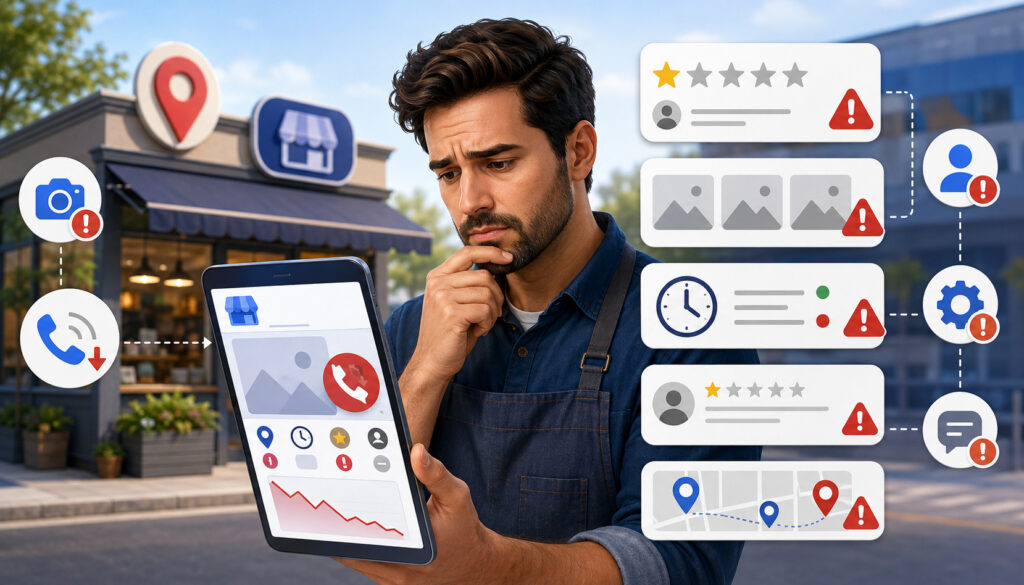
Many businesses struggle to get more calls from Google Business Profile because their listing creates avoidable friction. These issues may seem small, but they can reduce visibility, weaken trust, or stop customers from calling.
One of the most damaging mistakes is using the wrong phone number. This can happen after a number change, call tracking setup, office move, franchise update, or website redesign. If the number on your profile is wrong, disconnected, rarely answered, or routed to the wrong department, your local search visibility will not turn into revenue.
Outdated hours are another common problem. Customers rely on profile hours when deciding whether to call. If hours are inaccurate, you may miss calls or frustrate customers. Special hours should be updated whenever schedules change.
Weak category selection can also reduce relevant calls. If your primary category does not match your core service, your profile may appear for weaker searches or miss stronger ones. Secondary categories should be accurate and useful, not excessive.
Poor photos can hurt caller trust. A profile with no photos, outdated images, blurry uploads, or irrelevant stock-style visuals may feel less credible. Real, current photos help customers understand your business before they call.
Unanswered reviews are another missed opportunity. When customers see that a business never responds, they may assume the business is less attentive. Responding to reviews shows engagement and gives you a chance to reinforce service quality.
Keyword stuffing is a serious mistake. Adding keywords unnaturally to your business name, description, services, or posts can make your profile look untrustworthy and may violate guidelines. Use relevant terms naturally, but do not force them.
Incomplete services can also reduce calls. If customers cannot confirm that you offer what they need, they may call a competitor whose profile is more specific. Add services, descriptions, and FAQs that match real customer questions.
Other common mistakes include:
- Using a generic homepage link when a service page would convert better
- Ignoring mobile website speed
- Letting appointment links break
- Leaving old updates visible for too long
- Not training staff to handle calls from local search
- Failing to monitor competitors in the local map pack
- Not reviewing profile performance regularly
A guide on common Google Business Profile mistakes can help identify issues that may be limiting your local visibility and call volume.
How do I get more calls from Google Business Profile?
To get more calls from Google Business Profile, start by completing every important profile section. Use the correct phone number, accurate hours, strong categories, detailed services, helpful photos, and a customer-focused description.
Then improve reviews, respond consistently, publish useful updates, and link to pages that support calls or bookings. Track phone activity so you know which improvements are producing real leads.
Why is my Google Business Profile getting views but no calls?
Views without calls usually mean your profile is visible but not persuasive enough. Common causes include weak reviews, missing services, poor photos, unclear business details, outdated hours, low trust, or a website link that does not support conversion.
Compare your profile against the top local competitors and look for gaps in trust signals, service clarity, and call-focused information.
Does adding more reviews help increase calls from Google Maps?
Yes, reviews can help increase calls from Google Maps because they build trust before the customer contacts you. Review quality, quantity, recency, and owner responses all matter. Detailed reviews that mention specific services or positive experiences can make callers feel more confident. Always request reviews ethically and never offer incentives for positive ratings.
What phone number should I use on my Google Business Profile?
Use the phone number that is most likely to be answered by someone who can help the caller. For most businesses, this should be the main business line or a dedicated local line. If you use call tracking, set it up carefully so your business information remains consistent across important listings and your website.
Do photos help generate more local business phone calls?
Photos can help generate more local business phone calls because they make your profile feel more credible and active. Customers often use photos to judge professionalism, quality, location, atmosphere, team presence, and service results. Add current photos regularly and choose images that answer customer questions or build confidence.
Can local SEO improve Google Business Profile calls?
Yes, local SEO can improve Google Business Profile calls by strengthening your overall relevance, visibility, and trust. Service pages, location pages, internal links, local keywords, schema markup, citations, and mobile-friendly website design all support better local search performance. When your website and profile work together, customers have more reasons to call.
How often should I update my Google Business Profile?
Update your profile whenever business information changes and review it at least monthly. Add new photos, refresh services, publish timely updates, check links, respond to reviews, and confirm hours. Frequent useful updates show customers that your business is active and attentive.
What is the biggest mistake that reduces calls from Google Business Profile?
The biggest mistake is treating the profile like a static listing instead of a conversion tool. A profile with incomplete services, weak reviews, outdated hours, poor photos, and no tracking may still get views, but it will often lose calls. The best results come from combining Google Business Profile optimization with trust-building and call conversion tracking.
Conclusion
Getting more calls from Google Business Profile requires more than filling out a basic listing. You need a complete, accurate, trustworthy, and conversion-focused profile that helps local customers decide to contact you quickly.
Start with the essentials: correct phone number, accurate hours, strong categories, complete services, and a helpful business description. Then strengthen trust with current photos, customer reviews, review responses, FAQs, updates, and useful website links.
Support your profile with local SEO, location pages, service pages, internal links, mobile speed, and content that answers real customer questions.
Most importantly, track what happens after the call button is tapped. Monitor call volume, missed calls, call quality, staff response, and conversion outcomes. The goal is not only to increase calls from Google Maps but to turn those calls into appointments, bookings, visits, and customers.
When your profile, website, reviews, and phone process all work together, your local search visibility becomes more than exposure. It becomes a reliable source of high-intent local business phone calls.