How Reviews Impact Local Search Rankings
Online reviews can shape how customers discover, compare, and choose nearby businesses. For many local businesses, reviews are no longer just feedback after a sale. They are visible trust signals that appear directly in map results, local search results, business profiles, and decision-making moments.
Understanding how reviews impact local search rankings helps business owners and marketing teams manage reviews responsibly. Reviews can influence local search visibility by supporting reputation, prominence, relevance, engagement, and customer confidence. They may also affect how people interact with a listing after it appears in search results.
Reviews do not work alone. Local search rankings are influenced by many factors, including proximity, relevance, business information, profile completeness, website quality, citations, customer engagement, and business reputation.
Official local ranking guidance explains that local results are mainly based on relevance, distance, and prominence, and that businesses cannot request or pay for better local ranking.
That means reviews should be treated as one part of a complete local SEO strategy. The goal is not to chase shortcuts or manipulate customer feedback. The goal is to earn authentic local business reviews, respond professionally, learn from customer feedback, and build a trustworthy online presence that helps customers make confident decisions.
What Local Search Rankings Mean
Local search rankings refer to how businesses appear when someone searches for a nearby product, service, professional, store, restaurant, clinic, contractor, or service area provider. These results often appear in map results, local packs, business listings, mobile search results, and location-based organic results.
For example, a customer may search for a nearby plumber, dentist, bakery, auto repair shop, accountant, or beauty service. Search engines then try to show businesses that match the search intent, are close enough to the searcher or searched location, and appear credible enough to be useful.
Local search rankings are not only about adding local keywords to a website. A strong local SEO strategy usually includes:
- Accurate business name, address, and phone number information
- Correct business categories
- Complete Google Business Profile details
- Helpful website content
- Consistent citations across business listings
- Strong customer reviews
- Review responses
- Local links and mentions
- Useful photos, services, hours, and contact details
- Good customer experience signals
Reviews fit into this wider system because they help customers and search engines understand how people experience a business. They can show whether customers mention fast service, clean facilities, professional staff, fair pricing, reliable appointments, quality products, or specific services.
A business can have a well-built website and still struggle if its review profile is weak, outdated, or filled with unresolved complaints. At the same time, reviews alone cannot fix inaccurate business information, poor service pages, wrong categories, or weak location relevance.
Why Reviews Matter in Local SEO
Reviews matter because they help customers evaluate trust before taking action. Official local ranking guidance explains that local results are based mainly on relevance, distance, and prominence, and that review count and review score can be part of local ranking.
Businesses should use this as a reason to earn authentic reviews, not as a reason to manipulate feedback. For more context, see this official guidance on improving local ranking.
Online reviews local SEO efforts by adding real customer context to business listings. Reviews can show what a business is known for, how customers describe their experiences, and whether recent visitors or clients were satisfied.
This matters because local search is not only about visibility. It is also about whether customers trust the business enough to click, call, book, visit, or request directions.
Reviews can influence local search performance in two broad ways.
First, they may support review signals related to prominence, reputation, review quantity, review ratings, review quality, review freshness, and customer sentiment. Official guidance explains that prominence is one of the key local ranking concepts, and review count and score can factor into local search ranking.
Second, reviews can influence user behavior after a listing appears. A business with strong star ratings, helpful review snippets, recent feedback, and thoughtful review responses may earn more clicks, calls, website visits, messages, bookings, and direction requests than a similar business with a weaker review profile.
Customer reviews SEO value also comes from user-generated content. Customers often describe services, products, neighborhoods, staff, wait times, pricing expectations, and business strengths in natural wording. That language can help potential customers understand whether the business fits their needs.
However, review management must be ethical. Fake reviews, paid reviews, copied review text, review gating, or pressuring customers can damage trust and may violate review platform policies. Google’s user-generated content policy prohibits deliberately fake content, off-topic reviews, copied content, and other forms of misleading review activity.
How Reviews Impact Local Search Rankings
Reviews can affect local search rankings through several review signals, but they should never be viewed as a standalone ranking trick. A business with more reviews does not automatically outrank every competitor.
A perfect rating does not guarantee map pack rankings. A sudden burst of reviews does not replace strong relevance, accurate profile information, proximity, and website quality.
Still, reviews are important because they support local search visibility in practical ways. They help reinforce business reputation, customer trust, profile engagement, and local prominence. They may also help search engines and customers understand what services or experiences are connected to a business.
Important review-related factors include review quantity, review quality, review ratings, review freshness, review responses, review keywords, review sentiment, review diversity, and review consistency across platforms. These signals can affect how trustworthy and active a business appears.
For example, a business with recent, detailed, authentic reviews may look more active than a competitor whose most recent customer feedback is old.
A business that responds professionally to both positive reviews and negative reviews may appear more engaged than one that ignores customers. A business whose reviews naturally mention specific services may look more relevant for those services.
The impact is also behavioral. Customers often compare review count, rating, snippets, and response quality before choosing a listing. Better customer confidence can lead to stronger click-through behavior, more calls, more direction requests, and higher conversion rates.
Review Quantity
Review quantity refers to how many customer reviews a business has on a given platform or across multiple review platforms. A healthy number of reviews can show that a business has served many customers and has enough public feedback for people to evaluate.
More reviews alone do not guarantee better local search rankings. A large review count with poor ratings, repetitive language, unresolved complaints, or suspicious patterns may not help trust. However, steady review quantity can support local SEO reviews when it reflects real customer activity.
For small businesses, the goal should be consistent review growth, not a one-time review push. A restaurant, retailer, home service provider, healthcare practice, or professional firm can build credibility by encouraging customers to share honest feedback after real interactions.
Review quantity can also influence customer behavior. A listing with many authentic reviews may feel less risky than a listing with only a few ratings. Customers often want enough feedback to see patterns, not just isolated opinions.
Review Quality and Ratings
Review quality includes the depth, usefulness, authenticity, and tone of customer feedback. Review ratings refer to the star score customers leave with their reviews. Both matter because they affect how people judge the business before contacting it.
High review ratings can attract attention in local search results, but businesses should not chase perfect ratings at the expense of authenticity. A natural review profile often includes mostly positive feedback, some constructive comments, and thoughtful owner responses.
Detailed reviews are usually more useful than vague one-line ratings. A review that explains the service, staff behavior, wait time, product quality, scheduling experience, or final result gives future customers more context. This can help customer trust and conversion behavior.
Review quality also supports business reputation. If customers repeatedly mention reliability, professionalism, cleanliness, fast service, fair communication, or strong results, those themes become trust signals. If customers repeatedly mention delays, confusion, poor follow-up, or billing concerns, those themes can weaken confidence.
Review Freshness
Review freshness refers to how recent a business’s reviews are. Recent reviews can help customers understand whether the business is still active and whether the current customer experience is strong.
A business may have hundreds of older reviews, but customers often care about what happened recently. They want to know if hours are accurate, service quality is current, staff is responsive, pricing expectations are clear, and products or appointments are available.
Review freshness can be especially important for businesses where operations change often, such as restaurants, retail stores, clinics, salons, repair services, and appointment-based businesses. Fresh reviews help reduce uncertainty.
A steady review process is better than collecting reviews once and then stopping. Businesses should build review requests into normal customer follow-up. This keeps the review profile active without creating unnatural review spikes.
Review Keywords and Customer Language
Review keywords are words customers naturally use when describing a business. These may include service names, product types, local areas, staff qualities, problems solved, or customer experience details.
For example, customers may mention emergency repair, same-day appointment, friendly staff, clean office, family dinner, bridal styling, roof inspection, tax preparation, or curbside pickup. This customer language can help users and search systems understand what the business is associated with.
However, businesses should not manipulate review language. Do not tell customers exactly what keywords to use. Do not ask customers to include city names, service terms, or promotional phrases unnaturally. That can make reviews look forced and may violate platform expectations.
The safest approach is to ask for honest feedback about the customer’s real experience. Natural review keywords are more believable than scripted wording. They also help future customers understand the business in the language real customers use.
Review Responses
Review responses are owner or manager replies to customer feedback. They show that the business is paying attention, values customers, and takes its reputation seriously.
Thoughtful responses can support online reputation management by demonstrating professionalism. When a potential customer sees a business thanking happy customers and responding calmly to concerns, it can reduce uncertainty.
Review responses may not guarantee ranking improvements, but they can improve customer trust and engagement. A response can also clarify misunderstandings, invite offline resolution, and show that the business handles feedback responsibly.
Good responses are specific enough to feel human but careful enough to protect privacy. They should avoid arguments, personal details, blame, keyword stuffing, and defensive language.
Review Signals and Local SEO Table
The table below summarizes common review signals and how they may influence local SEO reviews, local search visibility, and customer trust.
| Review Signal | What It Means | How It May Affect Local SEO | Customer Impact | Best Practice |
| Review quantity | Number of reviews on a profile or platform | Can support prominence and trust when reviews are authentic | Helps customers feel there is enough feedback to compare | Build steady, ethical review requests |
| Average rating | Overall star score | Can influence trust and click behavior | Helps customers quickly compare options | Improve service quality instead of chasing perfect scores |
| Review freshness | How recent reviews are | Shows current business activity and customer experience | Helps customers judge recent reliability | Request reviews consistently after real interactions |
| Review responses | Replies from the business | Shows engagement and reputation management | Helps customers see professionalism | Respond calmly, personally, and promptly |
| Review keywords | Natural words customers use | Can reinforce relevance when customers mention real services | Helps users understand offerings | Ask for honest feedback, not scripted wording |
| Review diversity | Reviews across relevant platforms | Supports broader reputation visibility | Lets customers research in multiple places | Maintain profiles where customers actually look |
| Review sentiment | Positive, neutral, or negative themes | Can influence trust and conversion behavior | Shows patterns in customer experience | Track recurring praise and complaints |
| Review consistency | Similar reputation across listings | Reinforces confidence and credibility | Reduces confusion during comparison | Keep business listings accurate and monitored |
Reviews should be evaluated as a pattern, not as isolated data points. A single review rarely tells the whole story. Review quantity, quality, freshness, sentiment, and responses work together to shape the overall review profile.
Reviews, Relevance, Proximity, and Prominence
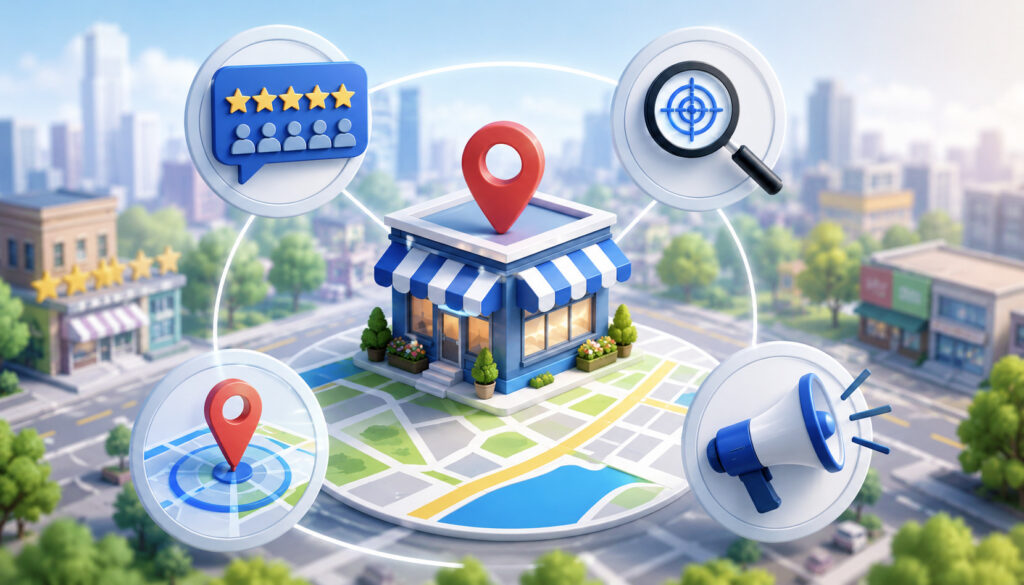
Local search rankings are often discussed through three major concepts: relevance, proximity, and prominence. Reviews connect most strongly with prominence, but they can also support relevance through customer language and service details.
Relevance is about how well a business matches what the searcher wants. Proximity is about how close the business is to the searcher or searched location. Prominence is about how well-known, trusted, and established the business appears.
Reviews do not change every part of local search. They do not move a storefront closer to the searcher. They do not replace correct categories. They do not fix an incomplete profile. But they can help confirm that a business is active, trusted, and known for certain services or experiences.
Relevance
Reviews can support relevance when customers naturally mention services, products, neighborhoods, business qualities, or real experiences. For example, if many customers mention dental cleanings, roof repairs, brunch, bridal makeup, oil changes, or tax filing, that language helps describe what the business actually does.
This does not mean businesses should script reviews. Relevance is strongest when review keywords come from genuine customer experiences. Authentic customer wording helps potential customers see whether the business matches their needs.
Reviews also work better when they align with business categories, services, website pages, and profile information. If reviews mention services that are not listed anywhere else, the business may be missing an opportunity to make its profile and website clearer.
For more context on category relevance, this guide on Google Business Profile categories can support a broader local SEO strategy.
Proximity
Proximity refers to the distance between the business and the searcher or searched location. Reviews do not change where a business is located. A strong review profile cannot make a business physically closer to every potential customer.
However, reviews can help a nearby business look more credible when it already appears in local search results. If two nearby businesses are relevant to a search, customers may use reviews to decide which one deserves attention.
This is especially important in dense local markets. Restaurants, salons, clinics, repair shops, retailers, and professional offices may compete with many nearby options. A stronger review profile can help a business stand out when proximity is similar.
For service area businesses, proximity can work differently because customers may search within a covered area rather than visit a storefront. Reviews can help show that the business serves customers reliably across its stated service area.
Prominence
Prominence is where reviews often have the clearest connection to local search performance. Prominence reflects how well-known, reputable, and trusted a business appears across the web.
Reviews can contribute to prominence through review count, rating score, review quality, freshness, sentiment, and customer engagement. A business with many authentic reviews and thoughtful responses may appear more established than one with little public feedback.
Prominence is broader than reviews. It may also involve citations, links, mentions, website authority, local content, brand recognition, and profile completeness. A complete local SEO strategy should strengthen all of these areas.
For businesses building broader authority, local link building strategies can complement review management by improving local trust and visibility beyond review platforms.
Google Business Profile Reviews and Local Visibility
Google Business Profile reviews are especially important because they appear directly in map results, local packs, profile panels, and search experiences where customers are ready to act. These reviews can influence how customers compare businesses before clicking, calling, booking, or asking for directions.
A complete profile should include accurate categories, hours, services, photos, contact options, business details, and review activity. Reviews are not a replacement for profile optimization. They work best when the profile is accurate, useful, and aligned with real customer expectations.
Google Business Profile reviews can affect local search visibility by supporting prominence and customer engagement. Official guidance states that local results use relevance, distance, and prominence, and that review count and score can factor into local ranking.
Still, businesses should avoid ranking guarantees. A strong review profile can help, but rankings may also depend on search location, competition, categories, website relevance, profile quality, and other local ranking factors.
For businesses trying to turn profile views into actions, this guide on getting more calls from a business profile can support the conversion side of local visibility.
Review Stars in Local Results
Review stars are often one of the first things customers notice. A visible star rating can help users quickly compare businesses in local search results and map pack rankings.
Stars can influence whether someone clicks a listing, calls directly, requests directions, or keeps comparing. A strong rating with enough review quantity may reduce risk in the customer’s mind. A weak rating or low review count may raise hesitation.
However, stars are not the entire story. Customers may read recent reviews, compare review snippets, look at photos, check hours, and evaluate responses before deciding. A business with a slightly lower rating but thoughtful responses and detailed positive reviews may still earn trust.
Businesses should focus on improving the customer experience that creates better ratings naturally.
Review Snippets
Review snippets are short pieces of review content that may appear in search or profile views. They can highlight customer language about services, products, staff, atmosphere, speed, cleanliness, or reliability.
Snippets matter because they make customer feedback visible before someone opens the full review section. A snippet mentioning helpful staff, fast repairs, great food, easy scheduling, or professional service can help build confidence.
Review snippets can also reinforce relevance. If customer reviews naturally mention the same services the business wants to be found for, users may feel the listing matches their search intent.
Businesses should not try to force snippet language. The better approach is to deliver clear, memorable experiences that customers describe naturally.
Profile Engagement
Reviews can encourage more profile engagement. When customers see strong ratings, recent feedback, and professional responses, they may be more likely to call, visit the website, send a message, book an appointment, or request directions.
Profile engagement is valuable because local SEO is not only about appearing in search results. It is about turning visibility into meaningful customer action.
A complete profile supports this process. Accurate hours, service details, photos, booking options, and contact information reduce friction. Reviews then add trust on top of that foundation.
Businesses should monitor engagement trends alongside review trends. If reviews improve but calls or clicks do not, the profile may need clearer service information, better photos, stronger calls to action, or more accurate business details.
Online Reviews and Customer Trust

Online reviews influence customer behavior beyond rankings. They act as social proof, showing how other people experienced the business before a new customer takes a risk.
Customer trust is especially important in local decisions. People may be choosing someone to enter their home, handle their health needs, repair a vehicle, prepare taxes, provide legal support, care for a pet, host a family meal, or deliver a service on a deadline.
Reviews help reduce uncertainty. They show whether customers felt respected, whether the service was reliable, whether products matched expectations, and whether problems were handled fairly.
A strong review profile can also support conversion rate. Customers who trust a business before reaching the website may be more likely to complete a form, schedule an appointment, request a quote, or visit the location.
Positive Reviews
Positive reviews can reinforce customer confidence. They help potential customers understand what a business does well.
Common positive review themes include:
- Friendly staff
- Fast service
- Clean environment
- Clear communication
- Fair pricing
- Reliable appointments
- Quality work
- Helpful recommendations
- Good product selection
- Professional follow-up
Positive reviews can also highlight differentiators that the business may not communicate clearly on its website. For example, customers may repeatedly mention patience with first-time buyers, careful cleanup after repairs, or helpful explanations during appointments.
These details can become valuable customer feedback. Businesses can use them to improve website copy, staff training, service descriptions, and customer experience standards.
Negative Reviews
Negative reviews can affect trust, but they do not always ruin a business’s reputation. Many customers understand that occasional negative feedback is normal.
What matters is the pattern and the response. A business that receives repeated complaints about the same issue should investigate the cause. A business that responds defensively may create more concern. A business that responds calmly and offers resolution can show accountability.
Negative reviews can also reveal important operational problems. Delays, billing confusion, poor communication, missed appointments, cleanliness concerns, or inconsistent service may show up in reviews before they appear in formal reports.
The best businesses use negative reviews as improvement signals, not just reputation problems.
Balanced Review Profiles
A balanced review profile usually looks more realistic than a thin profile with only perfect ratings. Customers often trust businesses that have many mostly positive reviews, some detailed constructive feedback, and professional responses.
A perfect rating with very few reviews may not provide enough evidence. A profile filled with vague praise may also feel less useful than one with detailed customer stories.
Balance does not mean businesses should seek negative reviews. It means they should allow honest feedback and respond responsibly. A realistic review profile can build stronger long-term trust than an overly polished one.
How Review Responses Affect Local SEO and Reputation
Review responses are a visible part of review management. They show customers that the business listens, appreciates feedback, and handles concerns professionally.
Responding to reviews may not guarantee higher local pack rankings, but it can support trust, engagement, and online reputation management. A potential customer reading reviews often notices whether the business responds at all. Silence can make a business look disengaged, while thoughtful responses can make it look attentive.
Good review responses should be timely, specific, respectful, and policy-safe. They should avoid personal information, private service details, medical details, financial details, blame, arguments, or repeated keyword stuffing.
Responses are also a customer service channel. They can thank happy customers, invite dissatisfied customers to continue the conversation offline, and show future readers how the business handles praise and criticism.
Responding to Positive Reviews
Positive review responses should thank the customer and acknowledge the experience without sounding robotic. A good response can reinforce customer care, but it should not become an advertisement.
For example, a business can thank the customer for visiting, mention that the team appreciates the feedback, and express that it looks forward to helping again. The response should feel natural and personal.
Avoid repeating the same phrase on every review. Customers can notice copied responses. Search engines and platforms may also treat repetitive content as low quality.
Positive reviews are also an opportunity to learn. If customers repeatedly praise one employee behavior, service feature, or product category, that insight can inform staff training and marketing messaging.
Responding to Negative Reviews
Negative review responses require care. The business should stay calm, acknowledge the concern, and avoid arguing publicly.
A strong response usually includes:
- A brief thank-you for the feedback
- A calm acknowledgment of the concern
- No private customer details
- No defensive accusations
- An invitation to continue the conversation directly
- A professional tone for future readers
Businesses should not admit fault for issues they have not reviewed, but they can still show concern and willingness to investigate. The response should be written for both the reviewer and future customers.
When a review appears fake, off-topic, or policy-violating, businesses can use platform reporting options. They should still avoid public arguments.
Avoiding Over-Optimized Responses
Over-optimized review responses can look unnatural. Businesses should not stuff city names, service keywords, or promotional phrases into every reply.
A response like “Thank you for choosing our best emergency plumbing repair service in downtown neighborhoods for water heater repair and drain cleaning” sounds forced. It may reduce trust because it looks written for search engines instead of customers.
Natural responses are better. Mention the customer’s experience only when appropriate, and keep the wording conversational, respectful, and accurate.
Review Freshness and Review Velocity
Review freshness and review velocity are related but different. Review freshness refers to how recent reviews are. Review velocity refers to the pace at which new reviews arrive.
Both can shape trust. Recent reviews show current customer experiences. Steady review velocity shows ongoing activity. Sudden unnatural review spikes may look suspicious, especially if the reviews are vague, repetitive, or from questionable accounts.
Businesses should aim for consistent, authentic review growth. That means asking customers at appropriate moments and making the process easy, without incentives or pressure.
Review freshness can be especially useful for customers evaluating current service quality. They may want to know whether the business still has good communication, current inventory, reasonable wait times, clean facilities, or reliable scheduling.
Why Recent Reviews Matter
Recent reviews help customers evaluate the business as it operates now. This matters because businesses change. Staff changes, hours change, menus change, inventory changes, service areas change, and appointment availability changes.
A review from long ago may still be useful, but it may not reflect the current customer experience. A recent review can show whether customers are still satisfied.
Recent reviews can also reduce hesitation. If a customer sees several current reviews mentioning reliable service, friendly staff, or clean facilities, they may feel more confident contacting the business.
Businesses should monitor whether recent reviews match the customer experience they want to deliver. If recent sentiment declines, it may indicate an operational issue.
Why Steady Review Growth Matters
Steady review growth is more natural than irregular spikes. A business that earns a few reviews consistently over time may appear more authentic than one that receives a large burst and then no reviews for a long period.
Review spikes can happen naturally after busy seasons, events, or promotions, but businesses should avoid artificial bursts. Fake or incentivized review campaigns can damage trust and may violate policies.
A steady process is easier to manage. Staff can ask after completed services, follow-up messages can be automated responsibly, and managers can track feedback trends.
Review Diversity Across Platforms
Review diversity means having customer feedback across multiple relevant review platforms, not only one profile. Different industries and customer groups may use different sources when researching local businesses.
A restaurant customer may check map results, delivery platforms, and social pages. A healthcare customer may check appointment platforms or professional directories. A contractor customer may review local directories, project photos, and business listings. A professional service client may look for testimonials, directory ratings, and detailed website proof.
Review diversity can support local search visibility and customer confidence because it shows reputation across the broader web. However, the right platforms depend on the business type. A business does not need to chase every review site. It should focus on the places customers actually use.
Industry-Specific Review Sites
Industry-specific review platforms can matter when customers rely on specialized information. Some industries have directories, booking platforms, or professional listings that customers trust during research.
For example, appointment-based businesses may receive reviews on scheduling platforms. Home service businesses may receive feedback on project-based directories. Hospitality and food businesses may collect reviews across travel, booking, or delivery-related platforms.
The best approach is to identify where customers naturally compare businesses. A review profile is most useful when it appears where decision-making happens.
Businesses should keep information accurate across these platforms. Inconsistent hours, addresses, phone numbers, or service descriptions can weaken trust.
Local Directories and Listings
Local directories and business listings can support discovery, citation consistency, and reputation visibility. Reviews on relevant directories may help customers compare businesses beyond map results.
NAP consistency is important. NAP stands for name, address, and phone number. If listings show different phone numbers, old addresses, outdated hours, or inconsistent business names, customers may become confused.
Accurate citations also support local SEO strategy by reinforcing business identity across the web. For deeper context, see this guide on citation building for local SEO.
Review Management Best Practices
Review management is the process of earning, monitoring, responding to, and learning from customer reviews. It supports both local SEO and customer experience.
Good review management starts with ethical review requests. Businesses should ask real customers for honest feedback after real interactions. They should never buy reviews, pressure customers, write reviews on behalf of customers, or filter review requests only toward happy customers.
A review management process should include staff training, response guidelines, review monitoring, sentiment tracking, and feedback loops. Reviews should not sit in isolation. They should help improve operations.
For example, if reviews show repeated confusion about appointment times, the business may need better confirmation messages. If customers praise one service repeatedly, the business may highlight that service more clearly on its website. If customers complain about slow responses, the team may need updated communication standards.
Ask Customers at the Right Moment
Timing matters. The best moment to ask for a review is usually after the customer has completed a positive, real experience.
Good moments may include:
- After a completed service
- After a successful purchase
- After a resolved support issue
- After a follow-up conversation
- After a customer expresses satisfaction
- After an appointment or visit
- After delivery or project completion
Businesses should avoid asking too early. A customer who has not experienced the service fully may leave incomplete feedback. They should also avoid pressuring customers during stressful moments.
A good request is simple, respectful, and optional.
Make Reviews Easy to Leave
Customers are more likely to leave reviews when the process is easy. Direct review links, receipt links, follow-up emails, QR codes, and short instructions can reduce friction.
The request should not tell customers what rating to leave. It should not offer payment, discounts, gifts, or special treatment in exchange for reviews. It should invite honest customer feedback.
For in-person businesses, QR codes can be useful when placed on receipts, checkout counters, appointment cards, or follow-up materials. For service area businesses, post-service messages may be more practical.
Train Staff on Review Requests
Staff should understand when and how to ask for reviews. They should also understand what not to do.
Training should cover:
- Asking only after real customer interactions
- Keeping requests optional
- Avoiding incentives
- Avoiding scripted review wording
- Not asking employees or family members to review
- Not filtering customers based on expected rating
- Respecting customer privacy
- Escalating negative feedback internally
Employees should feel comfortable asking naturally. A simple request after a positive interaction can be effective: “We appreciate your feedback. If you would like to share your experience online, it helps other customers learn what to expect.”
Review Request Methods Table
| Request Method | Best Use Case | Customer Experience | Risk to Avoid | Best Practice |
| Purchases, appointments, professional services | Easy to read later | Long or promotional messages | Keep it short with a direct review link | |
| SMS | Service visits, bookings, quick follow-ups | Convenient on mobile | Too many messages | Use only with appropriate consent and timing |
| Receipt link | Retail, restaurants, in-person purchases | Simple and passive | Hard-to-find links | Add a short, clear review prompt |
| QR code | Storefronts, counters, events, appointment cards | Fast scan from phone | Pressuring customers in person | Make it optional and visible |
| In-person request | Positive face-to-face interactions | Personal and natural | Asking before service is complete | Ask after satisfaction is confirmed |
| Follow-up call | High-touch services | Helpful for relationship-based businesses | Turning the call into pressure | Invite feedback respectfully |
| Booking reminder | Appointment-based businesses | Useful after visit completion | Asking before the appointment happens | Send only after the service is completed |
| Post-service message | Home services, contractors, repairs | Timely and relevant | Asking during unresolved issues | Send after work is complete and confirmed |
Review requests should be consistent, ethical, and easy to understand. The best methods are the ones that fit the customer journey naturally.
What Businesses Should Avoid With Reviews
Businesses should avoid fake reviews, paid reviews, copied review text, employee reviews, and misleading review requests. Review platforms have policies designed to keep customer feedback authentic and useful.
Businesses can review official guidance on prohibited and restricted review content to better understand what types of review activity may create risk.
Review mistakes can damage customer trust, violate platform policies, and weaken long-term reputation. Businesses should avoid shortcuts that make reviews look manipulated.
Risky practices include fake reviews, paid reviews, employee reviews, review gating, asking only happy customers, copying review text, pressuring customers, using keyword-stuffed request templates, and ignoring platform review policies.
Regulatory guidance warns that reviews should reflect honest opinions from people who actually used the product or service, and that deceptive review practices harm customers and honest businesses.
Fake or Incentivized Reviews
Fake or incentivized reviews can damage customer trust and may create compliance concerns. Public consumer protection guidance explains that reviews should reflect honest opinions from people who actually used the product or service.
Businesses can review this educational guide on soliciting and paying for online reviews to better understand why review transparency matters.
Incentivized reviews can also create problems when customers receive payment, discounts, gifts, or special benefits in exchange for feedback. Even when intentions are good, incentives can influence honesty.
Fake engagement may violate review platform policies. It can also create reputational risk if customers notice suspicious patterns. Trust is difficult to rebuild after a business appears to manipulate reviews.
The safest rule is simple: reviews should come from real customers describing real experiences without pressure or improper rewards.
Review Gating
Review gating happens when a business filters customers before asking for a public review. For example, it may ask customers whether they had a good experience, then only send review links to happy customers.
This can create an artificially positive review profile. It may also violate platform expectations because it prevents a full range of honest customer feedback from appearing.
Businesses can still collect private feedback, but they should be careful not to use it to block unhappy customers from reviewing publicly. A better approach is to invite all real customers to share honest feedback while also resolving problems through customer service channels.
Keyword Manipulation
Keyword manipulation happens when businesses tell customers exactly what words to use in reviews. This can include asking customers to mention specific services, neighborhoods, city names, or promotional phrases.
This practice can make reviews look unnatural. Customers should be free to describe their own experience in their own words.
Businesses can ask open-ended questions instead. For example, they can ask customers to share what service they received and how the experience went. This encourages useful detail without scripting the review.
How Negative Reviews Impact Local Search and Trust
Negative reviews can affect customer perception, click-through behavior, conversion rate, and business reputation. They may cause potential customers to hesitate, compare more competitors, or avoid contacting the business.
Occasional negative reviews are normal. A business with many customers will not satisfy everyone perfectly. The bigger concern is repeated unresolved issues. If customers keep complaining about the same problem, the review profile can become a warning sign.
Negative reviews can also affect local SEO indirectly. If poor ratings reduce clicks, calls, bookings, or direction requests, the business may lose valuable customer engagement. Even when rankings do not change immediately, conversions can suffer.
The best response is not to hide from negative feedback. Businesses should monitor patterns, respond professionally, and fix recurring issues.
Reading Patterns in Negative Reviews
A single negative review may reflect one unusual experience. Repeated complaints usually deserve closer attention.
Common negative review patterns include:
- Long wait times
- Poor communication
- Missed appointments
- Billing confusion
- Cleanliness concerns
- Staff rudeness
- Product quality issues
- Delayed delivery
- Incomplete work
- Difficult returns
- Unclear pricing
When several customers mention the same issue, the business should treat it as operational feedback. The problem may be a process issue, not just a review issue.
Tracking themes over time helps businesses separate isolated complaints from recurring problems.
Turning Feedback Into Improvements
Negative feedback can become useful when businesses act on it. Reviews can reveal where customer expectations and business operations are misaligned.
For example, if customers complain about unclear pricing, the business can improve estimates, invoices, and website explanations. If customers mention slow responses, the team can update communication workflows. If customers mention inconsistent staff behavior, training may need attention.
Improving the actual customer experience is the strongest long-term review strategy. Better operations lead to better reviews, better trust, and better conversion behavior.
How Reviews Affect Clicks, Calls, and Conversions
Reviews can influence what customers do after a business appears in search results. This is where local SEO reviews connect directly to business outcomes.
A listing with strong star ratings, current reviews, helpful snippets, good photos, complete profile details, and professional responses may attract more clicks and calls than a listing with weak or outdated feedback.
Customers often compare review count, rating, location, hours, photos, and services within seconds. Reviews can provide the trust needed to move from browsing to action.
Click-Through Rate
Click-through rate refers to how often people click a listing after seeing it. Review stars and snippets can influence this behavior.
A strong review profile can make a listing look safer and more relevant. A weak rating or lack of reviews may lead users to scroll past the listing, even if the business appears nearby.
Click-through behavior is also affected by title, category, photos, hours, and profile completeness. Reviews work best when the entire listing looks useful and trustworthy.
Calls and Direction Requests
For local businesses, calls and direction requests are often more valuable than website visits alone. A customer searching from a phone may call directly from a map result or request directions without visiting the website.
Trustworthy reviews can influence these actions. If customers see recent praise about service, availability, professionalism, or product quality, they may feel more comfortable contacting the business.
For brick-and-mortar businesses, direction requests may increase when reviews reduce uncertainty about the in-person experience. For service area businesses, calls may increase when reviews show reliability and fast response.
Website Conversions
Reviews can affect what users do after they reach the website. A customer may arrive already trusting the business because of strong local business reviews.
Website pages should reinforce that trust. Clear services, accurate contact details, helpful FAQs, simple booking options, and visible reputation signals can help visitors convert.
Businesses can also use review themes to improve website content. If customers repeatedly praise fast scheduling, transparent estimates, or friendly staff, those strengths can be explained on relevant service pages.
Reviews for Different Local Business Types
Review impact varies by industry because customers evaluate risk differently. A quick retail purchase does not require the same level of trust as a medical appointment, legal consultation, home repair, or major renovation.
Local SEO strategy should reflect the customer decision process. Some customers care most about speed. Others care about expertise, cleanliness, pricing transparency, staff professionalism, appointment availability, or long-term reliability.
Restaurants and Food Businesses
Restaurant reviews often influence decisions quickly. Customers may compare food quality, service, wait times, cleanliness, atmosphere, delivery experience, parking, menu options, and value.
Recent reviews are especially important because menus, staff, hours, and service quality can change. Photos and review snippets can also affect trust.
Restaurants should monitor recurring themes such as slow service, cold food, reservation issues, delivery problems, or cleanliness. Positive themes can highlight signature dishes, friendly service, or a strong dining experience.
Retail Stores
Retail reviews often focus on product selection, pricing, customer service, returns, inventory, store layout, and staff helpfulness.
For local search visibility, retail businesses should keep profile information accurate, especially hours, location, product availability, and contact details. Reviews can help customers decide whether a store is worth visiting.
If customers repeatedly mention helpful staff or hard-to-find products, those themes can become strong trust signals. If reviews mention stock issues or poor returns, the business should investigate.
Home Service Businesses
Home service reviews are trust-heavy because customers often invite providers into their homes or rely on them during stressful situations.
Customers may evaluate punctuality, professionalism, communication, pricing clarity, cleanup, emergency response, and quality of work. Negative reviews about missed appointments or surprise charges can hurt trust quickly.
Home service businesses should ask for reviews after completed work and follow up on concerns quickly. Detailed reviews with real service context can strongly influence calls and quote requests.
Healthcare and Appointment-Based Businesses
Healthcare and appointment-based businesses rely heavily on trust, communication, scheduling expectations, professionalism, and patient or client experience.
Reviews may mention wait times, front desk communication, appointment availability, provider attentiveness, billing clarity, and facility cleanliness. Businesses in sensitive fields should be especially careful with privacy in review responses.
Responses should avoid confirming private details. A professional, general response can acknowledge feedback without discussing the person’s visit.
Professional Services
Professional service reviews help customers compare expertise, responsiveness, clarity, reliability, and long-term trust.
Customers looking for advisors, consultants, accountants, attorneys, designers, or other professionals often want confidence before making contact. Reviews can show whether the professional explains things clearly, follows through, and provides dependable service.
Detailed reviews can be especially valuable because professional services are often intangible. Customer stories help make the service easier to evaluate.
Local Contractors
Contractor reviews often focus on project quality, timelines, communication, pricing transparency, cleanup, and whether the finished work matched expectations.
Contractor decisions can involve higher cost and higher risk, so customers may read reviews carefully. Photos, project descriptions, and review responses can all affect trust.
Contractors should watch for repeated concerns about delays, unclear estimates, subcontractor communication, or cleanup. These issues can affect both reputation and conversions.
Beauty and Wellness Businesses
Beauty and wellness reviews often influence bookings through comments about staff skill, cleanliness, atmosphere, results, comfort, and customer care.
Customers may look for reviews mentioning specific services, such as hair color, skin treatments, massage, nail services, or fitness classes. Natural review keywords can help users understand which services the business is known for.
Recent reviews matter because staff, products, and booking availability can change. Businesses should encourage honest feedback after completed appointments.
Multi-Location Businesses
Multi-location SEO requires location-level review management. Customers usually evaluate the branch nearest to them, not the overall brand.
Each location should have accurate business information, correct categories, unique photos, local review monitoring, and location-specific responses. A strong review profile for one branch does not automatically fix weak reviews at another.
Managers should compare review trends by location. If one branch has repeated complaints while another earns praise, the business can identify training and process gaps.
Local SEO Review Checklist
| Checklist Item | Why It Matters | Recommended Action |
| Claim and optimize the business profile | Gives control over key local information | Complete categories, hours, services, photos, and contact details |
| Verify NAP consistency | Reduces customer confusion | Keep name, address, and phone number consistent across listings |
| Request reviews ethically | Builds authentic review quantity | Ask real customers after real experiences |
| Respond to reviews | Shows engagement and professionalism | Reply to positive and negative feedback consistently |
| Monitor review freshness | Shows current customer activity | Track when the latest reviews were posted |
| Track rating trends | Reveals reputation movement | Watch average rating changes over time |
| Review sentiment | Shows deeper customer themes | Categorize praise and complaints |
| Document customer feedback | Turns reviews into operations insight | Share themes with managers and staff |
| Avoid fake reviews | Protects trust and policy compliance | Never buy, script, or fabricate reviews |
| Improve service issues | Builds long-term reputation | Fix recurring complaints |
| Compare competitor reviews | Provides market context | Review direct local competitors by category and area |
This checklist can be used during monthly local SEO reviews. It connects review management with profile optimization, business listings, and customer experience.
How to Measure Review Impact on Local SEO
Measuring review impact requires more than watching star ratings. Businesses should track review growth, profile engagement, local ranking movement, calls, website clicks, direction requests, bookings, conversion rate, and review sentiment.
No single metric tells the full story. A business may improve review count but still struggle if profile information is wrong. A business may improve ratings but lose visibility due to stronger competitors. A business may rank well but fail to convert because reviews reveal unresolved concerns.
Measurement should focus on trends. Are reviews becoming more frequent? Are ratings stable or improving? Are customers mentioning the services the business wants to grow? Are profile actions increasing? Are negative themes declining?
Track Review Growth
Review growth includes review count, review frequency, rating trends, and distribution across platforms. Businesses should monitor these numbers over time.
A healthy review profile usually grows steadily. If review growth stops, the business may need to improve its request process. If ratings drop, managers should review recent customer feedback closely.
Review growth should be compared with customer volume. A busy restaurant may receive reviews more often than a specialized professional firm. Benchmarks should be realistic for the industry.
Track Profile Engagement
Profile engagement includes calls, website clicks, messages, bookings, direction requests, and other actions customers take from business listings.
If review quality improves and engagement rises, reviews may be supporting stronger customer confidence. If reviews improve but engagement does not, the business may need better photos, clearer services, accurate hours, or stronger website pages.
For local SEO, engagement metrics help connect visibility with business outcomes. Rankings are useful, but actions matter more.
Track Review Sentiment
Review sentiment reveals what customers actually think. Star ratings are useful, but themes are often more actionable.
A business should track repeated praise and repeated complaints. For example, customers may praise friendly staff but complain about slow scheduling. That insight tells the business where to maintain strength and where to improve.
Sentiment tracking also helps marketing teams write more useful content. If customers consistently mention certain benefits, those benefits may deserve clearer placement on the website and profile.
Common Mistakes Businesses Make With Local SEO Reviews
Many businesses understand that reviews matter but still manage them inconsistently. Common mistakes can reduce trust and weaken review value.
One major mistake is ignoring reviews. When businesses do not respond, customers may assume the business is not paying attention. Another mistake is responding defensively to negative reviews. Public arguments rarely help and often make the business look less trustworthy.
Other mistakes include asking for reviews only once, relying only on star ratings, using copied responses, overusing keywords, failing to train staff, ignoring negative patterns, and not updating business information.
Some businesses focus only on getting more reviews while ignoring the customer experience that creates them. This is backwards. Review management should begin with better service.
Businesses also make the mistake of treating reviews as separate from local SEO. Reviews connect with profile optimization, website conversion, citations, content, customer service, and reputation management.
Best Practices for Reviews and Local SEO
The best approach to reviews and local SEO is ethical, consistent, and customer-focused. Businesses should aim to earn authentic reviews, respond professionally, monitor patterns, and use feedback to improve operations.
Start by delivering the kind of experience customers want to recommend. Then ask for reviews at the right moment. Make the process simple. Train staff to ask respectfully. Respond to reviews regularly. Track review freshness and sentiment. Keep business listings accurate.
Avoid manipulative tactics. Do not buy reviews, script customer language, pressure customers, or filter review requests based on expected sentiment. These shortcuts can damage business reputation and create policy risk.
Reviews should also align with broader local SEO work. A business profile should have correct categories, accurate hours, useful services, strong photos, and complete contact details. The website should support the same services and locations. Citations should reinforce consistent business information.
A strong local SEO strategy connects visibility and trust. Reviews help customers believe what the business says about itself. They also provide real feedback that can improve service, content, and conversions.
FAQs
How do reviews impact local search rankings?
Reviews can impact local search rankings by supporting reputation, prominence, customer trust, and engagement. They may also help reinforce relevance when customers naturally mention services, products, locations, or customer experience details.
Reviews also influence how people behave after seeing a listing. Strong ratings, recent reviews, helpful snippets, and professional responses can increase the chance that users click, call, request directions, or visit the website.
Reviews are not the only factor. Local search rankings also depend on proximity, relevance, business categories, profile completeness, website quality, citations, competition, and overall local SEO strategy.
Are reviews a local SEO ranking factor?
Reviews can be part of local ranking considerations, especially through prominence. Official local ranking guidance explains that review count and score can factor into local ranking, along with relevance, distance, and prominence.
However, this does not mean reviews control rankings by themselves. A business still needs accurate information, strong categories, relevant content, good customer experience, and consistent local signals.
The safest way to think about reviews is as a trust and prominence signal that supports a broader local SEO strategy.
Do Google Business Profile reviews help local SEO?
Google Business Profile reviews can help local SEO by making customer feedback visible in search and map results. They can affect how customers compare businesses, whether they click a listing, and whether they trust the business enough to take action.
These reviews can also support prominence when they are authentic, recent, and positive overall. Review responses can further show engagement and professionalism.
Businesses should avoid using review tactics that violate policies. Fake reviews, incentives, copied reviews, or manipulative review requests can harm trust and create risk.
Is review quantity or review quality more important?
Both review quantity and review quality matter, but quality is often more valuable for trust. A large number of vague or suspicious reviews is less helpful than a steady flow of authentic, detailed customer feedback.
Review quantity helps show activity and customer volume. Review quality helps customers understand real experiences. Review ratings, freshness, sentiment, and responses also influence how the review profile is perceived.
The best strategy is to earn consistent, honest reviews from real customers while improving the customer experience that creates better feedback.
How often should local businesses ask for reviews?
Local businesses should ask for reviews consistently after real customer interactions. The right frequency depends on customer volume and industry.
A high-traffic restaurant or retail store may have more review opportunities than a professional service firm or contractor. The goal is steady review growth, not sudden review spikes.
Businesses should ask at appropriate moments, such as after a completed purchase, appointment, service, support resolution, or positive interaction. The request should be respectful and optional.
Do keywords in reviews help local SEO?
Natural keywords in reviews can help customers and search systems understand what services, products, or experiences are associated with a business. For example, customers may mention specific services, neighborhoods, staff qualities, or product types.
However, businesses should not tell customers exactly what words to use. Scripted review language can look unnatural and may create policy risk.
The best approach is to ask customers for honest feedback about their real experience. Natural customer language is more trustworthy than forced keyword wording.
Should businesses respond to every review?
Businesses should try to respond to reviews consistently, especially detailed reviews and negative reviews. Responding shows that the business listens and values customer feedback.
Positive review responses can thank customers and reinforce appreciation. Negative review responses should be calm, professional, and privacy-safe.
If a business cannot respond to every review due to volume, it should prioritize recent reviews, detailed reviews, low-rated reviews, and reviews that raise service concerns.
Can negative reviews hurt local search rankings?
Negative reviews can hurt trust and conversion behavior. They may reduce clicks, calls, bookings, and website visits if customers see repeated unresolved complaints.
Occasional negative reviews are normal. The bigger concern is a pattern of negative sentiment, poor response behavior, or repeated complaints about the same issue.
Businesses should respond professionally, investigate recurring problems, and use negative feedback to improve customer experience.
What is review freshness?
Review freshness refers to how recently customers have reviewed a business. Fresh reviews help customers understand current service quality, staff behavior, product availability, wait times, and overall customer experience.
A business with old reviews may still have a good reputation, but customers often want recent proof. This is especially true in industries where operations change frequently. Steady review requests help maintain freshness without relying on unnatural bursts.
How can businesses get more reviews ethically?
Businesses can get more reviews ethically by asking real customers for honest feedback after real experiences. They can use direct links, emails, SMS messages, receipts, QR codes, follow-up calls, or post-service messages.
The request should be easy, optional, and neutral. Businesses should not offer incentives, pressure customers, write reviews for them, or ask only happy customers. A better customer experience is the strongest long-term review generation strategy.
Conclusion
Reviews can influence local search rankings by supporting prominence, trust, relevance, customer engagement, and conversion behavior. They help customers understand how a business performs in real situations, and they help businesses show credibility in competitive local search results.
The strongest review profiles are authentic, current, detailed, and supported by professional responses. Review quantity matters, but it works best with review quality, review freshness, review ratings, review sentiment, and ethical review management.
Reviews do not replace a complete local SEO strategy. Businesses still need accurate profiles, correct categories, NAP consistency, helpful website content, strong citations, good customer experience, and ongoing local marketing. Reviews strengthen these efforts by adding real customer proof.
Businesses should avoid manipulative tactics such as fake reviews, incentives, review gating, and keyword-stuffed requests. These shortcuts can damage customer trust and create policy risk.
The best long-term approach is simple: deliver strong customer experiences, ask for honest feedback at the right time, respond professionally, monitor review patterns, fix recurring issues, and use reviews as part of a complete local SEO strategy.
When reviews are managed responsibly, they can help improve local search visibility, strengthen business reputation, and give customers more confidence to choose the business.