
Citation Building Strategies for Local SEO
When people search for a nearby service, store, restaurant, professional office, or contractor, they often make decisions quickly. They compare names, reviews, addresses, hours, photos, and map locations before ever visiting a website. That is why citation building strategies for local SEO matter so much.
A citation is any online mention of a business’s key information, especially its name, address, phone number, website, and other profile details. These citations may appear on business directories, map platforms, review websites, local blogs, chamber pages, event listings, social profiles, and industry-specific websites.
For local businesses, citations help create confidence. Search engines want to understand whether a business is real, active, relevant, and located where it says it is. Customers want the same thing. If your business details are clear and consistent across the web, both search engines and people have fewer reasons to hesitate.
Citation building is not a shortcut or a one-time trick. It works best when it supports a complete local SEO strategy that includes Google Business Profile optimization, strong reviews, helpful website content, local landing pages, and accurate business information everywhere your customers may find you.
Google explains that local results are based mainly on relevance, distance, and prominence, and that complete, accurate business information can help improve local ranking. A strong citation strategy supports those signals by reinforcing who you are, where you are, what you do, and how customers can contact you through trusted sources like Google Business Profile Help.
Done properly, local citation building can improve local search visibility, strengthen local SEO trust signals, support local map pack rankings, and make it easier for customers to discover and choose your business.
What Is a Local Citation Building?
Local citation building is the process of creating, improving, correcting, and managing online mentions of a business’s core information. The most important details usually include the business name, address, phone number, website, business categories, hours, services, photos, descriptions, and links to important pages.
In simple terms, citations are business references across the web. A listing on a business directory is a citation. A profile on a map platform is a citation. A mention in a local news article, event page, sponsorship page, or neighborhood blog can also be a citation.
The most basic citation includes NAP, which stands for name, address, and phone number. Many citations also include a website link, appointment link, business description, opening hours, accepted payment types, service areas, social profiles, and customer reviews.
Local business citations for SEO help search engines connect your business identity across multiple trusted sources. When your business information appears consistently on reliable websites, it becomes easier for search engines to understand that your business is legitimate and relevant to local searchers.
For example, if your Google Business Profile, website contact page, local directory listings, and industry profiles all show the same business name, address, phone number, and hours, that creates consistency. If those details are different across platforms, confusion can grow.
Local citation building is not only about adding your business to as many directories as possible. Quality matters more than quantity. A listing on a trusted, relevant directory is more valuable than dozens of low-quality listings created only for links.
A strong citation profile usually includes:
- Major business directories
- Map and navigation platforms
- Review websites
- Industry-specific directories
- Local organization websites
- Chamber or association listings
- Community pages
- Local sponsorship mentions
- Relevant blogs or publications
Citation building also includes cleanup. Many businesses already have citations they did not create. These may come from data aggregators, customer submissions, old marketing efforts, previous addresses, duplicate profiles, or automated directory databases.
That is why local SEO citation strategies should include both building new citations and auditing existing ones. The goal is to make your business information accurate, consistent, and useful wherever customers and search engines encounter it.
Why Citations Matter for Local SEO
Citations matter because local search depends heavily on trust, clarity, and consistency. Search engines need to understand which businesses are relevant for a local query, where those businesses are located, and whether their information is reliable enough to show to users.
When your business details are consistent across multiple trusted sources, citations can support local SEO trust signals. They help confirm that your business exists, operates in a specific area, serves a clear category, and can be contacted through accurate information.
For customers, citations are also discovery points. A person may find your business through a directory, map platform, review site, local article, or event page before they ever see your website. If that listing has outdated hours, an old phone number, or a broken website link, the customer experience suffers.
Citations can also influence local search visibility by reinforcing your business category and location. For example, a dental clinic listed consistently in healthcare directories, map platforms, review sites, and local business directories sends stronger relevance signals than a clinic with incomplete or conflicting information.
This does not mean citations alone will guarantee top rankings. Local map pack rankings are influenced by several factors, including Google Business Profile optimization, reviews, website relevance, proximity, user behavior, and overall prominence. However, citations help create a cleaner foundation for those signals to work together.
For a broader local content strategy, citation building should connect with website optimization. If your business serves multiple areas, your citations should point to accurate pages that explain services, locations, and contact options. Helpful resources like location-specific landing pages can strengthen the connection between citation signals and website relevance.
Here is a simple breakdown of common citation types and how they support SEO.
| Citation Type | Example | SEO Benefit | Best Practice |
| Structured citation | Business directory listing | Reinforces NAP consistency and business category | Use the exact same official business details |
| Map citation | Map or navigation platform profile | Supports local discovery and directions | Keep hours, address, phone, and categories updated |
| Review platform citation | Customer review website profile | Adds trust and social proof | Monitor reviews and respond professionally |
| Industry citation | Niche directory for your business category | Strengthens topical relevance | Choose directories customers actually use |
| Local organization citation | Chamber, association, or community page | Builds local relevance and trust | Join legitimate organizations only |
| Unstructured citation | Blog post, news mention, event page, sponsorship page | Adds natural local authority signals | Earn mentions through real partnerships and community activity |
Structured Citations
Structured citations are business listings that follow a clear format. They usually appear on directories, map platforms, review websites, business profile websites, industry directories, and local listing platforms. These citations typically include fields for business name, address, phone number, website, hours, categories, photos, services, and descriptions.
Structured citations are important because they are easy for search engines and users to understand. When the same business information appears in the same format across many reliable sources, it creates clarity. That clarity can support local business citations for SEO and make your business easier to verify.
Common structured citation sources include general directories, map platforms, local business directories, professional associations, appointment platforms, and review sites. A restaurant may use food and reservation platforms. A contractor may use home service directories. A medical office may use healthcare directories. A legal office may use legal directories.
The best structured citations are relevant, accurate, complete, and maintained. A half-filled profile with outdated hours is less useful than a fully optimized listing with correct categories, photos, service descriptions, and a working website link.
Structured citations should also reflect your real-world business identity. Do not add extra keywords to your business name unless they are part of your actual legal or public-facing name. Keyword stuffing in listings can create trust issues and may violate platform rules.
Unstructured Citations
Unstructured citations are mentions of your business that do not appear in a standard directory format. These can happen in blog posts, news articles, sponsorship pages, event listings, local guides, school pages, nonprofit partner pages, neighborhood websites, podcast notes, or community resource pages.
For example, a local blog might mention your business in an article about trusted service providers. A charity event page might list your business as a sponsor. A community website might include your business as a recommended vendor. These are unstructured citations because they mention your business naturally within content.
Unstructured citations can be powerful because they often come from real relationships, local involvement, and editorial context. They can help build prominence and local relevance beyond standard directory listings. They may also send referral traffic from people who already trust the source.
To earn unstructured citations, businesses should participate in real community activities. Sponsor local events, collaborate with organizations, publish useful local resources, contribute expert quotes, host workshops, or support neighborhood initiatives. These activities can lead to natural mentions that feel more trustworthy than mass directory submissions.
The best unstructured citations include your business name, location context, website link, and a reason for the mention. They should feel earned, not forced.
NAP Consistency
NAP consistency means keeping your business name, address, and phone number the same across the web. It sounds simple, but it is one of the most common problems in local SEO. Businesses often change phone numbers, move locations, rebrand, add tracking numbers, or use different address formats without updating every listing.
Inconsistent NAP can confuse search engines and customers. One directory may show an old address. Another may show a different phone number. A map profile may show outdated hours. A customer who sees conflicting information may wonder whether the business is still active or trustworthy.
Search engines also need confidence. If multiple sources show different details, they may struggle to connect all citations to the same business entity. This can weaken local SEO trust signals and reduce the effectiveness of citation building for Google Maps rankings.
NAP consistency does not mean every listing must be visually identical down to every abbreviation, but your core details should match clearly. The business name should be the same. The phone number should be the same. The address should point to the same real location or approved service-area setup.
For a deeper explanation of why consistent business details matter, see this guide on NAP consistency.
Best Citation Building Strategies for Local SEO

The best citation building strategies for local SEO begin with quality, accuracy, and relevance. Many businesses make the mistake of chasing volume first. They submit to every directory they can find, regardless of quality, category fit, or customer value. That approach can create clutter instead of trust.
Start with your most important citation: your Google Business Profile. Make sure your business name, address, phone number, website, categories, services, hours, photos, and description are accurate. Your other citations should support this profile rather than contradict it.
Next, review your website. Your contact page, footer, location pages, and service pages should show accurate business details. If your website lists one phone number and directories list another, cleanup should happen before the new citation building.
After that, build citations in layers. The first layer should include major platforms that customers and search engines commonly use. These include map platforms, major directories, review websites, social profiles, and widely recognized business listing platforms.
The second layer should include niche directories. These are platforms related to your industry, profession, or service category. A niche citation is valuable because it adds topical relevance.
If you operate in healthcare, legal services, home services, education, real estate, hospitality, or automotive services, industry-specific listings can help customers and search engines better understand your business.
The third layer should include local citations. These may come from chambers, business associations, local networking groups, community websites, event pages, sponsorship pages, neighborhood guides, and local publications. Local citations help connect your business to a specific community.
The fourth layer should include earned mentions. These are unstructured citations from real-world activity. For example, hosting an educational workshop, sponsoring a fundraiser, supporting a school event, or contributing expert advice to a local article can lead to natural mentions.
A practical citation building plan may include:
- Claim and optimize your Google Business Profile
- Correct your website NAP information
- Submit to major trusted directories
- Claim map and navigation listings
- Build profiles on relevant review platforms
- Add niche industry listings
- Join legitimate local organizations
- Earn mentions through sponsorships and partnerships
- Track all citations in a spreadsheet or citation management tool
- Review listings regularly for accuracy
Category selection is also important. Your primary category should describe your main business as accurate
ly as possible. Secondary categories should reflect real services, not every possible keyword you want to rank for.
Descriptions should be written for people first. Explain what the business does, who it helps, where it operates, and what makes it useful. Do not stuff keywords into every field. Strong local SEO citation strategies use natural language and complete information.
For businesses targeting multiple service areas, citations should align with the website’s local structure. If a listing allows a website link and you have a relevant local landing page, use the page that best matches the listing’s intent. You can also strengthen keyword alignment by reviewing local keyword research before writing business descriptions.
Citation Building for Google Maps Rankings
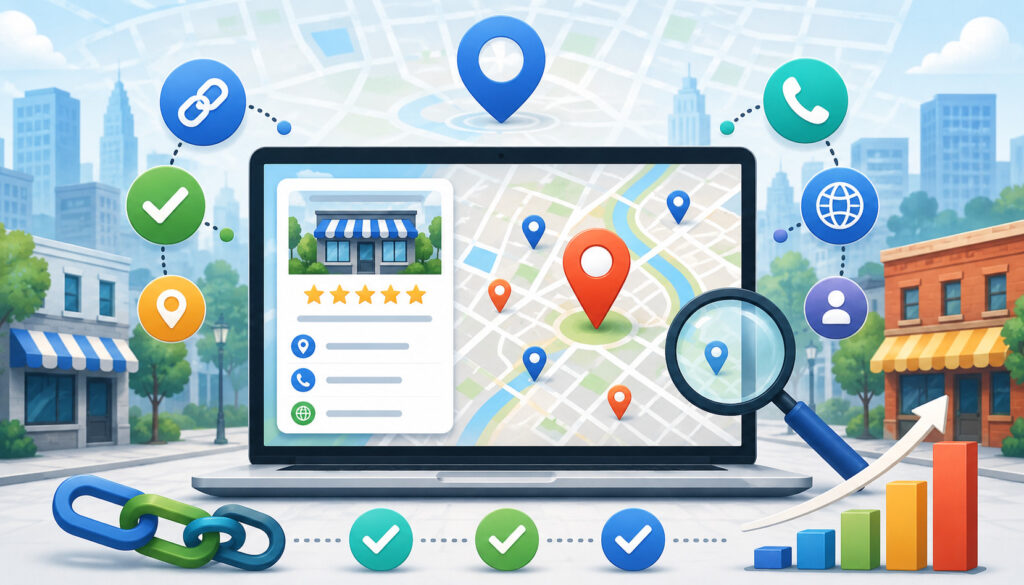
Citation building for Google Maps rankings works best when it supports a complete local search strategy. Citations can help reinforce business identity, location, category relevance, and prominence, but they are not the only ranking factor.
Google’s local results are influenced by relevance, distance, and prominence. Relevance refers to how well your business matches what someone is searching for. Distance considers how close the business is to the searcher or searched location. Prominence reflects how well-known, trusted, and visible the business appears online.
Citations can support relevance by confirming your business category, services, and location across multiple sources. They can support prominence by creating mentions on trusted directories, local websites, review platforms, and industry resources. They can also reduce confusion by keeping business details consistent everywhere.
However, citations cannot overcome a poorly optimized Google Business Profile. If your profile has missing categories, weak service details, few reviews, outdated hours, or poor photos, citation building alone will not solve the problem. Citation work should happen alongside Google Business Profile optimization.
A strong profile should include accurate categories, service descriptions, business hours, photos, products or services where relevant, appointment links, attributes, and regular updates. Reviews are also important because they influence customer trust and can support prominence.
Your website matters too. Search engines often compare your Google Business Profile, website, and citation footprint. If all three tell the same story, your local signals become clearer. If your website says you serve one area but citations list old locations or unrelated categories, the message becomes weaker.
For map visibility, citation quality is especially important. A listing on a trusted industry directory or local organization page can help more than a listing on a thin, spammy directory. Search engines are increasingly focused on usefulness and trust, so citation sources should be selected carefully.
To use citations for local map pack rankings, focus on these actions:
- Match your NAP across your website, Google Business Profile, and directories
- Choose accurate business categories
- Link to the most relevant website page
- Keep hours and holiday hours current
- Remove duplicate or outdated listings
- Build citations on reputable local and industry websites
- Encourage real reviews on appropriate platforms
- Respond to customer feedback professionally
- Keep photos and business descriptions fresh
It is also important to avoid shortcuts. Fake addresses, virtual locations that do not meet platform rules, keyword-stuffed business names, and low-quality citation blasts can create long-term problems. Local SEO works best when your online presence accurately reflects the real business.
If your Google Business Profile is underperforming, citation cleanup may help, but it should be part of a broader review. This resource on Google Business Profile mistakes can help identify profile-level issues that may be limiting local visibility.
How to Run a Citation Audit
A citation audit is the process of finding, reviewing, correcting, and organizing your business citations. It helps you understand where your business appears online, whether the information is accurate, and which listings need updates or removal.
Start with your master business profile. This should include the official business name, address, phone number, website, categories, hours, logo, short description, long description, social links, service areas, and preferred landing pages. This becomes your reference point during the audit.
Next, search for your business online. Use your business name in quotation marks, your phone number, your address, old addresses, old phone numbers, and common name variations. Look through the results for directories, map listings, review platforms, social profiles, local articles, and duplicate listings.
Create a spreadsheet with columns for citation source, URL, business name, address, phone number, website, category, status, login information, correction needed, date updated, and notes. This makes the process easier to manage, especially if your business has many listings.
During the audit, look for these problems:
- Old addresses
- Old phone numbers
- Misspelled business names
- Wrong website links
- Duplicate listings
- Closed listings that still appear active
- Incorrect business categories
- Outdated hours
- Broken appointment links
- Wrong photos
- Inconsistent service areas
- Listings created by previous owners or agencies
Duplicate listings deserve special attention. If multiple listings exist on the same platform, customers may leave reviews on the wrong one or see conflicting details. Search engines may also struggle to identify the correct listing. Claim, merge, suppress, or remove duplicates according to the platform’s rules.
Outdated information should be fixed at the source whenever possible. If a directory pulls data from another provider, the incorrect source may need to be corrected first. Otherwise, the bad information can keep returning.
A citation audit should also review quality. Not every listing is worth keeping. Some low-quality directories exist only to collect links or publish scraped business data. If a listing looks spammy, irrelevant, or untrustworthy, do not prioritize it unless it is causing visible confusion in search results.
After corrections are submitted, track progress. Some platforms update quickly, while others take longer. Keep records so you know when each citation was updated and whether follow-up is needed.
Citation audits are especially important after major business changes. If your business moves, changes its phone number, rebrands, changes hours, adds locations, closes locations, or changes ownership, audit your citations as soon as possible.
Common Citation Building Mistakes to Avoid
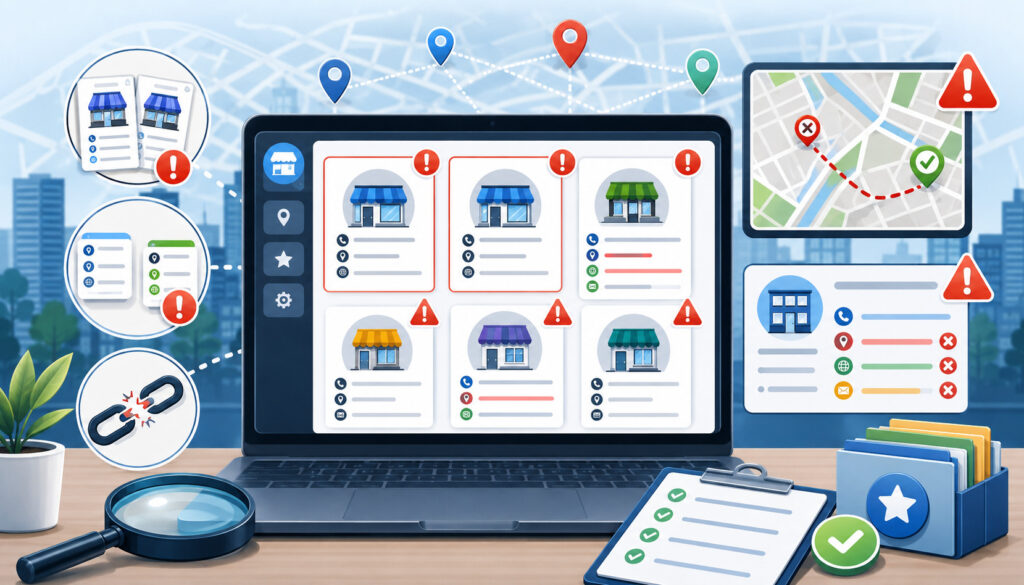
Citation building can help local search visibility, but poor execution can create problems. Many local businesses lose trust signals not because they lack citations, but because their citations are messy, duplicated, or misleading.
The most common mistake is inconsistent NAP. A business may use “Street” in one listing, “St.” in another, a suite number in one place, and no suite number elsewhere.
Minor formatting differences are not always serious, but major inconsistencies can cause confusion. The bigger problem happens when old phone numbers, old addresses, or different business names appear across important platforms.
Another mistake is creating duplicate listings. This often happens when a business changes locations, hires multiple agencies, or submits listings without checking whether profiles already exist. Duplicate listings can split reviews, confuse customers, and make citation management harder.
Wrong categories are another issue. Some businesses choose broad or unrelated categories because they want to appear for more searches. This can backfire. Categories should reflect what the business actually does. Relevance is more important than reach.
Keyword stuffing is also risky. Adding service keywords or location terms to the business name field may seem tempting, but it can damage trust and violate platform guidelines if those words are not part of the actual business name. Use descriptions, services, and website content for keyword relevance instead.
Low-quality directory submissions are another common mistake. Some directories have little value, poor moderation, thin content, or spammy outbound links. Submitting too many weak directories can waste time and create a messy citation profile. Choose sources that real customers might use or that have clear local or industry relevance.
Outdated hours can hurt both SEO and customer experience. If a customer visits when your listing says you are open and finds the business closed, trust drops immediately. Hours should be updated for seasonal changes, holidays, special events, temporary closures, and appointment-only availability.
Ignoring reviews is another citation-related mistake. Many citation platforms include review features. If customers ask questions or leave feedback and the business never responds, the profile may look neglected. A well-maintained citation profile includes reputation management.
Businesses should also avoid using different landing pages randomly. If one listing links to the homepage, another links to a booking page, and another links to an outdated campaign page, the user journey can become inconsistent. Choose landing pages intentionally based on the listing and customer intent.
Finally, do not treat citation building as a one-time project. Listings can change, platforms can update fields, data providers can overwrite details, and customers can suggest edits. Ongoing maintenance is essential.
Best Practices for Maintaining Local Business Citations
Maintaining local business citations for SEO is just as important as building them. A citation profile is not static. Business information changes, platforms update their systems, directories refresh data, and customers interact with listings over time.
The first best practice is to keep one master business profile. This document should include your official NAP, website URL, business descriptions, categories, services, hours, photos, logo, social links, service areas, and approved tracking links. Anyone who updates listings should use this document.
The second best practice is to use consistent formatting. Choose one version of your business name, one primary phone number, one website URL format, and one address format. Use them across your website, Google Business Profile, directory listings, social profiles, and review platforms.
The third best practice is to update citations immediately after a business change. If you move locations, change phone numbers, update hours, add services, or rebrand, do not wait. Old information can spread quickly and may take time to correct later.
The fourth best practice is to monitor reviews on citation platforms. Many directories allow customers to leave reviews, ask questions, upload photos, or suggest edits. Responding to reviews shows that the business is active and attentive. It also helps potential customers evaluate your reliability.
The fifth best practice is to choose relevant categories. Categories should match the business’s real services. Overly broad categories can reduce relevance, while overly narrow categories may limit discovery. Review category options on each platform and choose the most accurate primary category first.
The sixth best practice is to maintain local landing pages that support your citations. If your business has multiple locations or service areas, each relevant citation should connect users to a useful page. That page should confirm location details, explain services, and provide a clear next step.
The seventh best practice is to review citations regularly. A quarterly review is a good rhythm for many businesses, while businesses with frequent changes may need monthly checks. During each review, confirm NAP, hours, categories, links, photos, reviews, and duplicate listings.
The eighth best practice is to document login access. Many businesses lose control of listings because an old employee, freelancer, or agency created profiles with unknown credentials. Keep ownership and access organized so you can update listings when needed.
The ninth best practice is to avoid unnecessary changes. Changing business names, categories, phone numbers, or URLs too often can create instability. Only change citation details when there is a real business reason.
The tenth best practice is to connect citations with broader local SEO. Citations work better when your website content, reviews, Google Business Profile, and local pages all support the same business identity. This creates a stronger local presence than citations alone.
What are citation building strategies for local SEO?
Citation building strategies for local SEO are methods used to create, improve, and maintain online mentions of a business’s key information. These mentions usually include the business name, address, phone number, website, hours, categories, and services.
A strong strategy includes claiming major directories, optimizing map listings, submitting to niche industry directories, earning local mentions, correcting inaccurate listings, removing duplicates, and monitoring citation quality over time.
The goal is not simply to appear on as many websites as possible. The goal is to make business information accurate, consistent, trustworthy, and easy to find. Good citations support local search visibility and help customers contact the right business with confidence.
Do citations help Google Maps rankings?
Citations can help Google Maps rankings by supporting business trust, relevance, and prominence. When a business is listed accurately across reliable directories, map platforms, review sites, and local websites, search engines receive stronger confirmation about the business’s identity and location.
However, citations are only one part of local map pack rankings. Google Business Profile optimization, reviews, website content, location relevance, proximity, engagement, and overall prominence also matter. Citations work best when they support these other signals.
For example, accurate citations can reinforce your business name, category, address, and phone number. But if your Google Business Profile is incomplete or your reviews are weak, citations alone may not be enough to improve visibility.
What is NAP consistency?
NAP consistency means keeping your business name, address, and phone number accurate and consistent across online platforms. This includes your website, Google Business Profile, directories, review websites, map platforms, social profiles, and local organization pages.
NAP consistency matters because customers and search engines rely on these details. If your phone number is different on two major directories or your address is outdated on a map platform, people may call the wrong number or visit the wrong place.
Consistent NAP creates trust. It also makes citation audits easier because you can compare every listing against one official business profile. For local SEO, clean and consistent NAP is one of the foundations of a reliable citation profile.
What are structured citations?
Structured citations are business listings that follow a standard format. They usually appear on business directories, map platforms, review websites, social media profiles, industry directories, and professional listing websites.
These listings often include fields for business name, address, phone number, website, hours, categories, photos, services, and descriptions. Because the format is organized, structured citations are easy for users and search engines to understand.
Structured citations are especially useful for local citation building because they reinforce business identity in a clear way. The best structured citations are accurate, complete, relevant, and maintained regularly.
What are unstructured citations?
Unstructured citations are business mentions that appear naturally within content rather than in a standard listing format. They may appear in blog posts, news articles, sponsorship pages, event pages, community websites, local guides, association pages, or resource lists.
For example, a local event page that lists your business as a sponsor is an unstructured citation. A blog post that recommends your business as a local service provider is also an unstructured citation.
Unstructured citations can be valuable because they often come from real-world relationships and local relevance. They may also bring referral traffic and strengthen local SEO trust signals when they come from credible sources.
How many citations does a local business need?
There is no perfect number of citations that applies to every business. A small local business in a low-competition category may need fewer citations than a business in a highly competitive market. Quality, relevance, and accuracy matter more than raw quantity.
A good starting point is to claim and optimize major business directories, map platforms, review websites, and key social profiles. After that, add niche industry directories and local organization listings that make sense for your business.
Instead of asking how many citations you need, ask whether your business appears accurately where customers are likely to search. A focused citation profile on trusted platforms is usually better than hundreds of weak listings.
Should businesses use niche directories?
Yes, businesses should use niche directories when those directories are relevant, trusted, and actually useful to customers. Niche directories can help search engines understand your business category more clearly. They can also send better-qualified referral traffic than broad directories.
For example, a healthcare provider, home service company, attorney, restaurant, fitness studio, or consultant may benefit from listings on platforms specific to that industry. These listings can support topical relevance and customer trust.
The key is to choose carefully. Avoid directories that look spammy, outdated, or unrelated. A niche citation should strengthen your business profile, not clutter it.
How often should citations be audited?
Citations should be reviewed at least a few times per year, and immediately after any major business change. If your business moves, changes phone numbers, updates hours, rebrands, adds locations, or changes services, a citation audit should happen right away.
Regular audits help catch inaccurate information before it spreads. They also help identify duplicate listings, outdated categories, broken links, and neglected review profiles.
For most businesses, a quarterly review is practical. Businesses with multiple locations, frequent hour changes, or active local campaigns may need more frequent checks.
Conclusion
Citation building strategies for local SEO help businesses create a stronger, cleaner, and more trustworthy local presence. When your business information is accurate across directories, map platforms, review sites, local organizations, and community mentions, both customers and search engines gain confidence.
Strong citations support local search visibility, NAP consistency, local SEO trust signals, and citation building for Google Maps rankings. They also make it easier for customers to discover your business, confirm your details, read reviews, and take action.
The best results come from combining citation building with Google Business Profile optimization, helpful website content, strong reviews, relevant local landing pages, and ongoing citation audits. Citations are not a replacement for good service or useful content, but they are an important foundation for local visibility.
Start with accuracy. Build on relevance. Maintain consistency. Over time, a well-managed citation profile can help your business earn more trust, improve local map pack visibility, and turn local searchers into real customers.