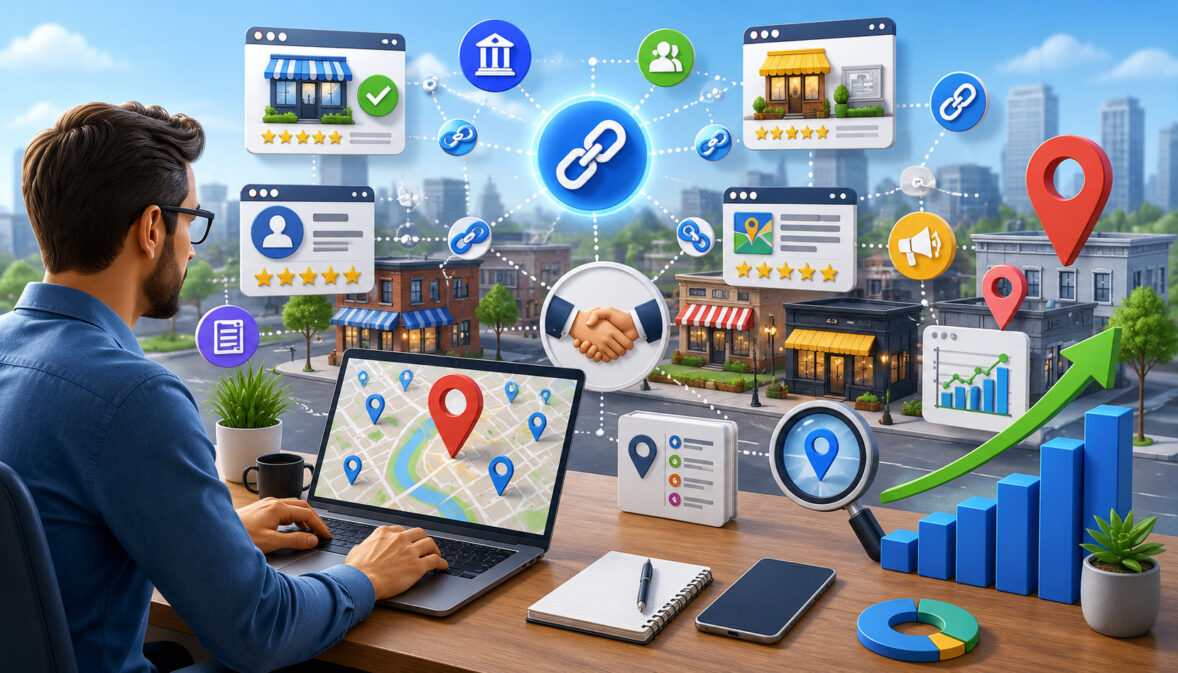
Local Link Building Strategies Explained
Local search is built on trust. When people look for a nearby service, restaurant, contractor, clinic, store, consultant, or professional provider, search engines need to decide which businesses look credible, relevant, and established in that area.
Your website content matters, your business profile matters, your reviews matter, and your name, address, and phone information matter. But links from respected local websites can also help search engines and customers understand that your business is part of the local market.
That is where local link building strategies come in. Local link building is the process of earning links from websites connected to your area, industry, audience, partnerships, or community.
These links may come from local directories, chambers of commerce, neighborhood blogs, local news websites, event pages, sponsorship pages, vendor websites, nonprofit organizations, schools, associations, and other businesses.
The goal is not to collect as many links as possible. The goal is to earn useful, relevant, trustworthy links that support local visibility, website authority, customer confidence, and location-based rankings.
Strong local backlinks can support organic search performance and may also strengthen the broader local SEO trust signals that influence how your business appears in map results, service-area searches, and “near me” style searches.
Effective local link building for SEO works best when it is connected to real business activity. Sponsoring a community event, collaborating with another local business, joining a credible organization, publishing a useful neighborhood guide, or earning a local news mention creates a link that feels natural because it reflects something real.
Google’s own SEO guidance emphasizes building websites for users and helping search engines understand content, rather than chasing shortcuts.
A sustainable local link strategy follows that same idea: create genuine value, make your business easier to verify, and earn mentions from sources that make sense for your audience. For foundational SEO guidance, Google Search Central’s SEO Starter Guide is a useful reference.
What Is Local Link Building?
Local link building is the practice of earning backlinks from websites that are relevant to a specific location, local audience, or service area. A backlink is simply a clickable link from another website to yours.
In local SEO, the most valuable links are not always from the biggest websites. Often, the most helpful links come from sources that are locally meaningful and contextually relevant.
For example, a bakery might earn a link from a local food blog, a downtown business association, a farmers market vendor page, a wedding venue partner page, or a community event sponsor page.
A plumber might earn links from supplier websites, neighborhood resource pages, home improvement blogs, real estate partners, or local directories. A professional service business might earn links from local associations, podcast interviews, guest articles, chamber profiles, or event listings.
These local business backlinks help search engines connect your business to a place, an audience, and a service category. They also help people discover you through trusted sources beyond search results. Someone reading a neighborhood guide, business directory, or event page may click your link because the context already feels relevant.
Local link building is closely related to local citation and link building, but the two are not identical. A citation usually refers to a mention of your business name, address, phone number, website, or profile details on a directory or listing platform. A backlink is a clickable link pointing to your website. Some citations include links, while others do not.
You can strengthen local link building by connecting it to other parts of local SEO. For example, businesses serving multiple areas may benefit from well-built service-area pages that give local partners and directories a relevant page to link to. This is why a guide on location-specific landing pages can support a stronger link strategy.
Good local link building strategies are not based on tricks. They are based on visibility, usefulness, accuracy, and relationships. The more your business participates in the local ecosystem, the more natural opportunities you create to earn links.
Why Local Link Building Matters for SEO
Local SEO depends on several signals working together. Search engines evaluate whether a business appears relevant to a search, whether it seems prominent in its market, and whether its information appears trustworthy across the web. Local backlinks can support all three areas when they come from credible, relevant sources.
A link from a local chamber, trusted directory, neighborhood publication, community organization, supplier, event page, or partner website can help confirm that your business is active and recognized.
These links act like digital referrals. They do not replace strong content, accurate listings, reviews, or a well-optimized business profile, but they can reinforce them.
Local SEO authority building is especially important in competitive markets. Two businesses may have similar services, comparable websites, and complete business profiles.
The business with stronger local references, better local content, more trusted mentions, and higher-quality backlinks may have an advantage because the web offers more evidence that it is established and relevant.
Local backlinks for Google rankings can also help search engines discover important pages on your site. If your homepage, service pages, location pages, or local resource content receive links from relevant websites, those pages may be easier to crawl, understand, and evaluate.
The strongest local links often combine three qualities: relevance, trust, and usefulness. A local directory link can be useful if the directory is real, moderated, and used by customers. A sponsorship link can be valuable if the event is legitimate and locally visible. A community backlink can be meaningful if it appears on a page that people actually visit.
| Link Source | SEO Benefit | Best Use Case | Quality Consideration |
| Local business directory | Supports citation consistency and discovery | Core business listings | Choose moderated, reputable directories |
| Chamber or business association | Builds local trust and authority | Membership-based visibility | Confirm the page is indexed and publicly accessible |
| Local news website | Strengthens prominence and credibility | Announcements, events, expert quotes | Avoid paid placements that look unnatural |
| Community organization | Reinforces local involvement | Sponsorships, volunteering, partnerships | Link should reflect real participation |
| Local blog or resource page | Builds topical and geographic relevance | Guides, interviews, recommendations | Content should be relevant and useful |
| Vendor or supplier website | Adds industry trust | Partner pages, dealer pages, testimonials | Best when the relationship is genuine |
| Event website | Creates timely local relevance | Sponsorships, speaking, hosting | Event page should include helpful context |
| Industry association | Supports niche authority | Certifications, memberships, profiles | Association should be legitimate and relevant |
Local Backlinks for Google Rankings
Local backlinks for Google rankings matter because they help connect your website with a specific market and topic. When a local website links to your business, it can send a relevance signal that says, in effect, this business belongs in this local conversation. That can support both organic visibility and the broader authority signals that help local search performance.
This does not mean every local backlink will automatically improve rankings. Search engines evaluate links based on quality, context, relevance, and trust. A link from a respected neighborhood publication, local association, or community organization is generally more meaningful than a random link from an unrelated website with no local audience.
For map visibility, links are not the only factor. Google Maps ranking signals can include business profile relevance, distance, prominence, reviews, categories, website quality, and consistency across the web. Still, local links can contribute to prominence by showing that your business is referenced by other trusted local sources.
The best approach is to earn links to pages that deserve attention. A homepage link is useful, but links to location pages, service pages, event recaps, local guides, or helpful resources can also strengthen visibility for more specific searches.
Local Citation and Link Building
Local citation and link building often overlap, but they serve different purposes. A citation is a business mention that usually includes your name, address, phone number, website, hours, category, or service details. A backlink is a clickable link from another website to yours. Some citation sources provide backlinks, but others only list your business information.
Citations help establish consistency. When your business details match across directories, maps, review platforms, and local listings, search engines have more confidence that your information is accurate.
This matters because inconsistent details can confuse both search engines and customers. For a deeper look at why consistency matters, this guide on NAP consistency is a helpful internal resource.
Backlinks go a step further by passing users from one website to another. A directory citation may confirm your existence, while a backlink can help users visit your site, read your services, book an appointment, request a quote, or learn more.
A balanced local SEO strategy uses both. Citations create a clean foundation. Backlinks build authority, visibility, and referral pathways. Together, they support local SEO trust signals.
Relevance vs Authority in Local Link Building
Many businesses assume that the best link is always the one from the highest-authority website. In local SEO, that is not always true. A locally relevant link from a respected community website may be more useful than a link from a large but unrelated website that has no connection to your market, audience, or services.
Relevance helps search engines understand context. If a local wedding venue links to a florist, photographer, caterer, or event planner, the connection makes sense. If a neighborhood association links to a home repair company that sponsors a cleanup day, that also makes sense. These links tell a coherent story.
Authority still matters. A link from a trusted publication, established association, or well-maintained directory can be powerful. But authority without relevance can be weaker than it looks. A random link from an unrelated site may add little value and may even look suspicious if the pattern repeats.
The ideal link has both relevance and authority. When you cannot get both, prioritize real local relevance, editorial quality, and user value over vanity metrics.
Best Local Link Building Strategies
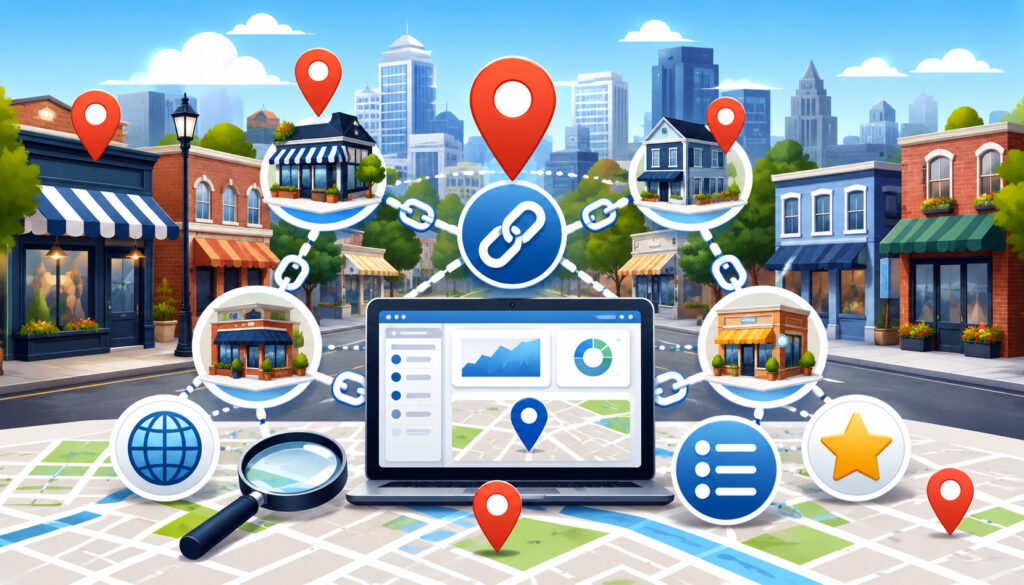
The best local link building strategies begin with assets and relationships you already have. Many businesses overlook easy opportunities because they think link building requires cold outreach to strangers.
In reality, the strongest local links often come from organizations, vendors, partners, customers, events, associations, and community connections already around the business.
Start with local directory links. Submit your business to reputable directories that are relevant to your area or industry. Avoid directories that accept every website, display spam, or have no real users. A quality local directory should have clear categories, accurate business information, moderation, and a useful experience for visitors.
Next, consider chamber of commerce links and business association profiles. These are often strong local SEO trust signals because they connect your business to a recognized organization. Membership pages, business spotlights, event pages, and committee pages can all create link opportunities.
Sponsorships are another practical option. Sponsor a school event, charity fundraiser, neighborhood festival, sports team, local workshop, or nonprofit initiative. The best sponsorship links appear on pages that explain the event and list supporters naturally.
Community partnerships can also generate local partnership backlinks. Partner with complementary businesses on workshops, referral programs, giveaways, educational content, or community projects.
For example, a real estate agent, mortgage broker, moving company, and home inspector might collaborate on a homebuyer resource page.
Local event pages are useful when your business hosts, attends, sponsors, or speaks at events. Create a page on your own website for the event and ask partner organizations to link to it where appropriate. If there is an event calendar, submit your listing with a helpful description.
Local blogs and niche publishers can be valuable when your business has a story, expert insight, or useful resource. Instead of asking for a link directly, pitch something useful: a quote, local data, seasonal advice, or a community-focused article.
News mentions can come from announcements, openings, expansions, awards, charity work, hiring milestones, expert commentary, or event participation. Not every mention will include a link, but even unlinked mentions can support visibility and reputation.
Vendor and supplier links are often overlooked. If you sell a product, install equipment, use a specialized system, or represent a known brand, ask whether the supplier has a dealer locator, partner page, installer page, or testimonial section.
Industry associations can also provide strong local business backlinks. Membership profiles, certification listings, speaker pages, award pages, and resource pages all create opportunities when the association is legitimate.
Content Strategies That Earn Local Backlinks

Content is one of the best ways to earn community backlinks because it gives other websites a reason to reference you. Local link building becomes much easier when your website has resources worth linking to.
A homepage can only attract so many links. A useful local guide, research piece, event recap, interview, or resource page can attract links from blogs, organizations, directories, media outlets, and partners.
Local guides are especially effective. A business can create a guide to choosing a service in a specific area, preparing for seasonal needs, comparing neighborhood options, understanding permits, planning events, or solving common local problems. The key is to make the guide genuinely useful, not just promotional.
Case studies can also attract links. A contractor might publish a project story showing how a property issue was solved. A clinic might share a patient education case without private details. A consultant might publish a local business growth case study. These pages demonstrate experience and build E-E-A-T because they show real-world knowledge.
Event coverage is another underused strategy. If your business participates in a local event, publish a recap with photos, takeaways, sponsor mentions, and helpful links. Then share it with organizers, participants, and community websites.
Local resource pages can be powerful. Examples include “local moving checklist,” “new resident guide,” “small business startup resources,” “pet-friendly local resources,” or “home maintenance checklist for local homeowners.” These assets can earn links because they help a defined audience.
Local statistics and surveys can also perform well. Even a small customer survey, neighborhood poll, or internal data summary can become a linkable resource if it reveals something useful. Keep it accurate, transparent, and easy to cite.
Interviews are another practical option. Interview local business owners, nonprofit leaders, event organizers, educators, real estate professionals, or subject-matter experts. Most interviewees are likely to share or link to the feature.
Community-focused content works because it connects your business to local interests. For topic planning, keyword research, and audience alignment, this guide on local keywords can help you identify what people nearby are actually searching for.
Local SEO Link Building Strategies for Small Businesses
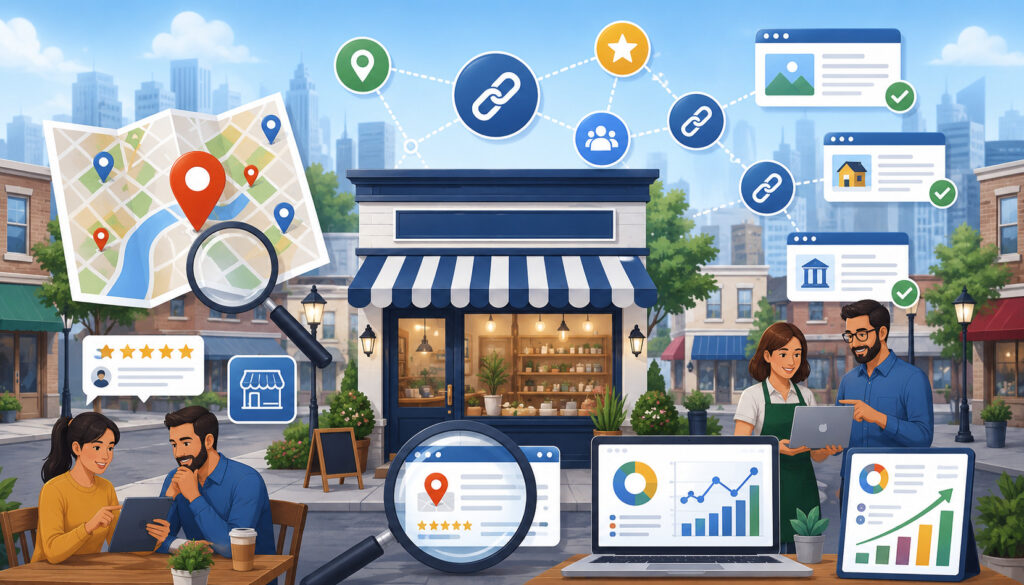
Small businesses often have a link building advantage that larger brands cannot easily copy: real local relationships. You may know nearby business owners, customers, vendors, community organizers, school leaders, local reporters, nonprofit teams, and association members. Those relationships can become high-quality local backlinks when handled professionally.
Outreach should be personal and specific. Avoid generic messages asking for a backlink. Instead, explain why your resource, event, partnership, or business profile is relevant to their audience.
If you are asking a neighborhood blog to include your guide, mention the exact page where it would fit. If you are asking a partner to update a vendor page, provide the correct URL and short description.
Relationship building works better than one-time link requests. Attend networking events, join local business groups, participate in community activities, and follow up after meetings. When people know your business, they are more likely to mention it naturally.
Partnerships can create repeat opportunities. A gym might partner with a nutritionist. A salon might partner with a wedding planner. A contractor might partner with a real estate agency. A café might partner with an event organizer. These relationships can lead to shared resource pages, event pages, blog mentions, and referral pages.
Testimonials are another simple strategy. If you use local vendors, software providers, suppliers, venues, or consultants, offer a genuine testimonial. Many businesses publish testimonials with a link back to the customer’s website.
Scholarships and educational partnerships can work when they are authentic and relevant. However, they should not be created only to chase links. A scholarship, workshop, mentorship program, or educational resource should serve a real purpose and follow appropriate guidelines.
Local PR can also support local SEO authority building. Share newsworthy updates such as new services, community initiatives, awards, local hiring, charitable projects, expert commentary, or educational events.
A useful article on small business content marketing explains how helpful content can support visibility, trust, and long-term audience engagement.
Common Local Link Building Mistakes to Avoid
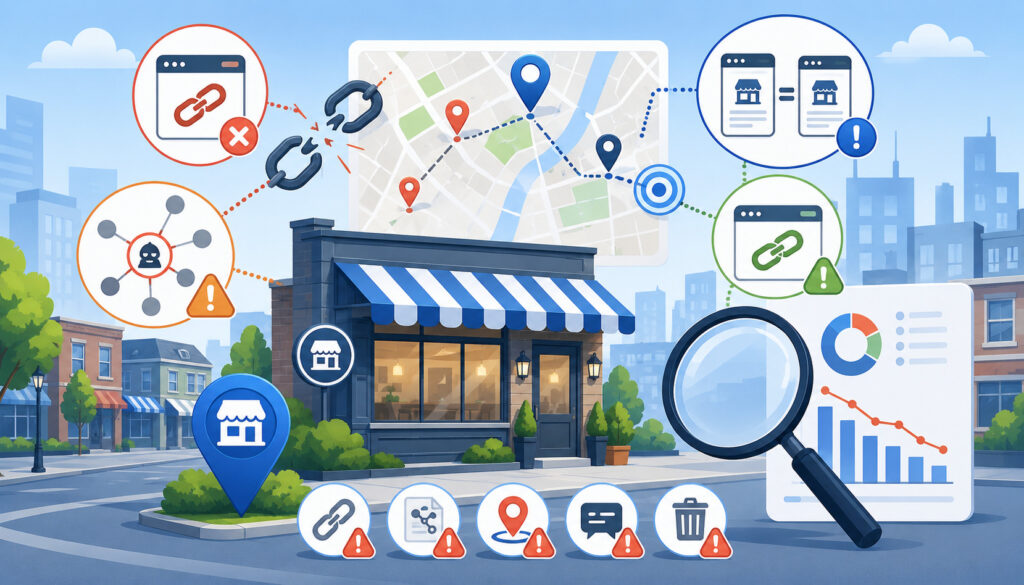
Local link building can help your SEO, but careless tactics can create risk. The most common mistake is buying links from websites that exist only to sell placements. These links may look convenient, but they are rarely worth it. They often come from irrelevant sites, low-quality blogs, private networks, or pages stuffed with unrelated outbound links.
Spam directories are another problem. Some directories accept any business, have no moderation, display thin content, and exist mainly for search manipulation. A few quality local directory links can help. Hundreds of low-quality directory links can look unnatural and add little value.
Irrelevant backlinks are also a concern. A local dentist does not need links from random gaming blogs, foreign coupon pages, unrelated business directories, or generic article farms. Relevance matters because local SEO is about matching the business to the right service, place, and audience.
Over-optimized anchor text is another mistake. Anchor text is the clickable text used in a link. If every backlink uses the exact same keyword phrase, it can look artificial. Natural anchors include your business name, website URL, article title, service description, or contextual phrases.
Duplicate listings can weaken local citation and link building efforts. If your business appears with different phone numbers, old addresses, outdated names, or inconsistent categories, trust can suffer. Clean citations before scaling link outreach.
Low-quality outreach can damage relationships. Sending mass emails, making vague requests, offering no value, or following up aggressively can make your business look unprofessional. Local markets are relationship-driven, so reputation matters.
Another mistake is linking only to the homepage. Your homepage is important, but service pages, location pages, resources, case studies, and event pages may be more relevant depending on the context.
Finally, do not ignore your website’s content quality. If people land on a weak, outdated, slow, confusing, or thin page, the link opportunity is wasted. Links work best when they point to pages that satisfy visitors.
How to Evaluate Local Link Quality
Not every local link is worth pursuing. A quality local backlink should help search engines, users, or both understand your business more clearly. Evaluating link quality before outreach saves time and reduces risk.
Start with domain relevance. Ask whether the website has a real connection to your location, industry, customers, or business activity. A local newspaper, chamber, industry association, school event page, community group, partner business, or niche blog may all be relevant. A random website with no clear connection is less useful.
Next, consider traffic and audience. A smaller local website with an engaged audience can be more valuable than a large website that nobody in your market reads. You do not need exact traffic numbers to make a judgment. Look for signs of activity such as recent posts, updated event pages, comments, social sharing, or local engagement.
Editorial standards matter. A website that publishes everything without review is less trustworthy than one with clear guidelines, real authors, useful content, and organized categories. Local directory links are more valuable when the directory is curated and accurate.
Placement quality is also important. A link in a meaningful article, sponsor page, resource list, profile, or partner page is usually stronger than a buried footer link or random sidebar link. Context matters because search engines and users both evaluate surrounding content.
Local audience relevance is critical. If the website’s visitors are likely to live, work, shop, or make decisions in your service area, the link has potential value. If the audience is unrelated, the link may not help much.
Trust signals include clear contact information, active maintenance, secure browsing, real organization details, useful content, and a good reputation. Avoid websites filled with spam, unrelated outbound links, copied articles, aggressive ads, or suspicious categories.
Also evaluate whether the page is indexable and accessible. If search engines cannot crawl the page or users cannot access it, the SEO value may be limited.
Best Practices for Sustainable Local Link Building
Sustainable local link building is not a one-time campaign. It is an ongoing process of earning visibility through relationships, content, accuracy, and community participation. The most successful businesses build systems rather than chasing random links when rankings drop.
Start with consistent outreach. Set a manageable monthly goal, such as contacting a few partners, submitting to one quality directory, pitching one local story, updating one association profile, and promoting one useful content asset. Small, steady actions compound over time.
Relationship building should be part of the process. Attend local events, join relevant organizations, collaborate with complementary businesses, and support community initiatives. When your business becomes visible offline, online mentions often become easier.
Content promotion is also essential. Publishing a local guide or case study is only the beginning. Share it with partners, customers, organizations, newsletters, social media groups, and relevant publishers. The more useful the content, the easier it is to promote without sounding self-serving.
Reputation management supports link building because people are more likely to reference businesses that look trustworthy. Strong reviews, professional responses, accurate profiles, and helpful website content all contribute to local SEO trust signals.
If your business profile has issues, a resource on Google Business Profile mistakes can help identify visibility problems that may weaken local performance.
Local engagement should be genuine. Sponsor events that align with your values. Join associations that matter to your customers. Create resources that help your audience. Share expertise when it is useful. These activities create natural reasons for local backlinks.
Regular backlink audits are also important. Review your backlinks to identify spam, broken links, outdated partner pages, missing links from sponsorships, or opportunities to reclaim unlinked mentions. You can also check whether important local pages are attracting links or whether all links point only to the homepage.
Finally, measure outcomes beyond rankings. Track referral traffic, calls, form submissions, branded searches, map visibility, directory profile visits, and conversions from linked pages. Local link building is not only about authority. It is also about discoverability and trust.
What are local link building strategies?
Local link building strategies are methods used to earn backlinks from websites connected to your local market, service area, industry, or community. These may include local directories, chamber of commerce profiles, sponsorship pages, event listings, local blogs, news mentions, business partnerships, vendor pages, nonprofit websites, and local resource pages.
The purpose is to help search engines and customers see that your business is credible, relevant, and active in the area you serve. Good strategies are based on real value. For example, publishing a useful local guide, sponsoring a community event, joining a respected association, or collaborating with another nearby business can all create natural link opportunities.
The best strategies avoid shortcuts. They focus on relevance, trust, and usefulness rather than mass link placement. When done well, local link building for SEO supports visibility, referral traffic, local SEO authority building, and stronger customer confidence.
Do local backlinks help Google Maps rankings?
Local backlinks can support Google Maps visibility, but they are only one part of a much larger local ranking picture. Map visibility depends on several signals, including business profile relevance, proximity, categories, reviews, website quality, local prominence, and consistency across the web.
Backlinks can contribute to prominence by showing that a business is mentioned and referenced by other trusted local sources. For example, links from local news sites, community organizations, business associations, directories, event pages, and partner websites can reinforce that a business is active and recognized.
However, links alone will not fix an incomplete business profile, poor reviews, inaccurate citations, weak website content, or confusing service-area information. The strongest approach is to combine quality local backlinks with accurate business data, helpful website pages, review management, and consistent local engagement.
What is the difference between citations and backlinks?
A citation is a mention of your business information on another website. It often includes your business name, address, phone number, website, hours, category, or service description. Citations usually appear on directories, maps, review sites, business listings, and local platforms.
A backlink is a clickable link from another website to your website. Some citations include backlinks, but not all do. For example, a business directory may list your company name and phone number without linking to your site. Another directory may include both a citation and a clickable website link.
Both matter for local SEO. Citations help confirm that your business information is accurate and consistent. Backlinks help users and search engines discover your website and understand its authority. Local citation and link building work best together because they strengthen both trust and visibility.
How can small businesses build local backlinks?
Small businesses can build local backlinks by starting with existing relationships and community involvement. Useful opportunities include joining local business associations, submitting to reputable directories, sponsoring community events, collaborating with nearby businesses, offering testimonials to vendors, participating in interviews, and creating local resource content.
A small business can also earn links by hosting workshops, supporting nonprofit initiatives, appearing on event pages, contributing expert quotes to local publishers, or creating helpful guides for customers. For example, a service business could publish a seasonal maintenance checklist, while a retailer could create a neighborhood shopping guide.
The key is to make the link feel natural. A backlink should reflect a real relationship, useful resource, event, membership, or recommendation. Small businesses should avoid buying bulk links or using spam directories. Quality, relevance, and trust are more important than volume.
Are local directory links valuable?
Local directory links can be valuable when the directory is reputable, relevant, moderated, and useful to real customers. A listing in a trusted local business directory, industry directory, chamber directory, or professional association directory can support visibility and citation consistency.
However, not all directory links are equal. Low-quality directories that accept every submission, publish duplicate content, show spam, or have no local audience are unlikely to provide much value. Too many weak directory links can also make a backlink profile look unnatural.
The best local directory links include accurate business information, a correct category, a helpful description, a website link, and consistent contact details. They should be part of a broader strategy that also includes partnerships, local content, community backlinks, and editorial mentions.
What types of local links are most effective?
The most effective local links usually come from sources that are relevant, trusted, and connected to your audience. Examples include local news mentions, chamber of commerce profiles, business association pages, community event pages, nonprofit sponsor pages, local blogs, vendor directories, partner pages, and industry association listings.
Links from locally focused content can also be powerful. A neighborhood guide, event recap, expert interview, case study, or local resource page can attract links because it provides helpful information. These links are effective because they connect your business to real local topics and user needs.
The best link type depends on the business. A restaurant may benefit from food blogs and tourism pages. A contractor may benefit from supplier, real estate, and home improvement links. A professional service provider may benefit from association, interview, and local media links.
Can bad backlinks hurt local SEO?
Bad backlinks can create problems when they appear manipulative, irrelevant, spammy, or unnatural. A few random low-quality links are common and may not require panic. However, a pattern of paid links, link farms, irrelevant directories, private networks, keyword-stuffed anchors, or unrelated foreign websites can weaken trust and create risk.
Local businesses should be especially careful with services that promise large numbers of backlinks quickly. Quality local link building takes time because it depends on real sources, relationships, and useful content. Fast link schemes often produce low-value links that do not help customers or search engines.
Regular backlink audits can help identify suspicious patterns. If you find harmful links, document them and focus on earning better links that outweigh low-quality signals. In serious cases, professional SEO review may be appropriate before taking advanced actions.
How often should businesses audit backlinks?
Businesses should review backlinks regularly, especially if local search visibility is important to lead generation. A light review every few months can help identify new links, lost links, spam links, broken pages, unlinked mentions, and missed opportunities. More competitive businesses may review links more frequently.
A backlink audit should not only look for problems. It should also look for patterns. Which pages attract links? Which partners mention your business? Are important service or location pages earning links? Are directory listings accurate? Are sponsorship links still live? Are old URLs causing errors?
Audits are also useful after website redesigns, business moves, rebrands, mergers, or service-area changes. Local SEO depends on consistency, so backlink and citation reviews should be part of routine local visibility maintenance.
Conclusion
Local link building strategies help businesses strengthen visibility, authority, and trust in the places they serve. They support local SEO by reinforcing relevance, improving discovery, increasing referral traffic, and adding credibility through trusted local sources.
The most effective approach is not about chasing every possible backlink. It is about earning the right links from local directories, chambers, associations, partners, suppliers, event pages, community organizations, local publishers, and useful content assets. When those links reflect real business activity, they become stronger signals for both people and search engines.
Local SEO link building strategies work best when combined with accurate citations, helpful website content, optimized business profiles, strong reviews, and consistent engagement. Local backlinks for Google rankings are valuable, but they are only one part of a complete local search strategy.
Focus on relevance over volume, relationships over shortcuts, and usefulness over manipulation. Businesses that invest in local business backlinks, community backlinks, local partnership backlinks, and strong content assets are better positioned to build long-term local SEO authority and stronger visibility in location-based search.