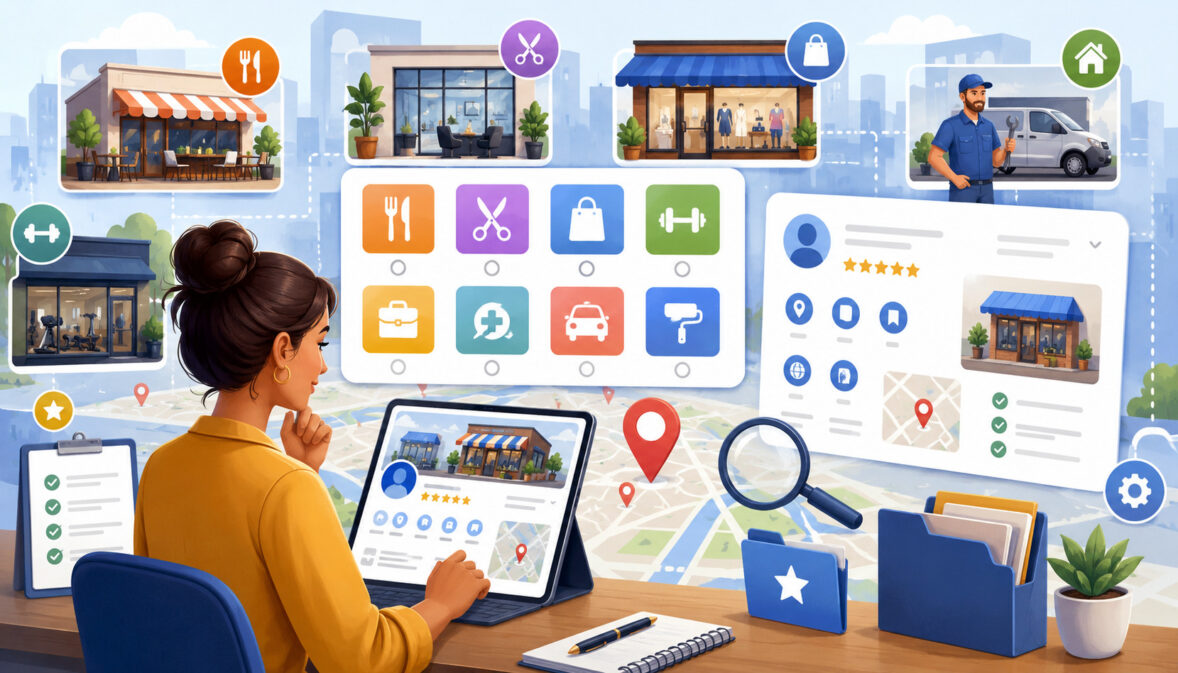
Google Business Profile Categories Explained
Google Business Profile categories are one of the most important parts of local visibility because they help Google understand what a business does, which searches it should appear for, and how closely it matches a customer’s intent.
When someone searches for a nearby service, product, store, or professional, Google does not rely on the business name alone. It looks at category signals, location signals, website relevance, reviews, profile completeness, and other local SEO factors to decide which results are most helpful.
That is why Google Business Profile categories deserve more attention than they often receive. A business can have a polished profile, strong photos, useful updates, and great reviews, but if its categories are inaccurate or too broad, it may struggle to appear for the right searches.
Categories are not just labels. They are relevance signals that affect discovery in Google Search, Google Maps, and the local pack.
For local businesses, choosing the right primary business category and supporting it with accurate secondary business categories can improve local search relevance, increase local pack visibility, and help potential customers understand what the business offers before they click, call, or request directions.
According to Google Business Profile Help, the categories selected can affect local ranking, and the primary category should describe the business as accurately as possible.
The goal is not to add as many categories as possible. The goal is to select the categories that best represent the business, match real customer search behavior, and support a stronger business profile optimization strategy. When categories are chosen carefully, they help connect the right customers with the right services at the right moment.
What Are Google Business Profile Categories?
Google Business Profile categories are predefined business classifications that tell Google what type of business you operate. Instead of allowing businesses to create any custom category they want, Google provides a set of available category options. A business owner or profile manager chooses the category that most accurately reflects the business.
For example, a dental clinic may choose a category related to dentistry. A bakery may choose a category related to baked goods. A repair company may choose a category tied to its core trade. These categories help Google interpret the business type and decide which local searches may be relevant.
There are two main types of categories: the primary business category and secondary business categories. The primary category is the main classification for the business. It should describe the core service, product, or business model as closely as possible.
This is usually the category most closely tied to revenue, customer intent, and the search terms the business most wants to appear for.
Secondary business categories provide additional context. They help describe other services, specialties, or business functions that the company genuinely offers. They should support the main category, not distract from it.
A strong category setup answers three basic questions:
- What is the business mainly known for?
- What services or products does it actually provide?
- What would a customer search for when looking for this exact type of business?
For example, a company that mainly installs garage doors should not choose a broad home improvement category if a more specific garage door category is available. Specificity usually helps Google understand relevance more clearly. The more accurately the category reflects the real business, the better it supports local search relevance.
Google Maps business categories also influence how a business appears in Maps results. When a customer searches by service type, category selection can help Google connect that search with businesses that fit the request. This is why category setup should be treated as part of local SEO, not just a profile setup task.
Why Google Business Categories Matter for Local SEO
Google Business categories for local SEO matter because they help establish relevance. Relevance is one of the core ideas behind local search visibility. If Google cannot clearly understand what a business does, it has less reason to show that business for specific local searches.
When someone searches for a service near them, Google tries to match that search with businesses that are relevant, nearby, and credible. Categories help answer the relevance part of that equation. If a business chooses the wrong category, Google may connect it with the wrong searches or fail to show it for valuable searches that actually match its services.
Categories also influence local pack visibility. The local pack is the prominent group of local results that often appears near the top of search results for location-based searches.
Appearing there can lead to more website visits, calls, direction requests, bookings, and walk-ins. Category accuracy can help a business compete in that space because it tells Google which search situations the profile should be considered for.
Google Maps ranking factors are not limited to categories, but categories are foundational. Reviews, proximity, prominence, website content, citations, and engagement all matter. However, if the business category is misaligned, those other signals may not reach their full potential.
Think of categories as the starting point for local search relevance. A well-chosen category does not guarantee rankings by itself, but it gives every other optimization effort a better foundation. Reviews become more meaningful when they mention services that match the category.
Website content becomes more useful when it reinforces the category. Photos, products, services, and posts all become stronger when they support the same business identity.
| Category Type | What It Means | SEO Impact | Best Practice |
| Primary Business Category | The main category that describes the core business | Strongest category relevance signal for local searches | Choose the most specific category that matches the main service or business type |
| Secondary Business Categories | Additional categories that describe real supporting services | Helps expand relevance for closely related searches | Add only categories tied to services the business genuinely offers |
| Irrelevant Category | A category chosen for reach rather than accuracy | Can confuse relevance and weaken trust | Avoid categories that do not match actual services |
| Overly Broad Category | A general category used when a specific one exists | May make the profile less competitive for high-intent searches | Choose specific intent whenever possible |
| Updated Category Set | Categories reviewed as services change | Keeps the profile aligned with current business offerings | Review categories during local SEO audits |
Primary Business Category
The primary business category is the most important category in a Google Business Profile. It tells Google the main identity of the business and has the strongest influence on which local searches the profile may appear for. This category should be selected with care because it defines the business at the highest level.
A good primary category is specific, accurate, and closely tied to the business’s most important service. If a business earns most of its revenue from emergency plumbing, a plumbing-related category is likely more appropriate than a general contractor category.
If a business is primarily a pediatric clinic, the primary category should reflect that specialty rather than a broad medical category if a more accurate option exists.
The primary category should also match what customers expect. When people search, they usually describe the business by need: “dentist,” “auto repair,” “coffee shop,” “roofing contractor,” “accountant,” or “pet groomer.” The primary business category should align with that natural search behavior.
Changing the primary category can affect visibility because it changes the way Google interprets the profile. That does not mean businesses should never update it. It means updates should be intentional, evidence-based, and tied to real business offerings.
Secondary Business Categories
Secondary business categories are supporting categories that help describe additional services or business functions. They are useful when a business offers more than one legitimate service line, but they should not replace the main focus of the profile.
For example, a primary category may describe the core business, while secondary categories describe closely related services. A wellness clinic might have a main category tied to its primary specialty and additional categories for supporting services it genuinely provides.
A home service business might add secondary categories for specific types of repairs, installation work, or maintenance services.
The key is relevance. Secondary business categories should strengthen Google’s understanding of the business, not create confusion. Adding every loosely related category can dilute the profile’s focus and may make the business look less specialized. More is not always better.
Secondary categories are especially useful when they reflect services that have real customer demand. If customers regularly search for those services, and the business has dedicated service pages, reviews, photos, and profile services that support them, secondary categories can help expand visibility in a controlled way.
A good rule is to ask: “Would a customer be satisfied if they found this business after searching for this category?” If the answer is yes, the category may be appropriate. If the answer is uncertain, leave it out.
Category Relevance and Search Intent
Category relevance and search intent work together. A category may technically describe something a business does, but it may not always match the way customers search or the way the business wants to compete. Effective Google Business Profile category optimization requires both accuracy and intent awareness.
Search intent is the reason behind a search. A person searching for “emergency electrician” likely needs fast help. A person searching for “lighting store” may want to browse products. A person searching for “wedding photographer” wants a specialist, not a general photography service. Categories should help Google understand which type of intent the business fits.
This is where local SEO categories become strategic. The best categories are not random labels. They reflect the intersection of real services, customer demand, and business goals. If a business chooses categories that do not match search intent, it may attract poor-fit visitors or fail to appear for high-value searches.
Website content should also support category intent. A business that selects a service-related category should have a page explaining that service. Location-specific pages can strengthen local relevance when they are useful, unique, and tied to real service areas. For deeper support, see this guide on creating location-specific landing pages.
How to Choose the Best Primary Category

Choosing the best primary category starts with clarity about the business’s main purpose. Before opening the profile editor, identify the service, product, or business type that matters most for customer acquisition. The right primary category should sit at the center of the business model.
Start by listing the main services or products the business offers. Then identify which one is the core offer. This is usually the service that drives the most revenue, brings in the most qualified leads, or represents the business’s strongest area of expertise. The primary category should closely match that core offer.
Next, research how competitors are categorized. Competitor research can reveal category options that may not be obvious at first. Look at businesses that rank well for your most important local searches and note the categories they use.
This does not mean copying them automatically. It means understanding the category landscape and comparing it to your actual services.
Avoid overly broad choices when a more specific category exists. A general category may seem safer, but it can make the business less relevant for high-intent searches. A specific category often communicates stronger intent.
For example, a specialty repair business may be better served by a trade-specific category than a broad home services category.
Also consider whether the chosen primary category matches the website. If the profile says the business is one thing but the website emphasizes something else, relevance signals become inconsistent.
A strong business profile optimization strategy should align the primary category with the homepage, service pages, title tags, headings, internal links, and reviews.
The primary category should also reflect what customers are actually searching for. Local keyword research can help reveal whether people search by profession, service, product, symptom, or urgent need. A guide like Local Keywords 101 can help connect category selection with real customer search behavior.
Here is a practical selection process:
- Identify the business’s main revenue-driving service.
- Search for the most specific matching Google category.
- Review top local competitors for category patterns.
- Compare category options against customer search intent.
- Choose the category that best describes the business today.
- Confirm the website and profile content support that category.
How to Use Secondary Categories Correctly
Secondary categories are useful when a business has additional services that deserve visibility. They should be added carefully, with each one serving a clear purpose. The goal is to improve relevance for related searches without weakening the main category signal.
A business should use secondary categories when it genuinely provides those services, has experience delivering them, and wants customers to find the business for those needs.
If the service is occasional, minor, or not central to the business, it may not deserve a category. In many cases, it is better to mention smaller services in the Services section rather than turning them into categories.
There is no universal number of secondary business categories that works for every business. Some businesses may need only one or two. Others with multiple legitimate service lines may need several. The best number is the number that accurately describes the business without stretching relevance.
Avoid adding secondary categories only because competitors use them. A competitor may have a different business model, different services, or a poorly optimized profile. Copying blindly can create category mismatch. Instead, use competitor research as a clue, then evaluate each category against your own services.
Secondary categories should also align with website content. If a business adds a category for a service, the website should ideally have a helpful page explaining that service. This makes the category more believable to both users and search engines. It also gives visitors a stronger path from profile discovery to conversion.
A smart secondary category setup looks like this:
- Primary category: core business identity
- Secondary categories: real, closely related services
- Services section: detailed service list
- Website pages: supporting service explanations
- Reviews and photos: proof that the services are actually provided
This alignment helps optimize Google Business Profile categories in a way that feels natural and credible. It also reduces the risk of confusing users. If someone finds the profile through a secondary category, they should immediately see evidence that the business offers that service.
Google Business Profile Category Optimization Tips
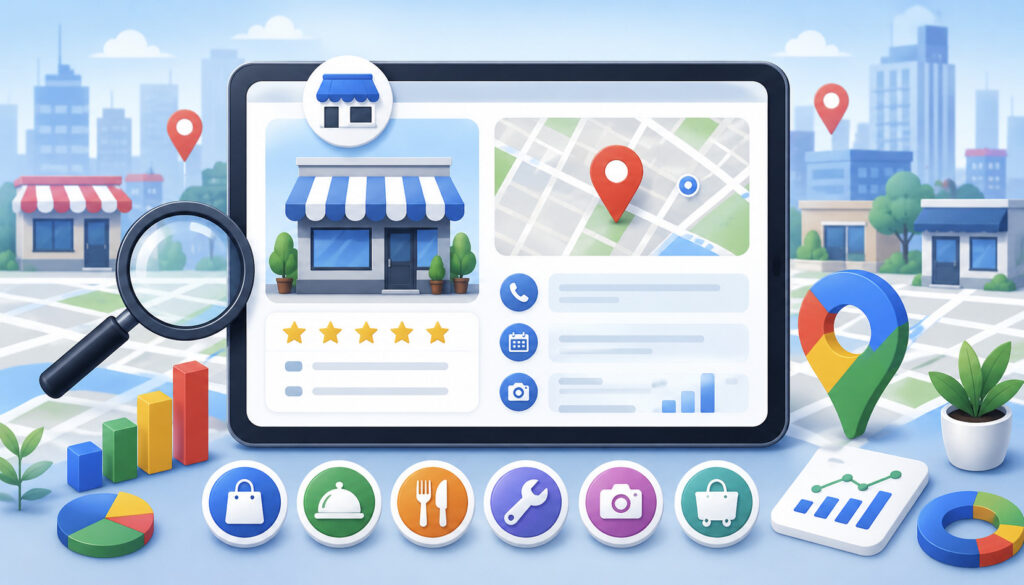
Google Business Profile category optimization is not a one-time setup task. Businesses change, customer demand changes, competitors adjust their profiles, and Google updates available categories. A category setup that worked well in the past may need refinement later.
Start with regular category reviews. During each local SEO audit, check whether the primary category still reflects the main business focus. If the company has shifted toward a different service line, opened new specialties, removed old services, or expanded into new offerings, the categories may need to be updated.
Category optimization should also be supported by the rest of the profile. Categories tell Google what the business is, but profile details help reinforce that message. The business description, services, products, photos, posts, attributes, and reviews should all support the selected categories.
For example, if a business chooses a category related to roof repair, the profile should include roof repair services, relevant photos, review language about roof repair, and a website page that explains the service. This creates consistency. It also makes the profile more useful to customers who are comparing options.
Website alignment is especially important. The website connected to the profile should clearly support the selected primary and secondary categories.
Dedicated service pages, local landing pages, FAQs, and helpful blog content can all strengthen local search relevance. If your business serves multiple areas, strong local landing pages can help Google and customers understand where each service is available.
Category optimization also works best when paired with NAP consistency. If the business name, address, and phone number vary across directories, trust signals can weaken. This guide on NAP consistency explains why identical business information across listings supports stronger local visibility.
Useful category optimization habits include:
- Review categories after adding or removing major services.
- Check whether Google has added more specific category options.
- Make sure service pages match the chosen categories.
- Add photos that visually support the main category.
- Encourage reviews that naturally describe real services.
- Keep the Services section updated.
- Avoid unnecessary category changes without a clear reason.
- Monitor local pack visibility after major profile updates.
Business profile optimization should feel cohesive. Categories, services, descriptions, reviews, citations, and website content should all tell the same story. When those signals work together, Google has more confidence in what the business does, and customers have fewer doubts before taking action.
Common Category Mistakes to Avoid
Many businesses lose local visibility because of category mistakes that are easy to avoid. The most common issue is choosing categories based on reach instead of accuracy. A business may add broad or unrelated categories because it wants to appear for more searches, but this can weaken relevance and attract poor-fit customers.
Another mistake is choosing a category for a service the business does not actually offer. This creates a bad user experience. If customers call expecting a service and the business cannot provide it, trust drops quickly. Google’s local systems are designed to connect users with helpful, relevant results, so misleading category choices can work against long-term visibility.
Changing categories too often is another problem. Category testing can be useful, but constant changes can make performance harder to understand. If visibility drops after a change, it may be difficult to know whether the category change caused the issue or whether another factor was involved. Category updates should be documented and evaluated over time.
Copying competitors blindly is also risky. A competitor may rank despite poor category choices, not because of them. They may have stronger reviews, better proximity, stronger citations, older local authority, or more complete website content. Their categories can provide clues, but they should never replace your own strategy.
Keyword stuffing is another misunderstanding. Google Business categories are selected from predefined options. Businesses do not need to force keywords into the business name, description, or services to compensate for category choices. Keyword stuffing can make a profile look spammy and reduce trust with customers.
A final mistake is ignoring category updates. Google may add, rename, or remove categories. Businesses that never revisit their profiles may miss better category options. A more specific category could become available, or an old category may no longer be the best fit.
Avoid these category mistakes:
- Choosing irrelevant categories for extra exposure
- Using broad categories when specific ones are available
- Adding categories for services not offered
- Changing the primary category without a clear reason
- Copying competitors without evaluating relevance
- Ignoring website alignment
- Treating categories as a one-time setup item
- Overlooking profile mistakes that reduce trust
For a wider profile audit, this article on common Google Business Profile mistakes can help identify issues beyond category selection.
How Categories Work With Other Local SEO Signals
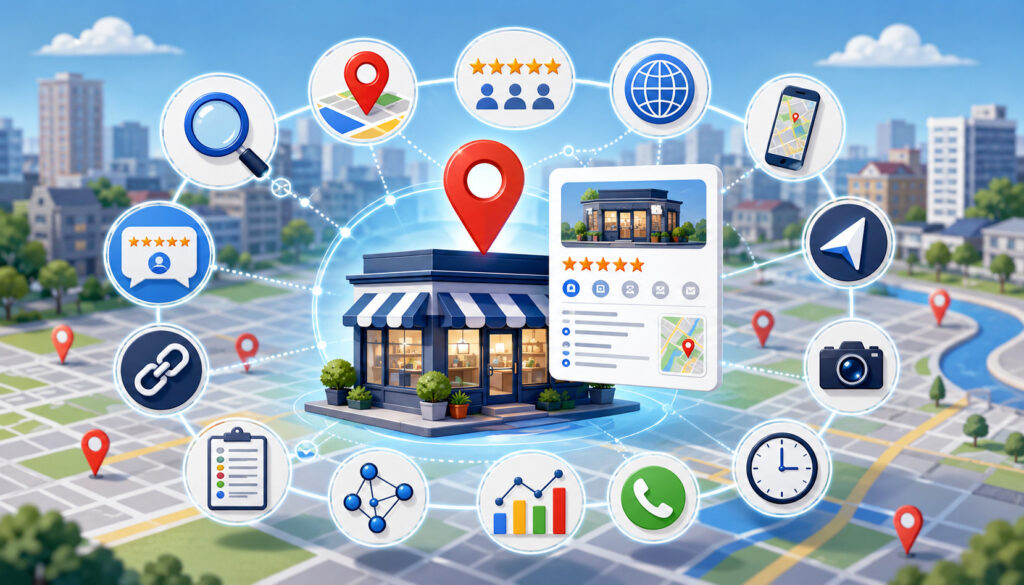
Google Business Profile categories are powerful, but they do not work alone. They are part of a broader local SEO ecosystem that includes relevance, proximity, prominence, trust, engagement, and website quality. Categories help define what the business is, while other signals help determine how confident Google should be in showing it.
Reviews are one of the most visible supporting signals. When reviews mention specific services, they can reinforce category relevance.
For example, if a business selects a category related to appliance repair and customers repeatedly mention refrigerator repair, washer repair, or same-day service, those reviews support the profile’s service identity.
Citations also matter. A citation is a business mention on another website, directory, or platform. Consistent citations help confirm the business’s name, address, phone number, and sometimes category. If citations describe the business differently across the web, Google may receive mixed signals.
Website content is another major support system. The website should clearly explain the business’s services, service areas, expertise, and contact options. If the Google profile category says one thing and the website says another, local search relevance becomes weaker. Service pages, local pages, FAQs, and helpful resources all help support the categories.
Proximity still matters because local search often depends on the searcher’s location. A well-optimized category setup cannot make a business relevant to every search everywhere. However, strong categories can help the business appear more often when it is reasonably relevant to the searcher’s location and intent.
Prominence also plays a role. Prominence can include review quality, brand recognition, links, mentions, and overall online authority. A business with accurate categories and strong prominence signals may have a better chance of competing for valuable local searches.
Local backlinks can also support relevance. Links from local organizations, partners, directories, sponsorships, media mentions, and community pages can reinforce local authority. These links work best when they point to helpful pages that support the same services reflected in the profile categories.
Business descriptions, products, services, photos, and posts should also support the selected categories. For example, a profile categorized as a restaurant should show food, menu details, dining information, and relevant customer feedback. A profile categorized as a contractor should show project photos, services, areas served, and proof of experience.
For businesses that want a broader overview of online visibility, this informational guide on what Google Business Profile is and why it matters provides helpful context on how profiles support local discovery and customer engagement.
What are Google Business Profile categories?
Google Business Profile categories are predefined labels that describe what type of business you operate. They help Google understand your main business activity and match your profile with relevant searches in Google Search and Google Maps. A business selects one primary category and may add secondary categories when they accurately describe additional services or specialties.
How important is the primary category?
The primary business category is extremely important because it is the main category signal for the profile. It should describe the business’s core service, product, or business type as accurately as possible.
A strong primary category helps Google understand which searches are most relevant to the business. Choosing the wrong primary category can make it harder to appear for high-intent searches that match what the business actually offers.
How many secondary categories should a business use?
A business should use only as many secondary categories as it needs to accurately describe real services. Some businesses may need one or two.
Others may need several. The best approach is not to fill every available slot, but to add categories that are directly connected to services the business genuinely provides. Each secondary category should support the main business focus and create a better match between search intent and the profile.
Can categories affect Google Maps rankings?
Yes. Categories can affect Google Maps visibility because they help Google understand whether a business is relevant to a search. Google’s own guidance states that categories can affect local ranking.
Categories are not the only ranking factor, but they are an important relevance signal. Reviews, proximity, profile completeness, website content, citations, and prominence also influence performance.
Should businesses copy competitor categories?
Businesses should study competitor categories, but they should not copy them blindly. Competitor research can reveal useful category options, especially when several high-ranking competitors use similar categories.
However, your categories should reflect your own services, revenue focus, customer intent, and website content. A competitor’s category setup may not be accurate, and copying it without analysis can create relevance problems.
How often should categories be reviewed?
Categories should be reviewed during regular local SEO audits, after major service changes, after rebranding, and when the business expands or removes offerings.
They should also be reviewed if visibility changes significantly or if competitors begin appearing for searches where your business used to perform well. Category reviews do not always require changes. Sometimes the best decision is to confirm that the current setup is still accurate.
Can wrong categories hurt local SEO?
Wrong categories can hurt local SEO by confusing Google about what the business does and by attracting the wrong audience. If the profile is categorized inaccurately, it may appear for irrelevant searches while missing better-fit searches.
Wrong categories can also create a poor customer experience if people contact the business expecting services it does not provide. Accuracy is always the safer long-term strategy.
What is the difference between services and categories?
Categories describe the overall type of business. Services describe the specific tasks, treatments, products, or offerings available from that business.
For example, the category might define the business as a dental clinic, while the services section may list cleanings, whitening, emergency appointments, and other specific offerings. Categories help classify the business; services help explain what customers can request.
Conclusion
Google Business Profile categories help Google understand business relevance, connect local searches with the right providers, and improve the chances of appearing in Google Maps and local pack results. They are one of the most important parts of business profile optimization because they shape how Google interprets what the business does.
The primary business category should closely match the main service or business type. Secondary business categories should support genuine additional services without confusing the profile’s focus. Together, they help create a clearer local search identity.
The strongest results come when categories work alongside other local SEO signals. Reviews, website content, citations, service pages, photos, descriptions, local backlinks, and profile updates all help reinforce the same message. When those signals align, businesses can improve local search relevance, build trust, and make it easier for customers to choose them.
Google Business Profile categories are not just setup fields. They are strategic local SEO categories that influence discovery, visibility, and conversion. Used accurately and thoughtfully, they help businesses show up for the searches that matter most.