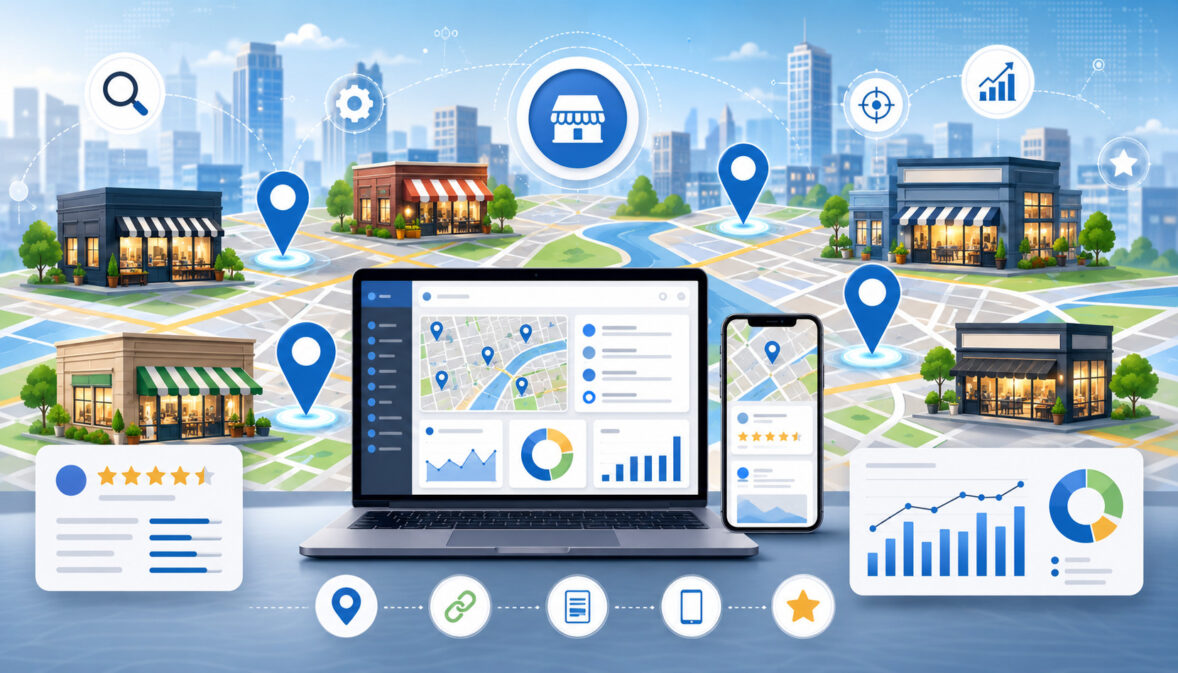
Multi-Location Local SEO Best Practices
Multi-location local SEO best practices help businesses with more than one storefront, branch, office, clinic, restaurant, or service area improve visibility in local search results across different markets.
When a customer searches for a nearby provider, the search results may change based on location, intent, competition, business information, reviews, and the quality of each local page or listing.
For a business with several locations, local SEO is not just about ranking one website. It is about helping each individual location become discoverable, trustworthy, and easy to contact. A strong multi-location SEO strategy connects accurate listings, optimized location pages, ethical review management, local content, structured data, and ongoing performance tracking.
The challenge is scale. One location may have strong reviews, accurate hours, and helpful photos, while another may have outdated information or thin website content.
One branch may serve a competitive downtown area, while another may serve a smaller suburban market. Because each location competes in its own local search environment, businesses need both consistency and local relevance.
This guide explains how multi-location local SEO works, why it matters, and how to build a practical system that improves search visibility, customer trust, and location-level engagement without relying on shortcuts or over-optimization.
What Multi-Location Local SEO Means
Multi-location local SEO is the process of improving a business’s online presence so each individual location can appear for relevant local searches, map results, and customer discovery journeys. It applies to businesses with multiple physical locations, offices, branches, clinics, stores, restaurants, franchises, or service areas.
The goal is to help search engines and customers understand where each location is, what it offers, when it is open, how it can be contacted, and why it is relevant to a local search. This includes the website, Google Business Profile, local business listings, local citations, customer reviews, internal links, local content, and location-specific trust signals.
Multi-location local SEO combines brand-level consistency with location-level accuracy. The brand may have one overall identity, tone, service promise, and website structure, but each branch still needs its own local details.
Customers want to know the phone number, address, hours, services, appointment options, photos, and reviews for the exact location they plan to visit or contact.
For example, a regional healthcare group may need separate pages for each clinic. A restaurant group may need individual pages for each dining location. A franchise network may need consistent brand messaging while still allowing local operators to manage reviews, photos, hours, and community updates.
Multi-location search optimization also helps reduce confusion. When every location has clear information, customers are less likely to call the wrong branch, arrive after hours, visit an old address, or leave a negative review because of inaccurate details.
Why Local SEO for Multiple Locations Is Different
Local SEO for multiple locations is more complex than SEO for a single-location business because every branch has its own local search environment. Each location may compete with different businesses, serve different neighborhoods, collect separate reviews, use different phone numbers, and have unique customer expectations.
A single-location business can often focus on one primary address, one local listing ecosystem, one review profile, and one main location page. A multi-location business must manage many moving parts at once. If one listing is incorrect, one profile is outdated, or one page contains copied content, the problem may affect customers in that specific market.
This is why a multiple location SEO strategy must be scalable. Businesses need repeatable systems for creating location pages, updating business hours, managing customer reviews, monitoring local citations, adding photos, and tracking location-level performance.
There is also a higher risk of duplicate content. Many businesses create one location page template and simply swap out city names, addresses, and phone numbers. That may be efficient, but it often creates pages that do not help users.
Location page SEO works best when each page includes useful local details, such as services offered, nearby landmarks, parking, staff information, directions, local FAQs, and customer support options.
Another difference is review management. Reviews are often tied to individual locations, not the overall brand. One location may have a strong rating and recent positive reviews, while another may have recurring complaints about wait times, service quality, or incorrect hours. Multi-location local search depends on knowing these differences and responding at the location level.
How Local Search Works for Multi-Location Businesses
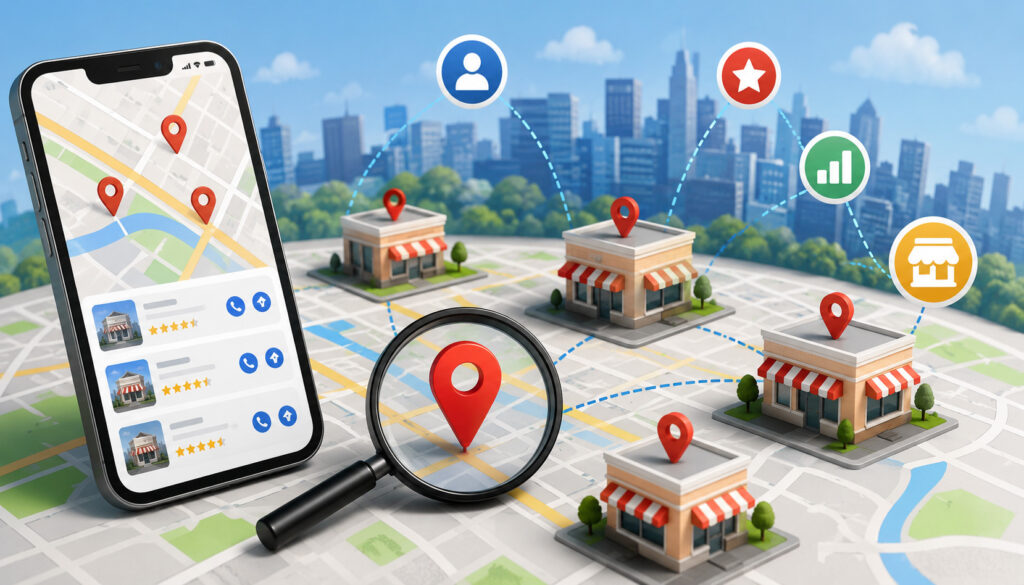
Local search uses several signals to decide which businesses may appear for a customer’s query, and official guidance explains that local results are influenced by relevance, distance, and prominence.
For multi-location businesses, the most important concepts include relevance, proximity, prominence, business categories, reviews, website signals, location data, and local content.
Official guidance explains that local results are influenced by relevance, distance, and prominence, while complete and accurate business information can help search systems better understand a business.
No single factor guarantees local search rankings. A location close to the searcher may not appear prominently if its profile is incomplete, reviews are weak, or its page does not clearly explain the service. A highly reviewed location may not appear for a search if the business category or page content does not match the customer’s intent.
For multi-location business SEO, the key is to strengthen the signals that are within your control. You cannot control where the searcher is standing, but you can control whether each branch has accurate NAP consistency, helpful location pages, complete profiles, ethical review management, and strong local content.
Local SEO for franchises, regional offices, and service-area businesses also requires careful organization. Search engines need to understand which page belongs to which location. Customers need a simple path from search result to the correct branch.
That means each profile should connect to its matching local landing page, and each location page should provide the information customers need to take action.
Relevance
Relevance is about how well a business location matches what the searcher wants. For multi-location SEO, each branch needs to clearly communicate its services, products, categories, specialties, and local availability.
A location page should not simply say that the brand serves a city. It should explain what that specific location offers. If one branch provides emergency service, another handles appointments only, and another has a limited product selection, those differences should be clear.
Google Business Profile optimization also supports relevance. Business categories, services, descriptions, attributes, photos, and website links should accurately reflect the location. If the wrong category is selected, or if a location lists services it does not actually offer, customers may be misled and search systems may struggle to match the listing to the right searches.
Proximity
Proximity refers to how close a business location is to the searcher or to the area mentioned in the search. A person searching from one side of a city may see different local pack or map results than someone searching from another area.
Multi-location businesses cannot fully optimize around proximity because physical location is not flexible. A branch cannot become closer to every searcher. However, businesses can make sure each location is correctly listed, mapped, and connected to the right website page.
For service-area businesses, proximity can be more complicated because the business may travel to customers rather than serve them at a storefront. In these cases, the business should be accurate about service areas, office visibility, contact options, and real coverage.
The best approach is to avoid trying to manipulate proximity. Instead, support each location with accurate address information, strong local content, quality reviews, and clear service area details where appropriate.
Prominence
Prominence refers to how well-known, trusted, and established a business appears online and offline. For multi-location local search, prominence can be supported by reviews, local backlinks, citations, local news mentions, community involvement, brand reputation, and website authority.
A location with many authentic customer reviews, accurate citations, strong local backlinks, and helpful content may have stronger prominence signals than a location with little online activity. However, prominence should not be built through fake reviews, low-quality links, or mass directory submissions.
Prominence is also location-specific. A regional brand may be well known overall, but a new branch may still need local reviews, photos, citations, and community awareness. That is why multi-location local search requires ongoing effort for each location, not just the main website.
Multi-Location Local SEO Checklist Table
A checklist helps keep multi-location SEO organized. When businesses manage many locations, small errors can multiply quickly. A missed phone number, old address, duplicate listing, or outdated profile link can create customer confusion and weaken trust.
Use the table below as a practical framework for ongoing local search optimization for multiple locations.
| SEO Area | What to Optimize | Why It Matters | Common Mistake | Best Practice |
| Google Business Profile | Name, address, phone, categories, hours, services, photos, reviews, links | Helps locations appear in local search results and map results | Linking all profiles to the homepage | Link each profile to the matching location page |
| Location Pages | Unique page for each branch, office, store, or service area | Helps customers and search engines understand each location | Using one generic page for all branches | Create detailed, unique local landing pages |
| NAP Consistency | Business name, address, phone number | Builds trust and reduces customer confusion | Different phone numbers or address formats across platforms | Standardize information across listings and website |
| Local Citations | Directories, maps, review platforms, industry listings | Supports location accuracy and discovery | Creating many low-quality listings | Focus on accurate, relevant, trusted listings |
| Reviews | Review requests, responses, sentiment tracking | Supports customer trust and local reputation | Managing all reviews as one brand-level task | Track and respond by location |
| Local Content | FAQs, directions, local services, neighborhood details | Improves usefulness and relevance | Copying the same content across pages | Add location-specific details and customer-focused answers |
| Internal Links | Hub pages, service pages, branch pages, blog content | Helps users and search engines navigate the site | Orphaned location pages | Link from hub pages, service pages, and relevant content |
| Structured Data | LocalBusiness schema, address, phone, hours, breadcrumbs | Clarifies page and location information | Adding markup that does not match visible content | Keep schema accurate and consistent |
| Backlinks | Local organizations, community pages, industry sources | Supports local authority and prominence | Buying low-quality links | Earn relevant local mentions naturally |
| Reporting | Rankings, calls, direction requests, clicks, bookings, reviews | Shows what is working by location | Only tracking brand-wide traffic | Measure location-level performance |
Build a Clear Website Structure for Multiple Locations
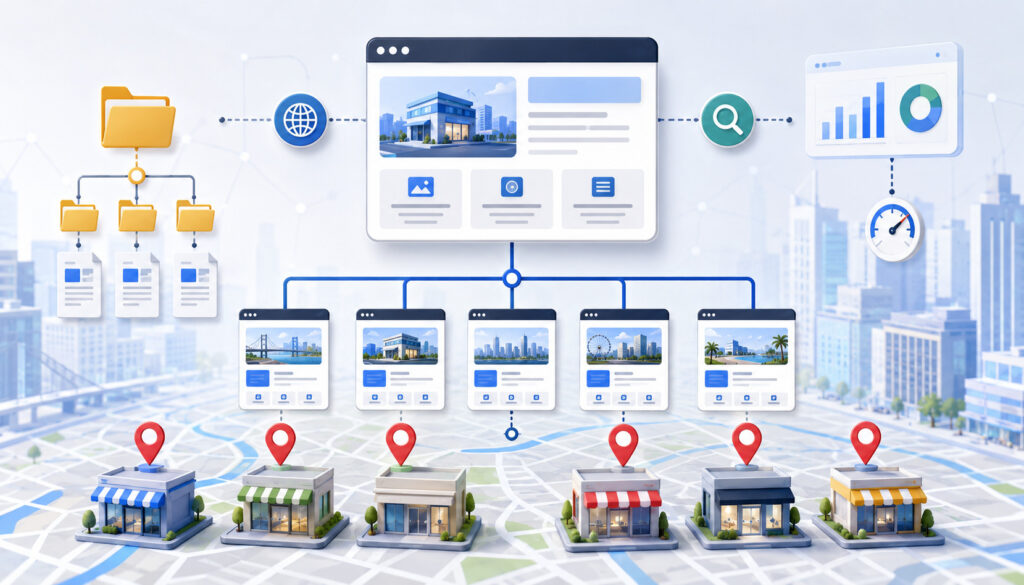
Website architecture matters because customers and search engines need to discover, understand, and navigate every location. A multi-location website should make it easy to find the nearest branch, compare location options, and move from general service information to the correct local page.
A strong structure often begins with a main locations hub. This page can list all branches, include a search or filter feature if needed, and link to every individual location page. For larger businesses, regional pages may also help organize locations by state, metro area, county, or service region.
Businesses that serve multiple markets should build helpful location-specific landing pages for multiple service areas instead of relying on one generic page for every branch or service area.
Individual location pages should be connected to the rest of the website. They should not be hidden in a sitemap or buried behind several clicks. Service pages should link to locations that offer those services. Blog content or educational resources can link to relevant local landing pages when helpful.
Clean URLs also support usability. A structure such as /locations/city-neighborhood/ or /locations/city-branch-name/ is usually easier to manage than long, unclear URLs. The goal is not to force keywords into URLs, but to create a logical system that helps users and site managers understand the page.
Avoid creating hundreds of thin city pages that do not represent real locations or useful service areas. Local SEO strategy for multiple locations should focus on real customer value, not page quantity.
Create a Main Locations Hub
A main locations hub acts as the central directory for all branches, offices, stores, clinics, or service areas. It helps customers quickly find the right location and gives search engines a clear path to crawl individual location pages.
A useful locations hub may include a searchable list, map, region filters, location cards, contact details, and links to each branch page. For smaller businesses, a simple list organized by region may be enough. For larger networks, filters by city, service type, or appointment availability can improve usability.
The locations hub should not replace individual location pages. Its purpose is to guide users to the correct page, not contain every detail about every branch. Each location still needs its own page with unique information.
Use Individual Location Pages
Each eligible location should have its own page because customers usually search for a specific place to call, visit, book, or evaluate. A generic “locations” page may not provide enough detail for someone comparing nearby options.
Individual location pages support location page SEO by giving each branch a dedicated space for address details, phone numbers, hours, services, photos, reviews, staff information, directions, and local FAQs. They also give each Google Business Profile a relevant website destination.
These pages should be useful even if a customer never visits another part of the website. A person landing on a location page from search should immediately understand where the branch is, what it offers, how to contact it, and what action to take next.
Avoid copying the same paragraphs across every page. Templates are helpful, but each page should include unique local information.
Keep URLs Simple and Descriptive
Simple URLs help users, search engines, and internal teams understand the purpose of each page. A clean URL structure also makes it easier to manage location pages as the business grows.
For example, a location page URL should usually include a location identifier such as the city, neighborhood, branch name, or office area. Avoid unnecessary numbers, long parameter strings, or unclear abbreviations that do not help users.
Descriptive URLs also make reporting easier. When analytics data clearly shows location page paths, marketing teams can compare traffic, conversions, and engagement by branch. This supports better decision-making.
Do not change existing URLs without a plan. If a location page already has traffic, links, or citations, changing the URL may require redirects and listing updates.
Create Strong Location Pages
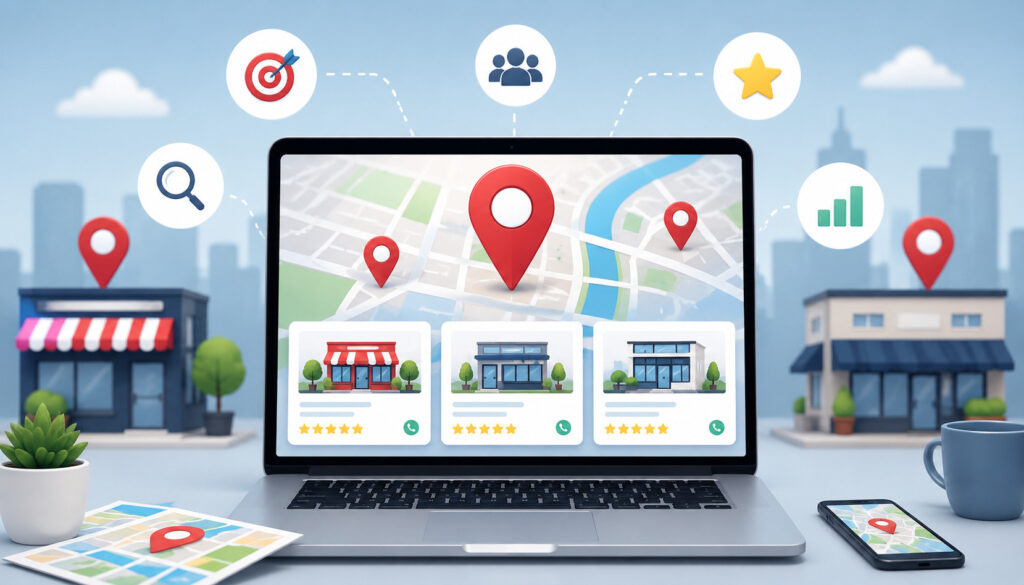
Strong location pages are central to multi-location SEO. Each page should help customers choose, contact, visit, or book with the right branch. It should also help search engines understand the relationship between the brand, the location, and the services offered there.
A complete location page often includes:
- Location name
- Street address or service area details
- Local phone number
- Business hours
- Map embed where appropriate
- Services or products offered at that location
- Appointment, ordering, booking, or contact options
- Parking, directions, and nearby landmarks
- Location-specific photos
- Customer reviews or testimonials where appropriate
- Staff or provider information if relevant
- Accessibility or entrance details when helpful
- Local FAQs
- Internal links to related services and nearby locations
The best local landing pages are not just SEO pages. They are customer service pages. They reduce friction by answering the questions people usually ask before visiting or contacting a business.
Location Name, Address, and Phone Number
Accurate location data is one of the most important parts of local SEO for multiple locations. Customers need to know which branch they are contacting, where it is located, and whether the phone number reaches the correct team.
The location name should match real-world branding and official listings. Avoid adding extra keywords unless they are part of the actual business name. Keyword-stuffed names can confuse customers and may conflict with business profile guidelines.
Address information should be complete, including suite numbers, unit numbers, floor details, or building names when useful. If the location accepts visitors, the address should match maps, listings, and the visible page content.
Phone numbers should also be handled carefully. Local phone numbers can support customer trust, but central call routing may be necessary for some businesses. If call tracking is used, it should be implemented in a way that does not create inconsistent NAP data across listings.
Unique Local Content
Unique local content is what separates a helpful location page from a duplicated template. Each page should describe the specific location, services offered, customer experience, nearby areas served, and local details that matter to searchers.
Useful local content may include parking instructions, appointment details, neighborhood references, local service limitations, product availability, staff notes, delivery zones, or common customer questions.
A retail store may mention in-store pickup and return options. A clinic may mention appointment types and accessibility. A service provider may describe nearby communities served from that branch.
This does not mean every page needs completely different brand messaging. Consistent descriptions of core services are acceptable, but each page should add enough local value to stand on its own.
Duplicate content becomes a problem when pages do not help users distinguish one location from another. The best approach is to use templates for structure, then fill them with genuine local details.
Calls to Action and Conversion Elements
Location pages should make action easy. A customer may want to call, get directions, request an appointment, place an order, send a message, or compare nearby branches. These actions should be visible and easy to complete.
Strong conversion elements include click-to-call buttons, direction links, booking buttons, contact forms, menu links, order links, appointment links, and service inquiry forms. The right call to action depends on the business type and customer journey.
For mobile users, the most important actions should appear near the top of the page. Many local searches happen when customers are ready to act, so they should not have to scroll through long paragraphs to find the phone number or directions.
Location-Specific Photos
Photos help customers recognize and trust a location before they visit or contact it. Location-specific photos can show the storefront, entrance, interior, parking area, team, service environment, products, waiting area, dining space, or nearby visual cues.
Generic brand images are not enough for multi-location local search. A customer wants to know what the exact branch looks like. This is especially important for businesses where access, parking, atmosphere, cleanliness, or staff interaction influences the decision.
Photos should be accurate and current. If a location has moved, remodeled, changed signage, or updated its interior, old images should be replaced. Outdated photos can create confusion and reduce trust.
Location photos can also support engagement on business profiles and local landing pages. They make pages more useful, more human, and more conversion-friendly.
Avoid Duplicate Content Across Location Pages
Duplicate content across location pages is common in multi-location SEO. Many businesses start with a template and change only the city name, address, and phone number. This may save time, but it often creates pages that feel repetitive and unhelpful.
The issue is not that every sentence must be unique. Some brand language, safety details, service descriptions, and policies may naturally repeat. The problem happens when location pages do not provide meaningful differences for users.
To avoid thin or duplicate pages, add information that is specific to each branch. This can include:
- Local services or products available
- Nearby landmarks and directions
- Parking or access details
- Team or practitioner information
- Local reviews or customer comments
- Neighborhoods served
- Appointment or ordering details
- Location-specific FAQs
- Photos from that branch
- Local events or community involvement
- Unique support details
For service-area pages, avoid creating many nearly identical city pages just to target keywords. Pages should reflect real service coverage and provide useful information for customers in that area.
Canonical pages may be useful for technical situations, but they should not be used as a substitute for creating helpful local content. If a page represents a real location, it should have enough unique value to justify its existence.
Optimize Google Business Profiles for Each Location
Each eligible location should have an accurate and complete Google Business Profile that follows the official business profile representation guidelines.
Business profiles help locations appear in map results, local pack results, branded searches, and discovery searches. They also provide customers with quick access to hours, directions, phone numbers, reviews, photos, services, and website links.
A complete profile should include the correct business name, address, phone number, business categories, hours, services, attributes, description, photos, products or menus where relevant, review responses, and a link to the correct location page. Google’s business representation guidelines emphasize accurate, consistent real-world business information.
For multi-location local SEO, accuracy matters at scale. If one location has the wrong hours or another links to the homepage instead of the branch page, customers may have a poor experience. That experience can affect calls, visits, reviews, and trust.
Profiles should also be maintained over time. Hours change, locations move, services are added, staff changes, and photos become outdated. Google Business Profile optimization is not a one-time setup task.
Choose Accurate Business Categories
Business categories help clarify what a location does. The primary category should reflect the main business activity of that specific location. Secondary categories can add useful context when they accurately represent services or departments.
Category stuffing creates confusion. Adding categories for services a location does not provide may attract the wrong customers and weaken trust. It may also make profiles less useful.
For multi-location businesses, categories may not be identical across every branch. A restaurant group may have one location with catering and another without it. A healthcare group may have different specialties by office. A retail brand may have store formats with different product lines.
Review categories regularly, especially after adding services, changing operations, or opening new locations.
Keep Hours Accurate
Accurate hours are essential for customer trust. Incorrect hours can lead to wasted trips, missed appointments, abandoned calls, and negative reviews. This is especially important for businesses with seasonal hours, holiday schedules, temporary closures, appointment-only availability, or location-specific operating times.
Each profile should reflect the correct regular hours and special hours. If one branch closes early for renovations or another extends weekend availability, those updates should be made at the location level.
Hours should also match the website and other major listings. If the website says one thing and the profile says another, customers may not know which source to trust.
Add Location-Specific Photos and Details
Each profile should include photos and details from the specific location. Customers often use visual information to decide whether they recognize the storefront, understand the entrance, or feel comfortable visiting.
Location-specific photos may show signage, parking, interior layout, products, staff, service areas, dining spaces, waiting rooms, or accessibility features. These details can reduce uncertainty before a visit.
Business descriptions, services, and attributes should also reflect the actual location. Avoid applying one generic description to all profiles if it does not match every branch.
Fresh and accurate profile details help customers make better decisions and support local trust.
Link to the Correct Location Page
Each business profile should link to the matching location page, not the homepage. Sending every profile visitor to the homepage creates extra work for customers and weakens the connection between the profile and the local landing page.
A profile for one branch should lead to the page for that branch. That page should repeat the correct name, address, phone number, hours, services, and calls to action. This creates a consistent experience from search result to website.
For appointment-based businesses, the profile may also include booking links when appropriate. For restaurants, menu or order links may be useful. For retailers, product or store information may help customers choose a location.
Maintain NAP Consistency Across All Locations
NAP consistency means the business name, address, and phone number are accurate and consistent across the website, business profiles, directories, maps, social profiles, review platforms, and local listings.
Inconsistent information can confuse customers. A person may find one phone number on a directory, another on the website, and outdated hours on a map app. This creates friction and can reduce trust before the customer ever contacts the business.
NAP consistency also helps search systems connect information about the same location across the web. When listings are accurate and aligned, it is easier to understand which branch is which.
This does not mean every listing must use identical punctuation. The bigger issue is whether the core information is correct. Suite numbers, street names, phone numbers, old addresses, and rebranded names should be reviewed carefully.
Standardize Business Names
Business names should reflect real-world branding. Adding keywords, city names, or service descriptions that are not part of the actual name can confuse customers and create inconsistency across platforms.
For franchises and regional brands, naming rules should be documented. Some locations may use a brand name plus neighborhood or branch identifier, while others may use only the brand name. Whatever format is used, it should match signage, profiles, website pages, and major listings where possible.
Avoid switching between abbreviations, legal names, short names, and keyword-heavy names without a clear reason. Consistency makes reporting, citation management, and customer recognition easier.
If the business rebrands, update names across listings systematically rather than changing only the website.
Use Correct Local Phone Numbers
Phone number strategy matters for multi-location business SEO. Some businesses use local phone numbers for each branch, while others use a central call center. Either approach can work if customers reach the right place and listings remain consistent.
If each location has its own phone number, use it consistently on the location page, profile, and major listings. If a central number is used, make sure customers can quickly reach the correct branch.
Call tracking can be useful for measuring performance, but it should be handled carefully. Dynamic call tracking on the website may be appropriate, while permanent listing phone numbers should remain consistent unless there is a controlled tracking setup.
The priority is simple: customers should not be confused, misrouted, or forced to repeat information because the wrong number was published.
Audit Address Formatting
Address consistency is especially important for businesses with suites, units, floors, campuses, medical buildings, shopping centers, or shared office locations. Small formatting differences may not always matter, but missing or incorrect details can create real customer problems.
Audit suite numbers, building names, ZIP codes, old addresses, service areas, map pins, and directional notes. If a location moves, the old address should be corrected across major platforms as soon as possible.
Service-area businesses should be clear about whether customers can visit the office. If the business does not serve customers at the listed address, profile settings and website content should reflect that accurately.
Manage Local Citations and Business Listings
Local citations are online mentions of a business location’s name, address, phone number, and related details. They may appear on directories, map apps, review platforms, social profiles, data aggregators, industry websites, chamber pages, local business directories, and niche platforms.
For multi-location local SEO, citations support discovery and trust. Customers may find a location outside of search results, and search systems may use listing information to understand business details. However, quality matters more than mass listing creation.
A good citation strategy begins with the most important platforms customers actually use. Then it expands to industry-specific and local listings where relevant. A healthcare office, restaurant, retail store, home service provider, and professional firm may all need different citation priorities.
Citation management should be ongoing. Listings become outdated when locations move, hours change, phone numbers change, branches close, or new locations open. Duplicate listings may appear due to old data feeds, user edits, or previous marketing work.
Prioritize Important Listings
Not every directory deserves equal attention. Focus first on listings that influence customer discovery, maps, reviews, and industry trust. These often include major map platforms, review platforms, social profiles, and key industry directories.
For some businesses, local chamber listings, community websites, professional associations, or niche directories may be more useful than generic directories. The best listings are accurate, visible, relevant, and likely to be used by real customers.
Avoid creating listings only for SEO volume. Low-quality directories with little customer value may create more maintenance work than benefit.
Remove or Fix Duplicate Listings
Duplicate listings can confuse customers and split attention across multiple profiles. One duplicate may show an old phone number, another may show a wrong address, and another may collect reviews separately.
For multi-location businesses, duplicates often appear after moves, rebrands, ownership changes, or inconsistent data submissions. They may also happen when customers or platforms create unofficial listings.
Fixing duplicates usually involves claiming, merging, suppressing, or correcting listings depending on the platform. Keep records of which duplicates were found and what action was taken.
Duplicate listing cleanup should be part of every local SEO audit, especially for businesses with many branches or frequent location changes.
Keep Listings Updated After Changes
Business information changes are normal. Locations move, hours shift, phone numbers change, departments open, services are added, and branches close. The problem is not change itself; the problem is failing to update listings consistently.
Create a process for updating listings whenever operational changes happen. The marketing team, operations team, and local managers should know who is responsible for updates and which platforms must be checked.
Closed locations require special care. If a branch closes permanently, update profiles, location pages, internal links, citations, and customer-facing content. If a location moves, guide customers to the new address and update map pins where possible.
Review Management for Multi-Location SEO
Reviews are highly important for customer trust and local decision-making. For multi-location local SEO, reviews should be managed at the location level because each branch has its own customer experience.
Review quantity, quality, freshness, sentiment, and responses can all influence how customers perceive a location. Official local ranking guidance also identifies review count and score as factors that can relate to local ranking prominence.
A strong review management process helps businesses understand what is happening at each location. One branch may receive consistent praise for fast service, while another may receive complaints about parking, wait times, product availability, or staff communication.
Review responses matter too. Professional responses show that the business is listening. They also provide an opportunity to clarify information, thank customers, and move sensitive issues to private support channels.
Review management must be ethical. Businesses should not buy reviews, pressure customers, filter out negative feedback before asking for reviews, or offer incentives for positive ratings. Review policies and consumer protection guidance emphasize authenticity and transparency in customer feedback.
Request Reviews Ethically
Ethical review requests happen after real customer experiences. A business may ask customers to share feedback, but the request should not pressure them, reward only positive reviews, or discourage honest criticism.
Good review requests are simple, neutral, and location-specific. The request should direct customers to the correct location profile so reviews do not land on the wrong branch. This is especially important for franchises, clinics, restaurants, and multi-office businesses.
Avoid review gating, which means asking customers to rate their experience privately first and only sending happy customers to public review platforms. This can create misleading review profiles and may violate platform expectations.
Respond to Reviews by Location
Review responses should reflect the specific location and customer experience. A generic brand response may feel impersonal, especially when a customer mentions a local staff member, branch issue, or service detail.
Positive reviews deserve appreciation. Negative reviews deserve calm, professional responses that acknowledge the concern without arguing or revealing private information. When appropriate, invite the customer to contact the location or support team directly.
Location-level responses can also help identify operational problems. If several reviews mention long waits at one branch, that may require staffing or scheduling changes. If reviews praise a particular team, that may reveal best practices worth sharing.
Responses should be timely, respectful, and consistent with brand guidelines.
Track Review Patterns Across Locations
Review patterns can reveal strengths and weaknesses that rankings alone cannot show. A location with strong visibility but poor sentiment may attract clicks but lose customers. A location with fewer reviews but excellent feedback may need more review requests.
Track themes such as wait times, staff helpfulness, product availability, cleanliness, appointment scheduling, communication, parking, delivery, and pricing confusion. Compare these patterns by branch, region, service line, or manager.
Review insights should be shared with operations, not just marketing. Local SEO and customer experience are connected. Better operations often lead to stronger reviews, better trust, and higher conversion rates.
Review Management Workflow Table
A review workflow keeps feedback organized across locations. Without a process, some branches may respond quickly while others ignore reviews for weeks. Consistent workflows help protect trust and improve local customer experience.
| Review Task | Who Handles It | Frequency | Why It Matters | Best Practice |
| Request reviews | Local staff or automated customer follow-up process | After completed customer experiences | Builds fresh location-specific feedback | Ask neutrally and send customers to the correct location profile |
| Respond to positive reviews | Local manager or trained support team | Several times per week | Shows appreciation and engagement | Use natural, specific responses when possible |
| Respond to negative reviews | Manager or trained escalation contact | As soon as practical | Protects trust and shows accountability | Stay calm, avoid private details, invite direct resolution |
| Monitor sentiment | Marketing and operations | Weekly or monthly | Reveals recurring location issues | Track themes by branch and service |
| Escalate serious issues | Local manager or operations leader | As needed | Prevents repeated customer problems | Create clear escalation rules |
| Track ratings | Marketing team | Monthly | Shows reputation trends | Compare rating, volume, and freshness by location |
| Report trends | Marketing and operations | Monthly or quarterly | Connects SEO with customer experience | Share insights with local teams |
Local Keyword Strategy for Multiple Locations
Local keyword optimization helps each page match the way customers search in a specific market. For multi-location SEO, keywords may include services, products, city modifiers, neighborhood terms, near-me intent, appointment intent, and problem-based searches.
The goal is not to repeat city names unnaturally. Local keywords should fit naturally into page titles, headings, body content, FAQs, metadata, internal links, and calls to action. A page should sound useful to humans first.
Start with real services and customer intent. If a location offers a service, the page can mention it. If a branch does not offer that service, do not target it. This keeps location pages accurate and prevents customers from contacting the wrong branch.
Local search optimization for multiple locations also requires avoiding doorway pages. A doorway page is a low-value page created mainly to capture search traffic for a location or keyword without offering meaningful content. Instead, build pages around real locations, real service areas, and real customer needs.
Use Local Keywords Naturally
Local keywords should help customers understand where a business operates and what each location offers. They can appear in headings, page copy, image alt text, FAQs, title tags, and internal links when they fit the context.
For example, a location page can naturally mention the branch’s city, neighborhood, nearby landmarks, and surrounding areas served. A service page can link to nearby locations that provide that service.
Avoid repeating the same city phrase in every sentence. Overuse can make content difficult to read and may reduce trust. Searchers are looking for helpful answers, not keyword repetition.
Match Keywords to Real Services
Each location page should target services or products that the location actually offers. This is especially important for businesses with different branch capabilities, appointment types, menus, product availability, or service coverage.
If one office offers consultations but not walk-ins, the page should say that. If one store offers repairs and another does not, the pages should reflect the difference. If a restaurant location has different hours or ordering options, those details should be accurate.
Matching keywords to real services improves relevance and reduces customer frustration. It also helps internal teams route calls, appointments, and inquiries correctly.
SEO should support reality, not rewrite it.
Avoid Doorway Pages
Doorway pages are low-value pages created mainly to rank for many local terms. They often use nearly identical content with only the city name changed. This approach can create a poor user experience and weaken trust.
A business should not create dozens of city pages unless it can provide useful, location-specific information for each page. Real service areas, local FAQs, customer needs, staff availability, and operational details can justify a page. Thin content cannot.
For service-area businesses, pages should reflect actual service coverage. Do not claim to serve markets where the business cannot reliably respond.
A better strategy is to create fewer, stronger pages that answer real local questions.
Create Helpful Local Content for Each Market
Local content helps multi-location businesses connect with customers in different markets. It can support search visibility, answer practical questions, and show that each location understands its local audience.
Helpful local content may include local FAQs, service area information, neighborhood guides, event pages, seasonal tips, local policy explanations, store updates, staff highlights, community involvement, and market-specific service advice.
The best local content is grounded in customer needs. A healthcare office may explain appointment preparation and parking. A home service branch may explain seasonal maintenance needs in its region. A retail store may highlight local pickup, returns, or product availability. A restaurant may explain ordering, reservations, or local dining features.
Local content should not be created only to target keywords. It should make the website more useful for customers who are deciding where to go, who to call, or what to expect.
Location-Specific FAQs
Location-specific FAQs answer practical questions that customers may ask before visiting or contacting a branch. These questions may cover parking, appointment availability, delivery zones, service areas, accepted payment methods, accessibility, hours, pricing policies, wait times, pickup options, or cancellation rules.
FAQs are especially useful when different locations operate differently. If one branch has parking and another does not, the pages should not use the same answer. If one office accepts walk-ins and another requires appointments, that should be clear.
FAQs can also reduce phone calls for basic questions and improve conversion rates by removing uncertainty.
Community and Local Context
Local context can make location pages and content more useful. Businesses may mention nearby landmarks, local service challenges, community involvement, neighborhood needs, regional events, or location-specific customer concerns when relevant.
This should be authentic. Do not add random landmarks or community references just to look local. Customers can often tell when content is generic.
For example, a branch may mention nearby parking options, transit access, local delivery limitations, or seasonal demand patterns. A professional office may mention nearby courts, business districts, or appointment logistics when relevant.
Community context builds trust when it helps customers make decisions.
Use Internal Links to Connect Locations and Services
Internal linking helps users and search engines navigate between location pages, service pages, regional hubs, blog content, and contact pages. For multi-location local SEO, internal links also clarify which locations offer which services.
A strong internal linking structure may include:
- Main navigation link to the locations hub
- Locations hub links to every branch page
- Regional pages linking to locations in that area
- Service pages linking to locations that offer the service
- Location pages linking to relevant services
- Blog content linking to appropriate local landing pages
- Nearby location links where useful
Internal links should be helpful, not excessive. The goal is to guide users to the next logical step. A customer reading about a service should be able to find nearby locations that provide it. A customer viewing a branch page should be able to explore services, directions, reviews, or nearby alternatives.
Link From Service Pages to Relevant Locations
Service pages often attract visitors who are interested in a specific product, service, or appointment type. Linking from those pages to relevant locations helps customers move from research to action.
For example, a service page can include a section that helps users find locations offering that service. This is more helpful than sending every visitor to a general contact page.
These links also help search engines understand the relationship between services and locations. If only some branches offer a service, link only to those branches.
Internal links should use natural anchor text. Avoid overusing exact-match local keywords.
Link Between Nearby Locations When Helpful
Nearby location links can improve customer experience. If one branch is closed, fully booked, or inconvenient, customers may appreciate seeing nearby alternatives.
This is useful for retail stores, restaurants, healthcare groups, professional offices, and service providers with overlapping coverage areas. Nearby links should be practical and based on real customer behavior.
Do not create long blocks of unrelated links between every location. Nearby links should help users choose a better option, not create clutter.
A “nearby locations” section with distance, neighborhood, or service notes can be helpful when accurate.
Add Local Business Schema Markup
Structured data is a standardized way to provide information about a page and its content. For location pages, LocalBusiness schema markup can help clarify business type, address, phone number, hours, geo details, service information, breadcrumbs, and page structure.
Google’s Search Central documentation explains that structured data helps classify page content, including local business information.
Schema is not a ranking guarantee. It does not replace quality content, accurate listings, or customer trust. Its role is to help search systems better understand information already visible on the page.
For multi-location businesses, schema should be implemented carefully. Each location page should include structured data that matches that specific location. Do not use one address or phone number across every location page unless that is truly accurate.
What Schema Can Help Clarify
Schema can help clarify business details such as address, phone number, hours, business type, location page URL, geographic coordinates, and service information. Breadcrumb schema can also help explain where the page sits within the website.
For a multi-location website, schema can reinforce the connection between each page and its corresponding branch. It can also help reduce ambiguity when several locations have similar names or services.
FAQ schema may be appropriate when the page contains visible, helpful FAQs that meet search guidelines. However, structured data should not be added only to chase rich results.
Keep Structured Data Accurate
Structured data should match visible page content, business profile details, and official location information. If the page shows one phone number but schema shows another, that inconsistency can create confusion.
When a location moves, changes hours, updates services, or closes, structured data should be updated along with the page and listings. This should be part of the same workflow.
Avoid marking up reviews, services, or offers that are not actually visible or relevant. Accuracy is more important than adding every possible schema field.
Build Local Authority for Each Location
Local authority is built through trust, relevance, reputation, and community presence. For multi-location local SEO, each branch may need its own authority signals, especially in competitive markets.
Local backlinks and mentions can come from community organizations, sponsorships, local events, industry directories, neighborhood associations, local publications, professional groups, schools, charities, or business partnerships. These signals can support prominence when they are relevant and authentic.
Quality matters more than quantity. A link from a relevant local organization may be more valuable than many low-quality directory links. Avoid link schemes, paid link networks, or irrelevant mass outreach.
Local authority also comes from useful content. A location that publishes helpful service area information, answers local customer questions, and participates in the community may earn natural mentions over time.
Local Backlinks
Local backlinks are links from websites connected to a location’s market, industry, or community. These may include local organizations, event pages, business associations, sponsorship pages, school partners, nonprofits, neighborhood groups, or industry resources.
For multi-location businesses, local backlinks can support branch-level prominence. A restaurant location may earn mentions from local event pages. A professional office may be listed by a local association. A retail store may be featured in a neighborhood guide.
The key is relevance. A backlink should make sense because the business has a real connection to the source.
Community Mentions
Community mentions may or may not include a link, but they can still support reputation and customer trust. Mentions in local articles, event listings, community pages, social posts, or neighborhood resources can help customers discover a location.
For franchise SEO and regional SEO, community mentions also help balance brand consistency with local identity. A location becomes more than a branch; it becomes part of a local market.
Community involvement should be genuine. Businesses should avoid creating artificial events or sponsorships only for SEO. The best local mentions usually come from real participation.
Multi-Location SEO for Different Business Types
Multi-location local SEO best practices apply across industries, but execution varies by business model. A restaurant, retail store, healthcare office, home service provider, franchise, and professional firm all need location accuracy, reviews, listings, and strong local pages. However, the details customers care about may differ.
A restaurant customer may care about menus, reservations, delivery, photos, and peak hours. A healthcare patient may care about practitioner details, appointment options, accessibility, and insurance or payment information where appropriate. A retail shopper may care about inventory, parking, returns, and pickup options.
This is why multi-location SEO should not use one universal page template without industry adjustments. Templates should be flexible enough to include the details that matter most for each business type.
Restaurants and Food Businesses
Restaurants and food businesses need accurate menus, hours, ordering links, photos, reservation details, delivery options, and location-specific reviews. Customers often make fast decisions based on proximity, ratings, cuisine, photos, and convenience.
Each location page should include menu access, dining options, takeout or delivery information, parking notes, photos of the space, and clear calls to action. If hours vary by location, they should be updated quickly across profiles and pages.
Reviews are especially important because food quality, service, wait times, and cleanliness influence customer decisions. Responding to reviews by location can help show accountability.
Retail Stores
Retail stores should focus on store hours, directions, parking, product categories, local promotions, pickup options, return policies, and photos. If inventory availability can be shown accurately, it may help customers choose the right location.
A retail location page should help customers know whether the trip is worthwhile. Include store-specific details such as departments, services, accessibility, curbside pickup, or local events where relevant.
Retailers should also keep holiday hours, temporary closures, and special events updated. Incorrect hours can quickly lead to poor reviews.
Healthcare and Appointment-Based Businesses
Healthcare and appointment-based businesses should provide clear location details, appointment links, practitioner information, services offered, accessibility details, and payment or insurance information where appropriate.
Patients often compare locations based on proximity, availability, reviews, practitioner credentials, and ease of booking. Location pages should answer practical questions without overpromising outcomes.
Privacy matters in review responses. Businesses should avoid discussing personal details publicly and should move sensitive conversations to appropriate private channels.
Home Service Businesses
Home service businesses often operate across service areas rather than storefront-based customer visits. Location pages and service area pages should clearly explain real coverage, availability, emergency service options, local proof, and how customers can request help.
Reviews, photos, service descriptions, and local FAQs can help build trust. Customers may want to know whether the business serves their neighborhood, how quickly it can respond, and what types of jobs it handles.
Avoid creating thin city pages for every nearby area. Focus on useful service area content that reflects real operations.
Professional Services
Professional service businesses should use office pages, practitioner bios, consultation options, credentials, local experience, and trust-building content. Customers often compare providers carefully before contacting them.
Each office page should include location details, services available at that office, appointment options, staff information, and local contact details. If different offices specialize in different services, make that clear.
Reviews, testimonials, and educational content can support trust, but claims should be accurate and responsible.
Franchises
Local SEO for franchises requires brand consistency plus local flexibility. The brand may control templates, guidelines, design, and messaging, while local operators may manage photos, reviews, local updates, and community involvement.
Franchise location pages should be consistent enough to feel unified, but unique enough to help customers understand each location. Reviews should be monitored separately because customer experience may vary by franchise location.
Clear governance matters. Define who can update profiles, respond to reviews, change hours, publish local content, and approve listing changes.
Service-Area Businesses
Service-area businesses should be clear about where they operate, how customers can contact them, and whether customers can visit a physical office. Business profile settings should reflect real customer interaction.
Service area pages should describe actual coverage, common local needs, and services available. They should not claim coverage in areas the business cannot serve reliably.
Customer trust depends on accuracy. If a business says it serves a community, it should be prepared to respond there.
Multi-Office Firms
Multi-office firms should create separate pages and profiles for each office when appropriate. Each page should include address, phone number, hours, staff details, appointment workflows, services, and local contact options.
If staff members work across offices, the website should clarify where appointments are available. If phone routing differs by office, that should be clear too.
Multi-office SEO also benefits from internal links between practice areas, office pages, professional bios, and relevant educational content.
Common Multi-Location Local SEO Mistakes
Many multi-location SEO problems come from trying to scale too quickly without quality control. The most common mistake is using one page for all locations. This may be simple, but it usually does not give customers enough information about individual branches.
Another frequent issue is duplicate content across location pages. If every page uses the same text with only the city name changed, customers may not learn anything useful. Add local details, FAQs, photos, directions, reviews, and service differences.
Linking every business profile to the homepage is also a missed opportunity. Each profile should usually connect to the matching location page so customers land in the right place.
Other common mistakes include:
- Inconsistent NAP data across listings
- Ignoring reviews by location
- Creating thin city pages
- Using keyword-stuffed business names
- Failing to update hours
- Leaving closed locations online without clear status
- Not tracking location-level results
- Neglecting local backlinks
- Publishing location pages without clear calls to action
- Forgetting internal links to important branch pages
How to Measure Multi-Location Local SEO Performance
Measuring multi-location SEO requires more than tracking overall website traffic. Each location should be measured separately because markets, competition, customer behavior, and location maturity differ.
Important metrics include local rankings, map visibility, profile views, calls, direction requests, website clicks, bookings, form submissions, review growth, average rating, rating trends, citation accuracy, location page traffic, and conversion rate.
Rankings can be useful, but they should not be the only measure of success. A location may rank well but receive few calls. Another may rank lower but convert visitors at a higher rate. Customer actions often provide more practical insight.
Measure both visibility and outcomes. Visibility shows whether customers can find the location. Actions show whether they are choosing to engage.
Track Location-Level Visibility
Each branch should be measured independently. A location in a dense metro area may face stronger competition than a branch in a smaller market. A new location may need time to build reviews and authority.
Track local search visibility, map presence, profile engagement, and location page traffic by branch. If a location is underperforming, compare its profile completeness, review count, content quality, citations, and local backlinks against stronger locations.
Do not assume that one brand-wide strategy will perform equally everywhere. Local search behavior varies by market.
Track Customer Actions
Customer actions include calls, direction requests, website clicks, appointment bookings, form submissions, messages, menu clicks, order clicks, and other measurable interactions. These actions often matter more than ranking reports.
For example, a restaurant may care most about direction requests and reservations. A clinic may care about appointment bookings. A home service provider may care about calls and quote forms. A retail store may care about direction requests and product page engagement.
Track actions by location to see which branches are turning visibility into real engagement.
Compare Locations Fairly
Location comparisons should account for market size, competition, proximity, demand, seasonality, location age, staffing, service availability, and customer behavior. A downtown branch and a suburban branch may not have the same search volume or conversion pattern.
Newer locations may have fewer reviews and weaker citations. Seasonal locations may fluctuate. Smaller markets may generate fewer searches but higher intent.
Use reporting to find improvement opportunities, not to punish locations unfairly.
Multi-Location SEO Reporting Checklist
A reporting checklist helps businesses connect local SEO activity with business outcomes. Use the table below to organize recurring reporting across locations.
| Metric | Where to Track It | Why It Matters | Review Frequency | Action to Take |
| Local rankings | Local rank tracking or manual checks | Shows visibility by market | Monthly | Review content, profiles, reviews, and competition |
| Profile views | Business profile insights | Shows discovery activity | Monthly | Improve profile completeness and photos |
| Calls | Call tracking or profile data | Shows direct customer interest | Weekly or monthly | Check phone accuracy and conversion quality |
| Direction requests | Profile insights | Shows visit intent | Monthly | Review address accuracy and map pin placement |
| Website clicks | Profile insights and analytics | Shows movement from profile to site | Monthly | Link profiles to correct location pages |
| Form submissions | Website analytics or CRM | Shows conversion intent | Monthly | Improve page CTAs and forms |
| Reviews | Review platforms | Shows reputation growth | Weekly or monthly | Request reviews ethically and respond consistently |
| Rating trends | Review monitoring | Shows customer sentiment | Monthly | Escalate recurring issues |
| Location page traffic | Website analytics | Shows page discovery | Monthly | Improve content and internal links |
| Citation accuracy | Listing audits | Shows data consistency | Quarterly | Fix wrong or duplicate listings |
How to Scale Multi-Location Search Optimization
Scaling local SEO means creating repeatable systems without turning every page and listing into a generic copy. The best multi-location local SEO strategy uses templates, workflows, ownership, audits, and reporting while preserving location-specific detail.
Templates can help standardize location pages, metadata, schema, FAQs, and calls to action. However, templates should include fields for unique content, such as parking notes, local services, staff details, photos, nearby landmarks, and local FAQs.
Centralized listing management can reduce errors, but local teams should still have a way to report changes quickly. If a branch changes hours, closes temporarily, or updates services, the information should not wait for a quarterly audit.
Review workflows should also scale. Define who requests reviews, who responds, who escalates issues, and who reports patterns. For large networks, role-based permissions may help protect accuracy.
Use Templates Carefully
Templates create consistency, but they should not create duplicate pages. A good template provides structure for essential information while encouraging unique local details.
For example, a location page template may include sections for address, phone, hours, services, directions, photos, reviews, FAQs, and nearby locations. Each section should be completed with information specific to that branch.
Templates are especially useful for schema, internal links, and page design. But the content itself should remain useful and locally relevant.
Create Location-Level Responsibilities
Someone should be responsible for keeping each location’s information accurate. This may be a local manager, regional manager, marketing coordinator, or operations contact.
Responsibilities should include checking hours, photos, reviews, phone numbers, service availability, staff changes, and customer-facing updates. Central marketing teams can provide oversight, but local teams often know about changes first.
Clear ownership prevents outdated information from lingering online.
Audit Regularly
Multi-location SEO requires ongoing audits. Listings change, duplicates appear, reviews accumulate, pages become outdated, and links break. Regular audits help catch issues before they become customer problems.
Audits should review profiles, location pages, NAP consistency, citations, reviews, schema, internal links, photos, and conversion paths. They should also check whether closed or moved locations are handled correctly.
Best Practices for Multi-Location Local SEO
The strongest multi-location local SEO best practices focus on accuracy, usefulness, and consistency.
Businesses should create unique location pages, optimize each business profile, maintain NAP consistency, manage reviews locally, build accurate citations, use internal links, add structured data, create helpful local content, avoid duplicate pages, and track performance by location.
Start with the basics. Make sure every real location has accurate information online. Then improve each location page so customers can understand services, hours, directions, contact options, and local details. After that, strengthen reviews, citations, local content, internal links, and authority signals.
Avoid shortcuts. Do not create fake reviews, keyword-stuffed names, thin city pages, or low-quality links. These tactics can damage trust and may create long-term problems.
A responsible multiple location SEO strategy should answer three questions for every branch:
- Can customers find this location?
- Can customers trust the information?
- Can customers take the next step easily?
If the answer is yes, the local SEO foundation is strong.
FAQs
What is multi-location local SEO?
Multi-location local SEO is the process of optimizing a business’s online presence for more than one branch, office, storefront, clinic, restaurant, or service area. It helps each location appear for relevant local searches and helps customers find accurate information.
It includes location pages, Google Business Profile optimization, local business listings, NAP consistency, review management, local citations, local keyword optimization, internal linking, structured data, and performance tracking.
The goal is not only to improve local search rankings. The goal is to help customers find, trust, and contact the right location.
What are the best practices for multi-location local SEO?
The best practices include creating unique pages for each location, optimizing each business profile, linking each profile to the correct location page, keeping NAP information consistent, managing reviews by branch, building accurate citations, adding local content, using internal links, and tracking results by location.
Businesses should also avoid duplicate content, thin city pages, fake reviews, keyword-stuffed business names, and outdated listings. A strong strategy balances brand consistency with local relevance.
Do businesses need separate pages for each location?
In most cases, yes. Separate location pages help customers find the exact branch they want to visit, call, or book with. They also give each business profile a relevant website link.
A single page listing all locations may be useful as a hub, but it usually should not replace individual location pages. Each branch page should include address, phone number, hours, services, directions, photos, reviews, and local FAQs where appropriate.
Separate pages are especially important when locations have different services, hours, staff, menus, products, or appointment options.
How do I optimize local SEO for multiple locations?
Start by creating a clean website structure with a locations hub and individual location pages. Then optimize each page with accurate NAP details, unique local content, services offered, directions, photos, FAQs, and clear calls to action.
Next, complete and maintain each business profile. Make sure categories, hours, services, photos, reviews, and website links are accurate. Then audit citations, manage reviews, build local links, and track performance by location.
Local SEO for multiple locations works best when it is managed as an ongoing system, not a one-time setup.
Should each location have its own Google Business Profile?
Each eligible location should generally have its own business profile if it meets profile guidelines and serves customers at that location or within a legitimate service area. Each profile should represent the real location accurately.
The profile should include the correct business name, address or service area, phone number, hours, categories, photos, services, reviews, and website link.
For multi-location local SEO, each profile should usually link to the matching location page rather than the homepage.
How can businesses avoid duplicate content on location pages?
Businesses can avoid duplicate content by adding unique local details to each page. This may include services offered at that branch, staff information, nearby landmarks, parking details, directions, photos, reviews, local FAQs, service areas, and location-specific calls to action.
Templates are acceptable for structure, but the content should not be identical across every page. Each page should help customers understand what is different or useful about that specific location. If a page does not provide unique value, it should be improved before publication.
Why is NAP consistency important for multi-location SEO?
NAP consistency helps customers and search systems identify the correct business location. When the business name, address, and phone number are inconsistent across profiles, directories, maps, and the website, customers may become confused.
Inconsistent information can lead to missed calls, wrong directions, poor customer experiences, and negative reviews. It also makes listing management harder. Maintaining a master location data sheet can help businesses keep information accurate across all platforms.
How do reviews affect multi-location local search rankings?
Reviews can support customer trust and may contribute to local prominence signals. Review quantity, rating, freshness, sentiment, and responses can all affect how customers evaluate a location.
For multi-location businesses, reviews should be tracked by branch because each location has its own customer experience. One location may have excellent feedback, while another may need operational improvement.
Businesses should request reviews ethically, respond professionally, and monitor review patterns across locations.
What should be included on a location page?
A strong location page should include the location name, address, phone number, hours, services, map or directions, nearby landmarks, photos, reviews, staff details when relevant, appointment or contact options, and location-specific FAQs.
It should also include internal links to relevant services and nearby locations where useful. The page should make it easy for customers to call, get directions, book, order, or contact the correct branch.
The most important goal is usefulness. A customer should understand the location without needing to visit several other pages.
How can franchises manage local SEO across many locations?
Franchises can manage local SEO by creating brand guidelines, standardized page templates, profile management rules, review response workflows, and location-level responsibilities. Central teams can manage consistency, while local operators provide accurate updates and local content.
Each franchise location should have accurate listings, unique page details, local photos, review management, and clear contact options. The best franchise SEO systems allow local flexibility without losing brand quality control.
Conclusion
Multi-location local SEO best practices help businesses improve search visibility, customer trust, and location-level engagement across multiple markets. Each branch, office, storefront, clinic, restaurant, or service area needs accurate information, helpful content, strong reviews, and clear customer pathways.
Successful multi-location SEO depends on both consistency and local relevance. The brand should have a clear structure, reliable guidelines, and centralized oversight. At the same time, each location should have unique pages, accurate listings, location-specific photos, relevant reviews, and useful local details.
Businesses should focus on the fundamentals first: accurate NAP information, complete business profiles, strong location pages, ethical review management, citation accuracy, internal links, structured data, and regular audits. Then they can build local authority through community involvement, helpful content, and trustworthy customer experiences.
No strategy can guarantee local rankings, and local search results will vary by market, competition, proximity, and intent. However, a responsible multi-location local SEO strategy gives every location a stronger foundation to be found, understood, trusted, and chosen by nearby customers.